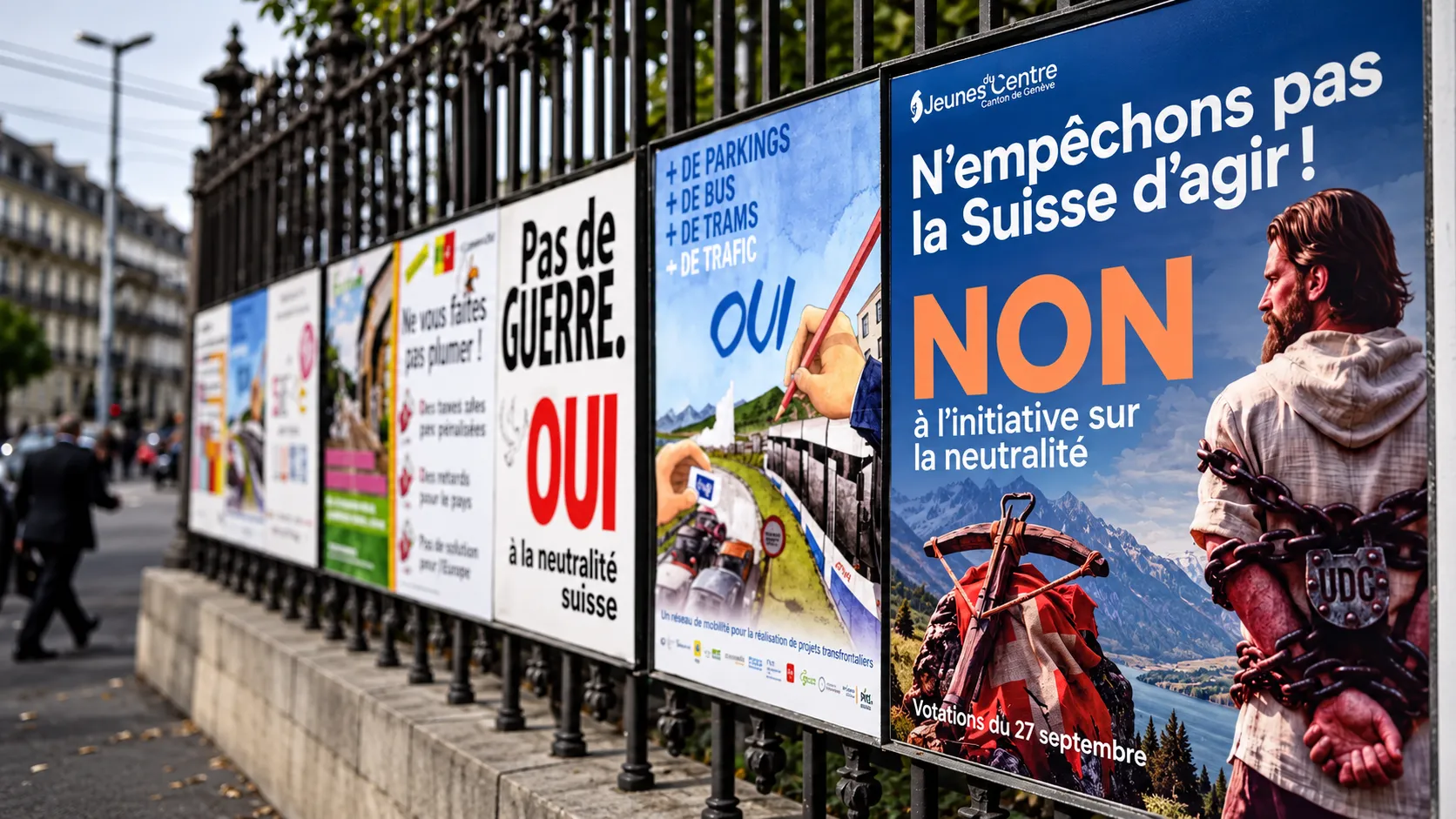
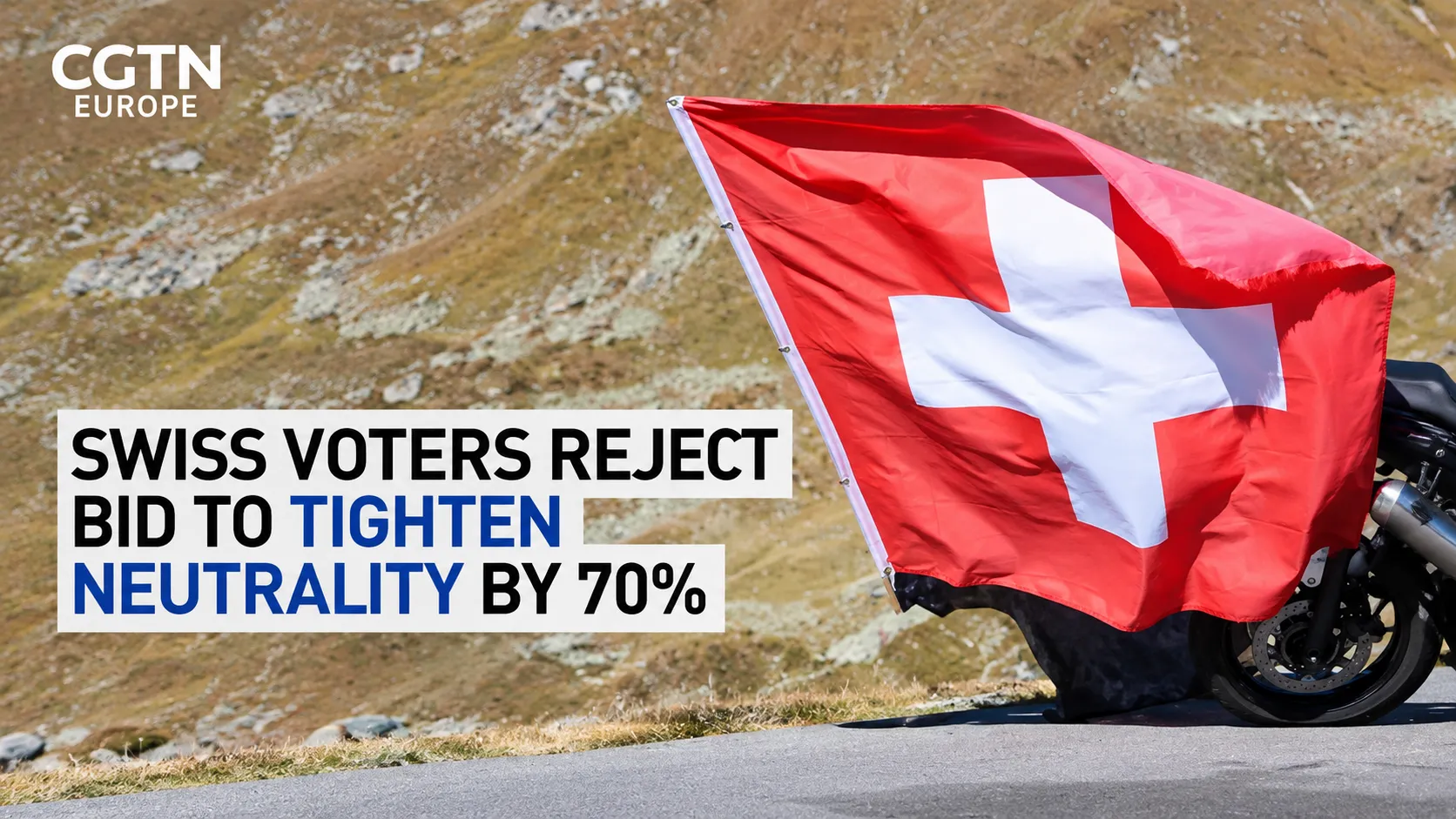
Switzerland has chosen flexibility over rigidity in one of the defining questions of its foreign policy. In a national vote on Sunday, 27 September, about 69 per cent of voters rejected a popular initiative that would have written a strict interpretation of neutrality into the country's constitution, according to a Reuters report published by Business Standard. Only 31 per cent supported the proposal.
The initiative sought to declare Switzerland's neutrality "eternal and armed". In practice, it would have barred the country from joining military alliances and prevented it from imposing sanctions on other countries unless those sanctions had been approved by the United Nations. The outcome preserves the government's ability to align with sanctions imposed by the European Union and other partners, as it did after Russia's full-scale invasion of Ukraine in 2022.
Why the vote was called
The proposal was a direct response to Switzerland's decision in 2022 to adopt the EU's sanctions against Russia. For many Swiss, that move was a necessary response to a flagrant violation of international law and consistent with the country's values. For others, particularly on the political right, it represented a departure from centuries of neutrality that had served Switzerland well, keeping it out of wars and allowing it to act as a trusted intermediary between rival powers.
Moscow openly urged Swiss voters to back the initiative, arguing that Switzerland's sanctions breached its neutrality. Russia has refused to recognise Switzerland as a neutral mediator since 2022, which has diminished Geneva's traditional role as a venue for East–West diplomacy.
A lopsided political landscape
The initiative faced opposition from the government, parliament and every major party except the right-wing Swiss People's Party (SVP), the largest party in parliament. Christoph Blocher, the billionaire former SVP leader and one of the most influential figures in modern Swiss politics, spent 2 million francs, about $2.4 million, campaigning in favour.
The result marks the second SVP-backed initiative rejected by voters this year. In June, Swiss voters turned down a proposal to cap the country's population at 10 million, which would have had major implications for immigration and for Switzerland's agreements with the European Union on the free movement of people. A separate proposal on food production on Sunday's ballot received only 24 per cent support.
What neutrality means now
Switzerland's neutrality has never been absolute in a legal sense. Under international law, neutrality concerns primarily military matters: a neutral state does not join wars or military alliances and does not allow belligerents to use its territory. The Swiss government has long argued that economic sanctions are a political instrument compatible with neutrality, and that aligning with EU measures does not make Switzerland a party to any conflict.
Sunday's vote endorses that pragmatic interpretation. It allows Bern to continue making case-by-case decisions on sanctions, on cooperation with NATO short of membership, and on defence procurement with European partners. Switzerland participates in NATO's Partnership for Peace programme and has been deepening cooperation on European air defence, while maintaining that it will not join any alliance.
The business dimension
For Switzerland's economy, the outcome carries significant implications. The country is home to one of the world's largest wealth management industries, major commodity trading houses, and global companies in pharmaceuticals, food and machinery. Its financial centre depends heavily on international trust and on access to Western markets and financial infrastructure. A constitutional ban on non-UN sanctions could have put Switzerland at odds with the EU and the United States, its largest trading partners, and exposed Swiss banks and traders to accusations of serving as a channel for sanctions evasion.
The EU is Switzerland's most important economic partner, and the two sides have been working to finalise a new package of bilateral agreements governing Swiss access to the EU single market. A vote to lock in strict neutrality would have complicated those negotiations by signalling a divergence on foreign and security policy. The clear rejection removes that risk.
The Swiss franc, traditionally a safe-haven currency, is also relevant. In periods of geopolitical stress, such as this year's conflict involving Iran, investors buy francs as a store of value. That status rests partly on Switzerland's political stability and its alignment with Western legal and financial norms. The vote reinforces that foundation.
Implications for global business and India
For multinational companies and investors, including many Indian businesses with operations or treasury functions in Switzerland, the outcome offers predictability. Swiss sanctions policy will continue to track closely with the EU's, which simplifies compliance for firms operating across Europe. Indian pharmaceutical, IT and commodities companies with Swiss links, and Indian high-net-worth families using Swiss private banks, benefit from a jurisdiction that remains closely aligned with Western regulatory frameworks.
India and Switzerland also have a direct economic relationship that is growing. The trade and economic partnership agreement between India and the European Free Trade Association, of which Switzerland is the largest member, came into force in 2025 and includes a commitment by EFTA states to promote investment of $100 billion in India over 15 years. Swiss political stability and continued alignment with international norms support that framework.
Defence industry considerations also featured in the debate. Swiss arms manufacturers have complained that strict re-export rules, which prevent buyers from passing Swiss-made weapons and ammunition to countries at war, have cost them orders from European customers since 2022. Parliament has debated loosening those rules. A constitutional commitment to eternal and armed neutrality would have made any such change far harder. The vote leaves the door open for a more flexible approach to defence cooperation and exports with like-minded democracies.
A lesson in direct democracy
The vote also illustrates the strengths of Switzerland's system of direct democracy. Citizens can force national votes on constitutional amendments by collecting 100,000 signatures, and they regularly decide questions that in other countries would be settled by parliaments. Sunday's result shows voters weighing a cherished national identity against practical interests and choosing, decisively, a flexible interpretation.
For a country whose wealth rests on trust, the ability to act with its partners proved more valuable than the purity of a doctrine. Neutrality remains central to Swiss identity, but Sunday's vote makes clear that most Swiss see it as a principle to be applied with judgement, not a constitutional straitjacket.