The boardroom tensions at the top of India's largest business conglomerate have produced another delay, keeping one of corporate India's most consequential decisions in limbo.
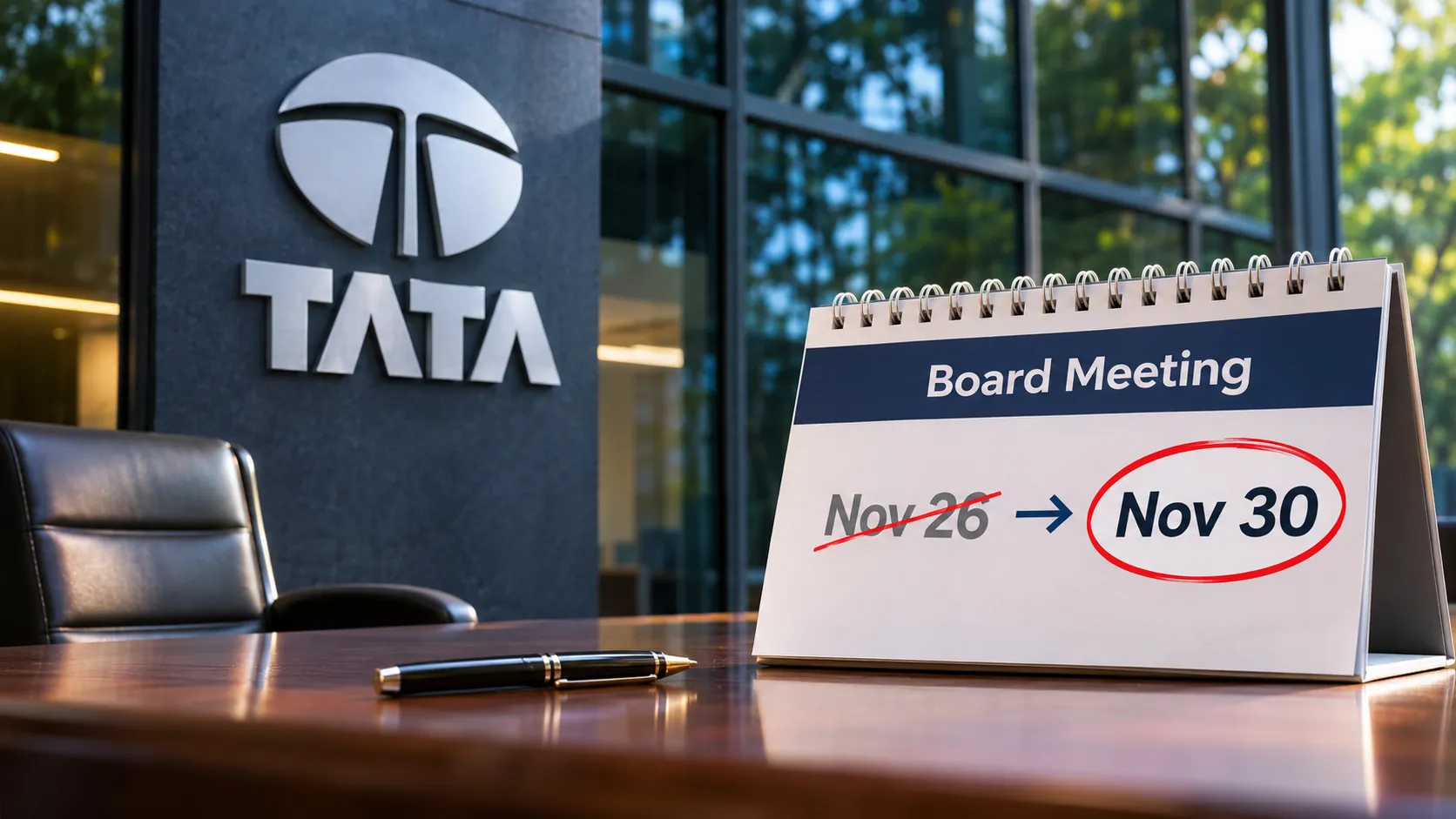
Tata Sons has postponed a board meeting scheduled for Thursday, November 26, to Monday, November 30, Business Today reported on Tuesday, November 24. The change followed a request from Noel Tata, chairman of Tata Trusts, Tata Sons' largest shareholder.
In an email dated November 22 to Tata Sons' company secretary, Suprakash Mukhopadhyay, copied to chairman N Chandrasekaran, Noel Tata said the meeting papers had been uploaded late, "against the established practice of circulating them at least seven days in advance," according to the report.
The core dispute: to list or not
The postponement is the latest episode in a long-running disagreement over the future structure of Tata Sons, the unlisted holding company that controls the group's listed companies, including Tata Consultancy Services, Tata Motors, Tata Steel and Titan.
The Reserve Bank of India classifies Tata Sons as an upper-layer non-banking financial company (NBFC). Under the RBI's regulations, upper-layer NBFCs must list their shares on a stock exchange. The RBI has reiterated that listing is mandatory, according to Business Today.
Chandrasekaran and the Tata Sons board are preparing to proceed with the listing. Noel Tata, backed by Tata Trusts, favours an alternative restructuring that would merge Tata Electronics Systems Solutions and Tata Consulting Engineers into Tata Sons. That would change the composition of Tata Sons' assets so that it no longer falls into the core investment company or upper-layer NBFC categories, removing the listing requirement.
Why listing matters to Tata Trusts
Tata Trusts, the philanthropic organisations established by members of the Tata family, own about two-thirds of Tata Sons. The trusts have historically played a central role in the group's governance, and their control of Tata Sons has ensured that a large share of the group's profits flows to charitable causes.
A public listing would bring Tata Sons under the scrutiny of public shareholders and securities regulations, and could over time dilute the trusts' influence. Many observers believe the trusts are concerned that listing could change the character of the group and weaken the philanthropic model that has defined it for more than a century.
The Shapoorji Pallonji factor
The second-largest shareholder in Tata Sons is the Shapoorji Pallonji (SP) Group, which owns about 18%. The SP Group has substantial debt and has long sought to monetise its stake. A listing would provide a market for its shares and a mechanism for it to raise money.
The agenda for the November 30 meeting includes the monetisation of the SP Group's stake, according to Business Today, highlighting how closely the listing question is tied to the SP Group's financial needs.
What is on the agenda
Business Today reported that the November 30 meeting is expected to cover the RBI directive, the monetisation of the SP Group's stake, business reviews of Tata AIG, Agratas and Tejas Networks that were skipped at the September meeting, and the finalisation of a date for an extraordinary general meeting.
Agratas is the Tata Group's battery manufacturing company, building gigafactories in India and the United Kingdom. Tejas Networks makes telecommunications equipment, and Tata AIG is the group's general insurance joint venture.