Tata Consultancy Services has agreed to acquire MHP, the German management and technology consulting firm majority-owned by Porsche, in a deal valued at $373 million. The acquisition, announced on August 24, 2026, extends TCS's presence in automotive and digital engineering consulting at a time when traditional carmakers are investing heavily in software-defined vehicles and digital manufacturing.
The transaction is among the larger acquisitions by an Indian IT services company in the European consulting market this year, and reflects the continued willingness of major Indian technology firms to pursue inorganic growth in specialised, high-value consulting niches rather than relying solely on organic expansion of their existing service lines.
MHP has built a strong reputation within Europe's automotive and manufacturing sectors, advising major industrial clients on digital transformation, supply chain optimisation and connected-vehicle technology. For TCS, the acquisition provides an established European consulting practice with deep automotive-sector relationships, complementing the Indian IT services giant's existing global delivery capabilities and its efforts to move up the value chain into higher-margin advisory and engineering work.
The shift toward software-defined vehicles -- in which a growing share of a car's functionality and differentiation is delivered through software rather than mechanical hardware -- has fundamentally reshaped the kind of engineering and consulting expertise automakers require, favouring firms with deep software architecture and digital systems experience over those rooted primarily in traditional mechanical engineering consulting.
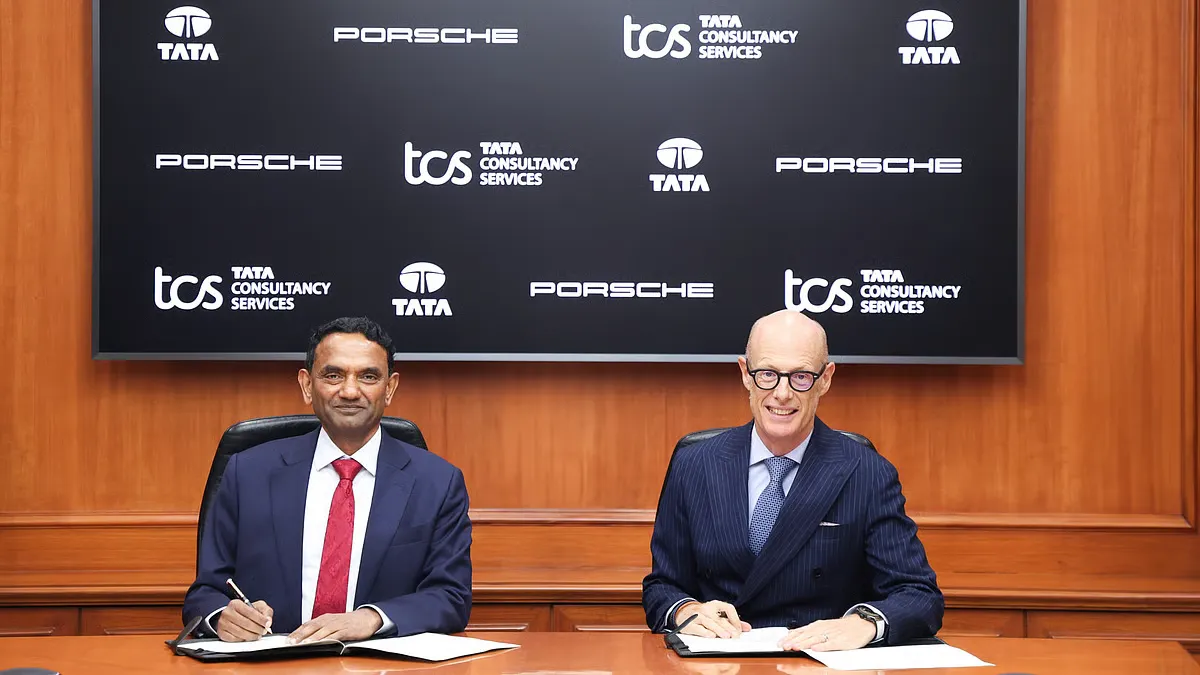
The deal also reflects a broader trend among global automakers of divesting non-core consulting and technology units as they refocus capital on vehicle electrification and software development. Porsche's decision to sell its majority stake in MHP allows the automaker to concentrate resources on its core manufacturing and product strategy, while giving MHP access to TCS's scale and global client base to accelerate its own growth.
For Porsche and other legacy automakers navigating the capital-intensive transition to electric and software-defined vehicles, streamlining non-core business units has become an increasingly common strategy, freeing up both management attention and capital for the substantial investments required in battery technology, software platforms and manufacturing retooling.
For TCS, the acquisition underscores a continued strategy of targeted, capability-driven deal-making rather than large-scale, transformative mergers. The transaction is expected to close during the third quarter of 2026, subject to customary regulatory approvals, and will be closely watched as a test of how effectively Indian IT services companies can integrate specialised European consulting practices into their global delivery models.
Successful integration will likely hinge on TCS's ability to preserve MHP's existing client relationships and consulting culture while layering in the scale advantages of its global delivery network -- a balance that has proven challenging for several Indian IT majors in past cross-border acquisitions, where cultural and operating-model differences between boutique European consultancies and large offshore delivery organisations have sometimes complicated integration.