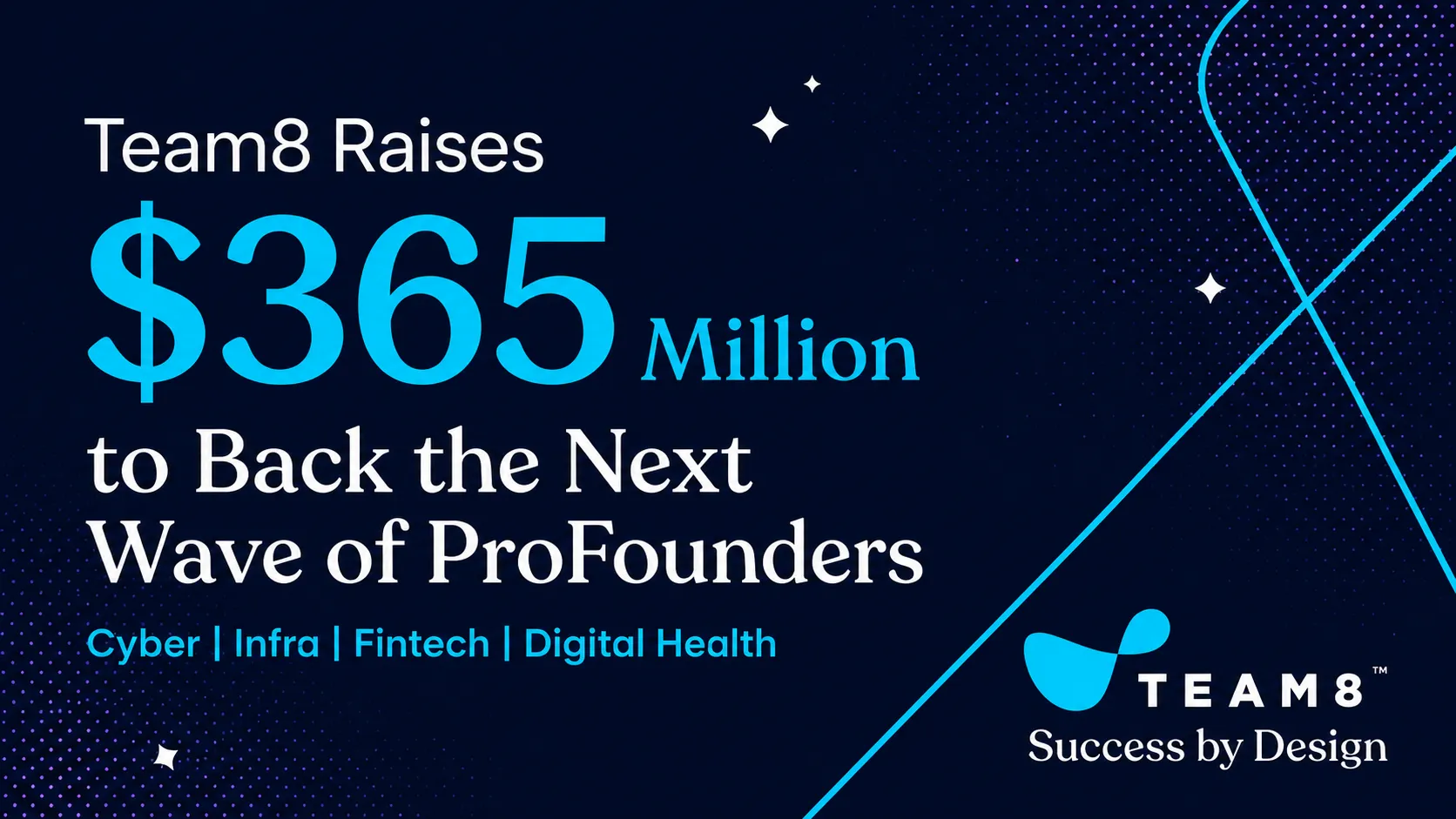
Team8, the Israeli venture creation platform, announced on August 11, 2026, that it has raised $365 million in new capital — comprising $265 million for Team8 Capital's third fund and more than $100 million earmarked for follow-on investments in its highest-conviction existing portfolio companies. The raise brings Team8's total assets under management to nearly $2 billion across eight funds since the firm's founding in 2014, cementing its position as one of Israel's most established venture platforms focused on enterprise technology.
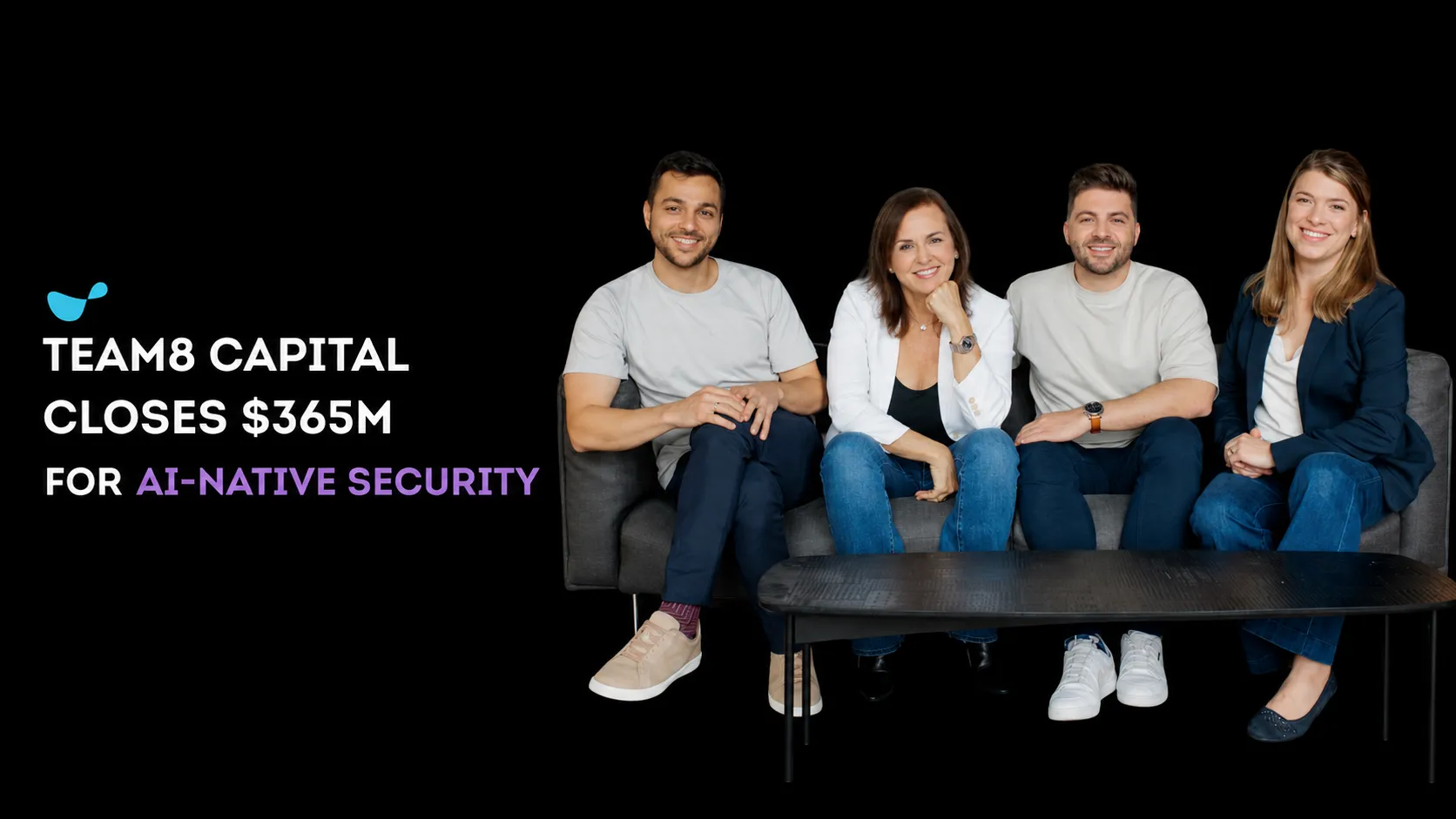
Fund III will target Seed and Series A founders building AI-native companies across four core sectors: cybersecurity, software infrastructure, fintech and digital health. The fund is led by Managing Partners Sarit Firon and Liran Grinberg, alongside Partners Ori Barzilay and Hadar Siterman Norris, continuing Team8's distinctive model of combining direct venture capital investment with an in-house 'company-building' function that supports founders well beyond a typical board seat and capital cheque.
Unlike a conventional venture fund, Team8 operates what it describes as a venture creation platform, employing more than 90 in-house company builders and maintaining what it calls a 'Village' of hundreds of enterprise executives drawn from Fortune 500 and other global companies. That structure allows Team8 to provide portfolio companies with direct support across enterprise customer connections, market validation, go-to-market strategy, recruiting and AI-specific technical expertise — a model designed to compress the time between founding and enterprise-grade product-market fit, particularly for the security- and infrastructure-focused startups that make up the bulk of its portfolio.
Notably, Fund III had already made nine investments and recorded its first realised exit before reaching final close: Team8 co-led a $48 million fundraise for Tel Aviv-based Koi Security late in 2025 from the new $265 million fund, and in April 2026, Koi — whose software helps organisations manage and prevent risks introduced by autonomous AI agents — was acquired by cybersecurity giant Palo Alto Networks in a deal reported at approximately $400 million. That early exit, arriving before the fund had even finished raising, offers investors a rare real-time proof point for the fund's investment thesis rather than a purely forward-looking pitch.
The fund's sector focus reflects what Team8 describes as a specific and urgent gap opening up inside large enterprises: organisations are adopting AI agents faster than their security and governance systems can keep pace. A survey of 111 security leaders conducted at Team8's most recent CISO Village Summit found that 97 per cent of organisations had already begun adopting AI agents, with 80 per cent already running them in production environments — yet confidence in their organisation's ability to secure those AI agents averaged just 2.32 out of 5, a stark gap between adoption speed and governance readiness that Team8 is explicitly positioning Fund III to address.
Team8's investment approach typically involves leading or co-leading rounds with cheques in the $5 million to $15 million range, primarily backing Israeli-founded startups — a geographic focus that reflects both the firm's roots and Israel's continued position as one of the world's most productive per-capita sources of cybersecurity and enterprise infrastructure startups, a dynamic Team8 has helped shape since its founding by cybersecurity veterans in 2014.
The fund closes at a moment when venture capital more broadly has grown more selective about AI-adjacent startups, increasingly favouring companies with demonstrable enterprise traction and defensible technical moats over speculative bets on foundation models or thin application-layer wrappers around existing large language models. Team8's specific focus on the security, infrastructure and governance layer beneath AI agents — rather than the agents or models themselves — positions the fund somewhat differently from the broader wave of AI-focused venture capital chasing model developers and consumer AI applications.
For Team8's limited partners, the timing of Koi Security's exit — realised while the fund was still being raised — offers an unusually concrete validation of the firm's thesis that enterprise AI adoption is creating durable, investable demand for security and governance tooling specifically. Whether Fund III can replicate that early success across its remaining Seed and Series A bets in cybersecurity, fintech, software infrastructure and digital health will likely shape how the broader venture capital market continues to allocate toward the increasingly crowded but still rapidly evolving category of AI-native enterprise startups over the next several years.