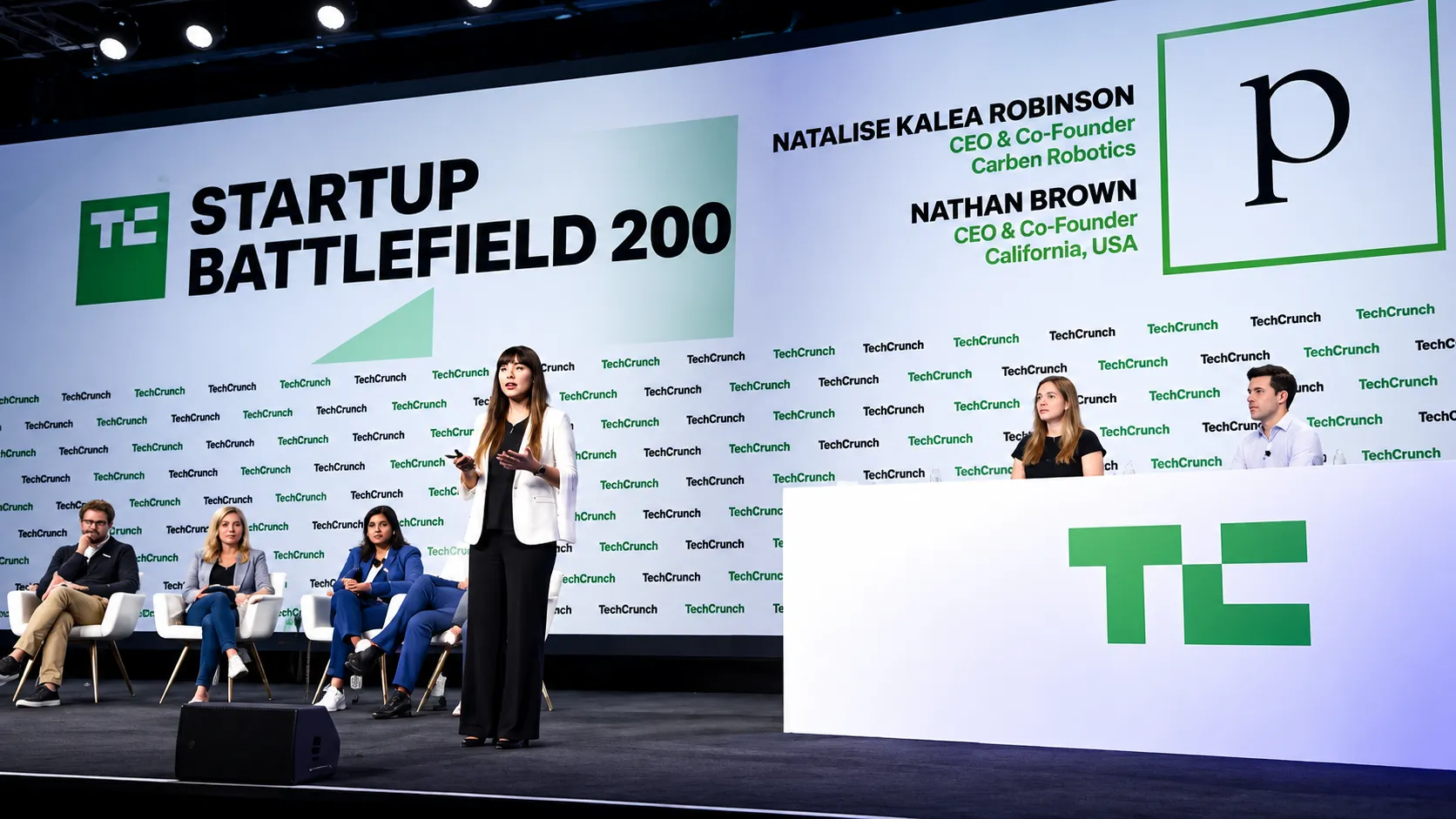
TechCrunch Disrupt 2026 opens its doors on October 13 at Moscone West in San Francisco, bringing together more than 10,000 founders, investors and technology executives for three days of pitches, panels and deal-making at one of the startup world’s most closely watched events.
The conference, which runs through October 15, features more than 200 sessions with over 250 speakers across six stages, and more than 300 startups exhibiting in its Expo Hall. Its centrepiece is the Startup Battlefield, a pitch competition in which 200 startups selected from thousands of applicants vie for attention, with 20 finalists pitching on the main stage for a $100,000 prize and the Disrupt Cup.
The event arrives at a pivotal moment for the startup economy. Artificial intelligence is drawing an outsized share of venture capital, valuations of leading AI companies have soared, and founders across every sector are racing to show how AI changes their products and business models.

The Battlefield and its judges
Startup Battlefield has a long history of spotlighting companies early in their journeys. Its alumni list over the years includes companies that went on to become household names, and for many founders an appearance on the Disrupt stage provides a valuable credential with investors and customers.
This year’s judges include Stacy Brown-Philpot of Cherryrock Capital, Chi-Hua Chien of Goodwater Capital and Dayna Grayson of Construct Capital, all of whom founded or co-founded the funds they lead. After the final pitches, the judges will hold a live question-and-answer session on the Builders Stage, offering founders a rare window into how seasoned investors evaluate companies.
Among this year’s Battlefield 200 is Honeyjar, a women-led San Francisco startup building AI tools for public relations and communications teams, which launched its platform publicly days before the event and says it drew 10,000 waitlist sign-ups in 24 hours.
An AI-shaped agenda
The programme spans AI, product development, go-to-market strategy, fundraising, finance, infrastructure and scaling, with roundtables and breakout sessions alongside main-stage talks. But AI threads through almost everything.
The timing is apt. The days before Disrupt brought a run of major AI news: Meta released Muse Wonder, its first frontier model, emphasising long-term memory; Microsoft president Brad Smith called for binding global AI safety rules; and startups raised fresh capital for AI products ranging from ambient assistants to video documentation tools. Founders on the Disrupt floor will be pitching into a market where large model developers are moving quickly into applications, raising questions about which startups can build durable businesses on top of foundation models.
Disrupt is where the startup world tests its stories in public, and this year almost every story is about AI.
The funding climate
Founders arrive in San Francisco amid a split funding market. Capital has poured into a small number of AI companies, from model developers to infrastructure providers, at record valuations. Investors are paying premiums for startups that can show rapid revenue growth from AI products.
Outside that circle, conditions are tougher. Many startups in consumer, fintech and enterprise software categories face more demanding investors, longer fundraising cycles and pressure to show efficient growth and a path to profitability. The initial public offering market has reopened for some technology companies, but listings remain selective.
Disrupt’s fundraising sessions are designed to help founders navigate that environment, from pitching and term sheets to managing burn and building investor relationships. For many early-stage founders, the networking alone, with venture capitalists, corporate investors and potential customers in one venue, justifies the trip.
Beyond software
AI is not the only theme. Hardware, robotics, climate technology, defence and space have attracted growing investor interest, and startups in these fields are a visible presence at the event. Companies such as WindBorne Systems, which this week won a US Air Force contract worth up to $49 million for weather data collected by its balloon fleet, illustrate how deep-technology startups are finding government and enterprise customers for capabilities that combine hardware, data and AI.
Consumer technology is also evolving. Wearables, smart glasses and ambient AI devices are attempting to move AI off the screen and into everyday life, with all the privacy and design challenges that entails.
How founders can make the most of it
For founders attending, the value of Disrupt often lies as much in the hallways as on the stages. The Expo Hall, with more than 300 startups showing their products, functions as a marketplace for partnerships, customer leads and investor introductions. Roundtables and breakout sessions offer smaller-group access to experienced operators and investors on topics from pricing and hiring to fundraising strategy.
Organisers have pitched this year’s event at builders as much as investors, with sessions covering go-to-market execution, infrastructure and scaling alongside the more familiar fundraising content. That mix reflects the reality of a market in which investors expect startups to show traction earlier, and in which AI tools allow small teams to ship products faster than ever.
For the Battlefield 200, the stakes are higher. Selection alone brings exposure to media and investors, and the 20 finalists will pitch on the main stage over three days, each facing questions from a panel of experienced venture capitalists. Winning the $100,000 prize and the Disrupt Cup can transform a young company’s profile, but many past participants say the relationships formed during the competition proved more valuable than the prize itself.
The live AMA with the judges after the final pitches is designed to demystify that process, giving founders in the audience a rare look at how investors weigh team, market, product and timing when they decide which companies to back.
Why it matters for Indian founders and the diaspora
Indian and Indian-origin founders have long been a significant presence in Silicon Valley and at events such as Disrupt. Many lead US-headquartered startups with engineering teams in India, a model used by companies such as Clueso, the IIT Madras alumni-founded AI video startup that raised a $10 million Series A this week.
For founders building from India, Disrupt offers exposure to US customers and investors, insight into where the global market is heading and a benchmark against international peers. As Indian startups increasingly target global markets from day one, particularly in AI and software-as-a-service, events like Disrupt have become important stops on the road to building a global company.
Over the next three days, the pitches, product launches and conversations at Moscone West will offer a real-time snapshot of where founders and investors believe technology is heading. For entrepreneurs, investors and policymakers in India and across the diaspora, it is a useful indicator of the opportunities, and the competition, that lie ahead.