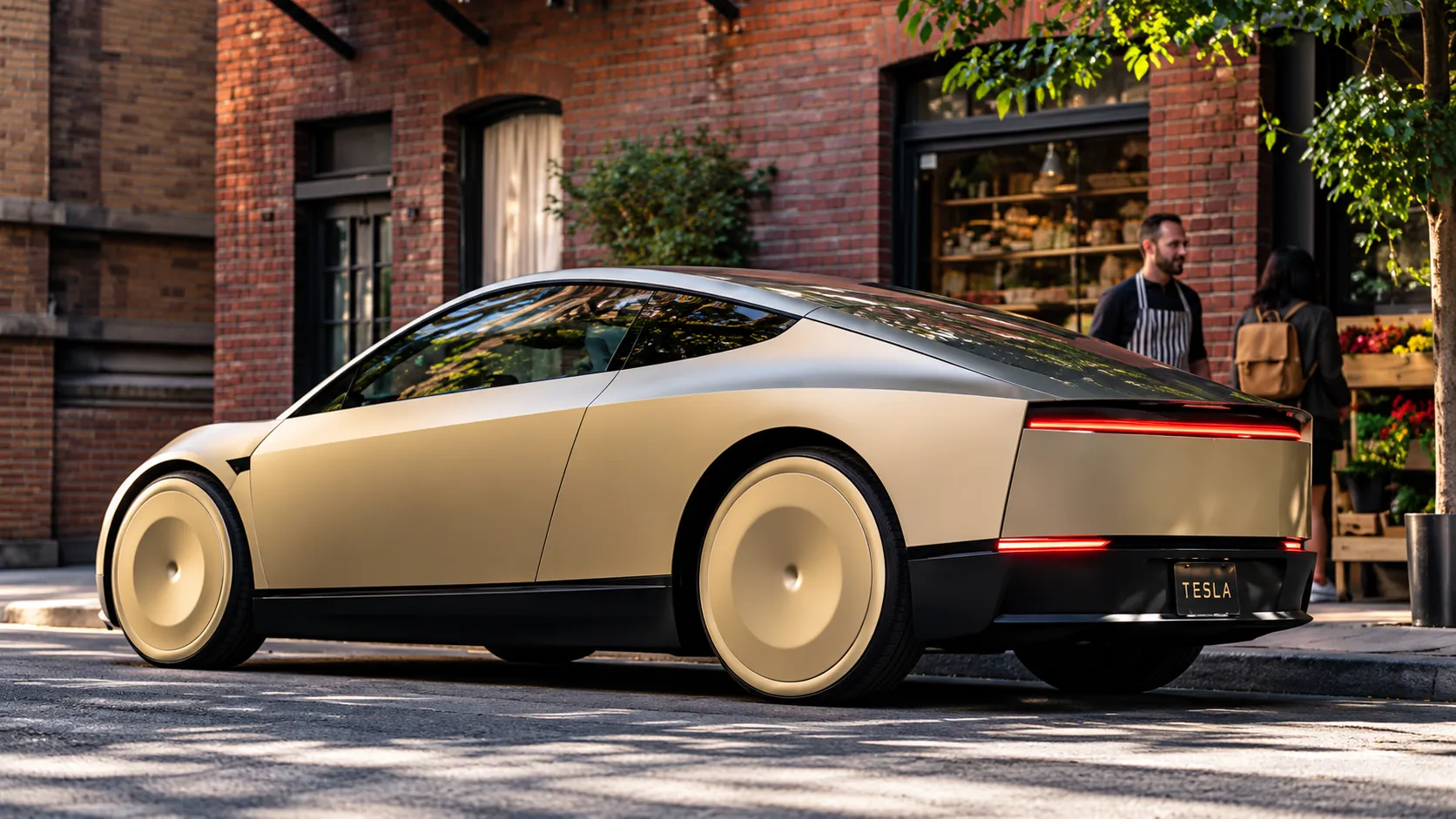
A month after Tesla launched its purpose-built Cybercab robotaxi in Austin, Texas, the service is growing quickly in size but still working through early problems, and the company faces mounting pressure to show it can scale autonomous ride-hailing fast enough to justify investors' expectations.
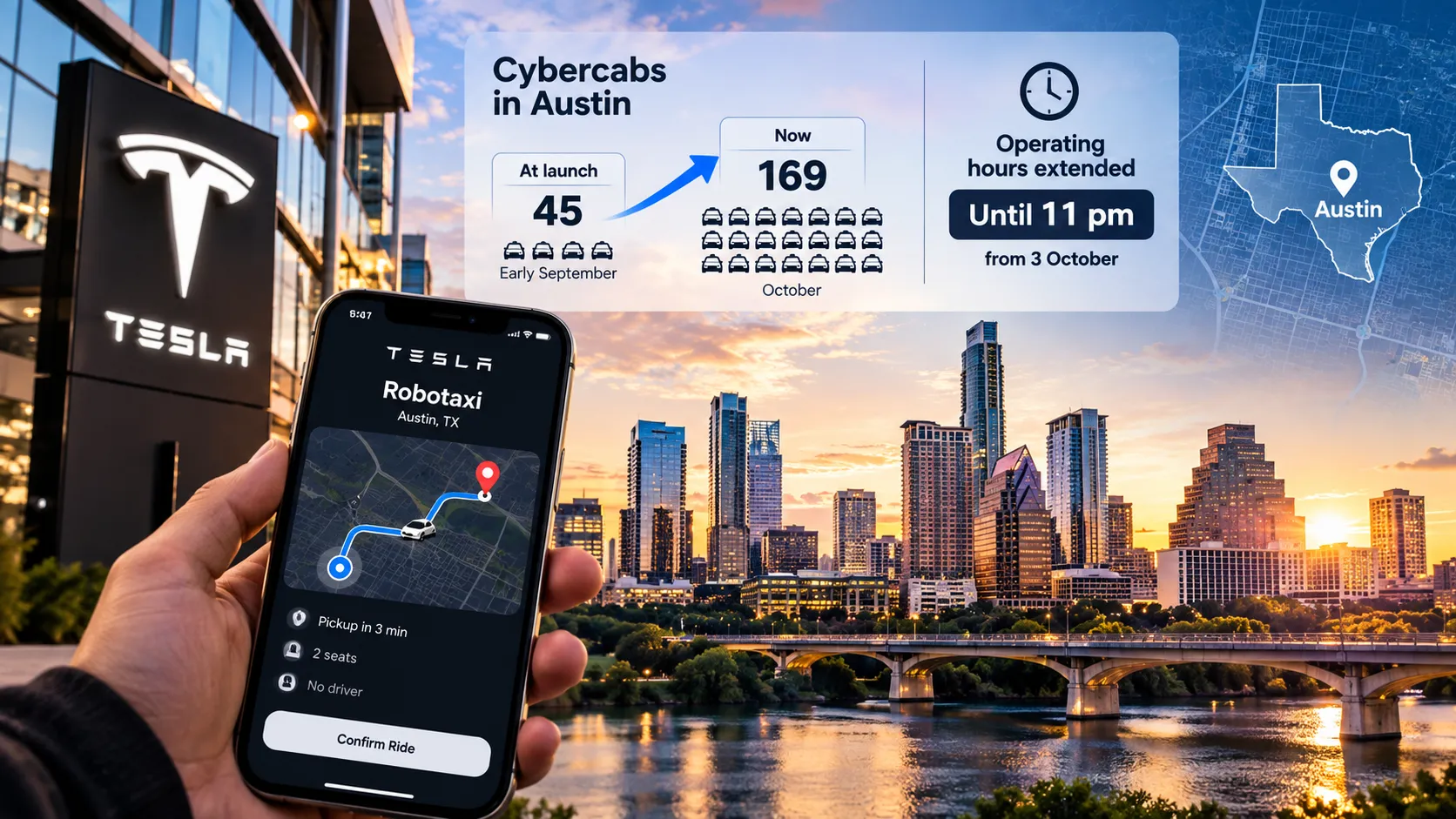
Texas Department of Motor Vehicles records show the number of Cybercabs registered for the Austin service has risen from 45 at launch to 169, according to reports published over the weekend. Tesla also extended the service's operating hours to 11pm from 3 October.
The Cybercab, a two-seat vehicle with no steering wheel or pedals, began carrying passengers in Austin in early September after a launch event on 3 September. Paid rides followed during the month.
A rocky start
CNBC reported that the Cybercab had a rocky first month. Riders have complained about long wait times and about vehicles picking up or dropping off passengers at the wrong locations, according to reports. Some have reported problems with the vehicle's butterfly doors and with the trunk opening automatically after rides.
Those issues are typical of early autonomous services, which must learn to handle the messy details of urban driving, from ambiguous kerbside locations to unpredictable passenger behaviour. They matter, however, because rider experience will determine whether people choose robotaxis over conventional ride-hailing.
Tesla has also run a separate robotaxi service in Austin since 2025 using modified Model Y vehicles, which gives the Cybercab programme a base of operating experience. The purpose-built vehicle, however, has no manual controls, which removes the option of a person in the car taking over and raises the stakes for the software.
Importantly for Tesla, there have been no reports of major safety incidents or collisions involving a Cybercab so far.
Elon Musk, Tesla's chief executive, has defended the pace of the rollout. "We are being extremely careful with autonomous safety, just as we are with making Teslas the safest cars in the world for human driving," he said.
Emergency responders want rules
The launch has also raised practical questions for public authorities. Austin Fire Department captain Matt McElearney has called for state or national rules that would allow emergency responders to move, steer or shut down autonomous vehicles during emergencies.
The request reflects a wider issue as driverless vehicles become more common. Fire, police and ambulance crews need reliable ways to deal with a vehicle that has no driver to give instructions to, whether it is blocking a road, involved in a crash or stopped near an emergency scene.
Why the Cybercab matters so much to Tesla
Tesla's valuation rests heavily on autonomy. Musk has argued for years that self-driving technology will transform Tesla from a carmaker into an AI and robotics company, with a fleet of robotaxis generating recurring revenue far beyond what vehicle sales produce. CNBC noted that Musk's effort to move beyond auto sales relies largely on the Cybercab's success.
That makes the pace of expansion critical. Musk has indicated that the next phase will involve growth across Texas, Nevada and Florida, while acknowledging that the network is not yet "very, very widespread."
Waymo's lead
The scale of the challenge becomes clear when Tesla's numbers are set beside Waymo's. Alphabet's autonomous driving unit operates more than 4,000 vehicles across the United States and serves about 15 cities, with more than 500,000 paid rides a week, according to reports. Waymo has also accumulated hundreds of millions of fully driverless miles.
The two companies have taken fundamentally different technical approaches. Waymo uses a combination of cameras, radar and lidar, along with detailed maps. Tesla relies on cameras and neural networks, a choice Musk has defended for years, famously calling lidar "a fool's errand." Tesla argues its approach is cheaper and more scalable because it can draw on data from millions of customer vehicles. Critics argue that additional sensors provide safety redundancy that cameras alone cannot.
The regulatory backdrop
Tesla's driver-assistance systems remain under scrutiny from the National Highway Traffic Safety Administration, which has been examining the performance of its Full Self-Driving software, including in low-visibility conditions. Any serious incident involving a Cybercab would likely intensify that scrutiny and could slow expansion.
At the same time, the regulatory environment for autonomous vehicles in the United States has become more supportive at the federal level, and states such as Texas have relatively permissive rules for driverless operations. ## The economics of a driverless taxi
The financial case for robotaxis rests on removing the driver, typically the largest cost in ride-hailing, and on keeping vehicles in service for many more hours a day than a private car. Tesla has said it intends to produce the Cybercab in high volumes at low cost, with Musk previously suggesting a price below $30,000 per vehicle.
If those targets are met, a robotaxi fleet could offer rides at prices that undercut human-driven services while still generating attractive margins. The risks lie in the details: maintenance, cleaning, charging, insurance, remote assistance staff and the cost of handling incidents. Waymo's experience suggests those costs are significant and fall only as fleets reach scale. </content> </invoke>
What investors will watch
Investors will focus on a handful of metrics in the coming months: the number of vehicles in service, the number of paid rides, the geographic spread of the service and, eventually, the cost per mile compared with human-driven ride-hailing. Tesla's ability to manufacture Cybercabs at scale, and at a low cost, will be as important as the software.
The India perspective
For India, robotaxis remain a distant prospect given the complexity of road conditions, regulatory caution and the low cost of human drivers. But the technologies behind them, from computer vision to AI-based driving systems, are areas where Indian engineers play a large role at global automakers and technology companies, and where Indian startups are building solutions for driver assistance and fleet safety. Tesla, which began selling cars in India in 2025, also has a growing commercial interest in the market.
The next test
The Cybercab's first month has shown that Tesla can deploy a purpose-built driverless vehicle and expand its fleet quickly without a major safety incident. It has also shown that the experience is still rough around the edges and that Tesla is far behind Waymo in scale.
The next few months will reveal whether Tesla can close that gap. For a company whose valuation depends on autonomy, the stakes could hardly be higher.