Tesla sustained its sales momentum in the third quarter, beating Wall Street's expectations on deliveries even as demand for its cars in the United States fell sharply. The electric vehicle maker's figures, released on 2 October, showed a company increasingly dependent on markets outside its home country for growth.
Tesla delivered more than 486,500 vehicles in the July–September quarter and produced about 464,391, according to TechCrunch. Deliveries rose by roughly 6,000 vehicles from the second quarter, though they remained below the approximately 497,000 vehicles delivered in the third quarter of 2025.
The results exceeded both the consensus forecast and some more optimistic estimates on Wall Street. Tesla shares climbed after the release, contributing to a broader rally in technology stocks on a day when a weak US jobs report lifted markets.
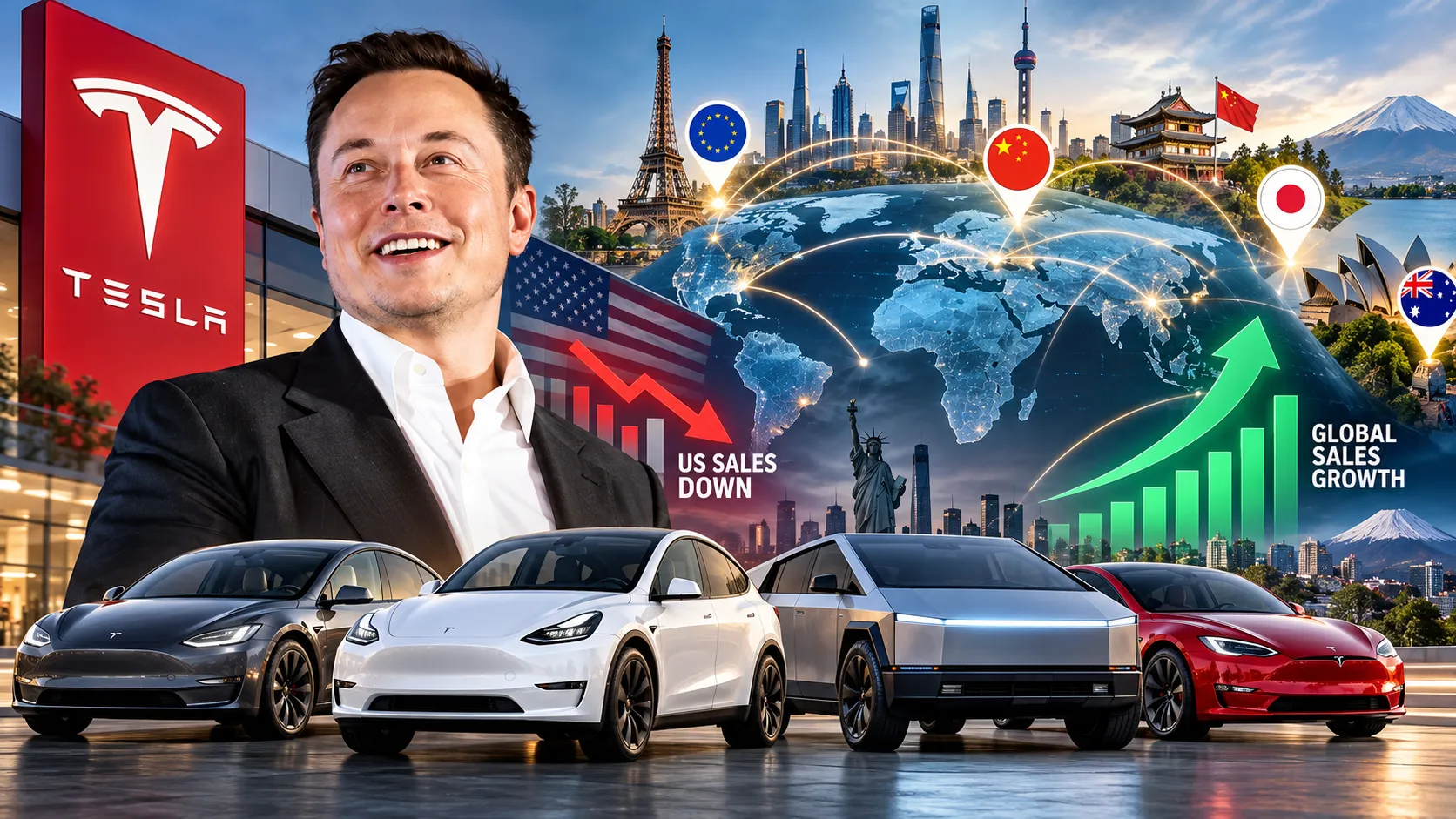
Beneath the headline numbers, however, the regional picture was sharply divided. Tesla's US sales fell nearly 20% year on year, according to data from Cox Automotive cited by TechCrunch. Growth in Europe, China and a range of smaller markets offset that decline.
Why US sales are falling
Several factors appear to be weighing on Tesla in its home market. The company has introduced few new consumer models in recent years. Its line-up remains centred on the Model 3 and Model Y, refreshed versions of designs first launched years ago. The Cybertruck, its most distinctive recent launch, has been widely described as a commercial disappointment, failing to reach the volumes the company once suggested.
Brand perception has also become a factor. Chief executive Elon Musk's political activities, including his role in the Trump administration's Department of Government Efficiency, triggered consumer backlash among some buyers, according to TechCrunch's reporting. In a market where many EV buyers have historically leaned politically progressive, that shift has had commercial consequences.
Competition has intensified as well. Legacy carmakers and newer EV companies have launched models across segments, and Rivian's new R2 SUV, which set a sales record for that company in the same quarter, targets buyers who might otherwise have chosen a Model Y.
Growth abroad
Outside the US, the story is more positive. Sales in Europe rose, and Tesla is expanding production capacity at its factory near Berlin, Germany. China continued to perform strongly despite fierce competition from domestic manufacturers such as BYD, which have aggressively cut prices and launched new models at a rapid pace.
Tesla also reported growth in markets including Japan, Australia and Lithuania. Smaller markets rarely move the global total on their own, but together they help diversify the company's revenue and reduce its dependence on any single region.
The company reached a symbolic milestone earlier in 2026 when it produced its 10 millionth vehicle, a figure that underlines how far it has come since it began producing the Model S in 2012.
Beyond cars
Investors increasingly value Tesla not just as a carmaker but as a technology company with ambitions in autonomous driving, robotics and energy. The company is focusing heavily on the Cybercab, its planned dedicated robotaxi, and on Optimus, its humanoid robot. Musk has repeatedly argued that these businesses will eventually be worth far more than vehicle sales.
Tesla has also launched the production version of its Semi electric truck after nearly a decade of development, giving it a foothold in the heavy commercial vehicle market where electrification has been slower. And it has secured $30 billion in new credit lines, according to TechCrunch, giving it financial flexibility as it invests in new products and capacity.
Those ventures carry considerable uncertainty. Autonomous vehicles face regulatory scrutiny and technical challenges, and new rules are emerging in the US on how robotaxi operators must behave around emergency responders. Humanoid robots remain at an early stage commercially across the industry. But they help explain why Tesla's share price often reacts more to its technology narrative than to quarterly vehicle numbers.
The competitive EV landscape
The global EV market has become far more crowded than when Tesla dominated it. Chinese manufacturers now lead in volume, and several are expanding aggressively into Europe, Southeast Asia, Latin America and other regions. In many markets, consumers can now choose from dozens of electric models at a wide range of prices.
India offers an example of how fast that competition is evolving. Electric car sales there hit a record in September, with registrations rising 94% year on year, and Tesla moved ahead of Mercedes-Benz in luxury EV sales in the country, according to industry data. Its volumes in India remain small relative to domestic leaders Tata Motors and Mahindra, but its presence signals the company's interest in one of the world's fastest-growing car markets. ## The affordability challenge
One response Tesla has already tried is lower prices. In October 2025, the company launched cheaper "Standard" versions of the Model 3 and Model Y, stripping out some features to reduce sticker prices. The move was aimed squarely at buyers deterred by cost, particularly after US federal tax credits for EV purchases were withdrawn.
Price cuts help volumes but come at a cost to margins, which have already been under pressure for several years. The balance between growing deliveries and protecting profitability will remain a central tension for the company, especially as competitors from China continue to undercut it in many international markets. Wall Street analysts will also watch inventory levels. Tesla produced fewer vehicles than it delivered in the quarter, drawing down stock, which can support cash flow but also indicates how tightly the company is managing production against uncertain demand in different regions.
What to watch
Tesla will report full third-quarter financial results later in October, and investors will focus on margins, pricing and spending on artificial intelligence and robotics. Strong deliveries do not necessarily translate into strong profits if they are supported by discounts or incentives, so the quality of revenue will matter as much as the quantity.
The bigger strategic question is whether Tesla can reverse its decline in the United States. A new affordable model, a significant upgrade to its existing line-up or improved brand perception could help, but none is guaranteed. In the meantime, the company's ability to grow in Europe, China and emerging markets will determine whether it can maintain overall volume.
For now, the third quarter delivered a message that will reassure investors in the short term while raising questions for the long term: Tesla is still selling more cars than many expected, but increasingly, it is selling them somewhere other than home.