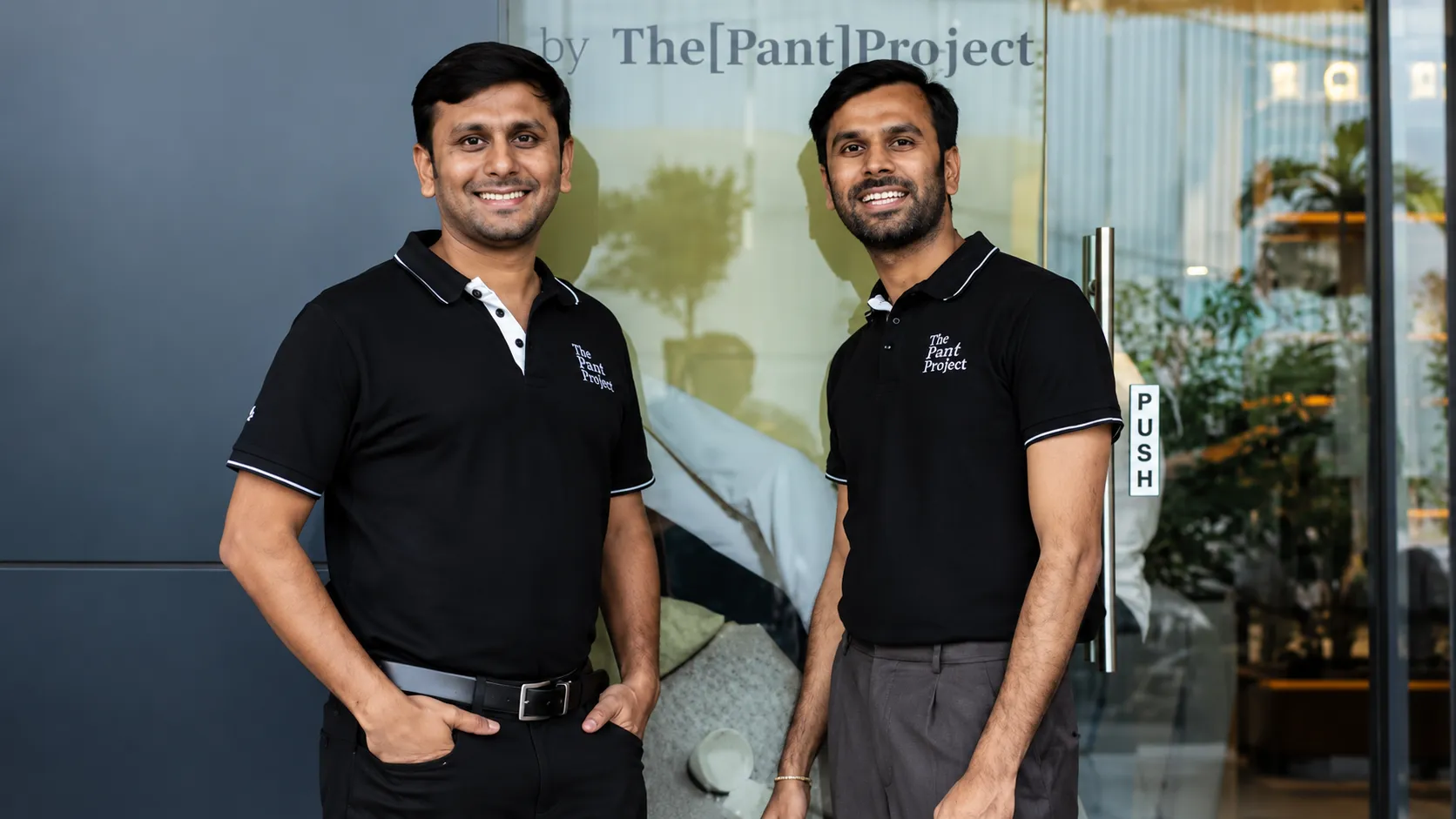
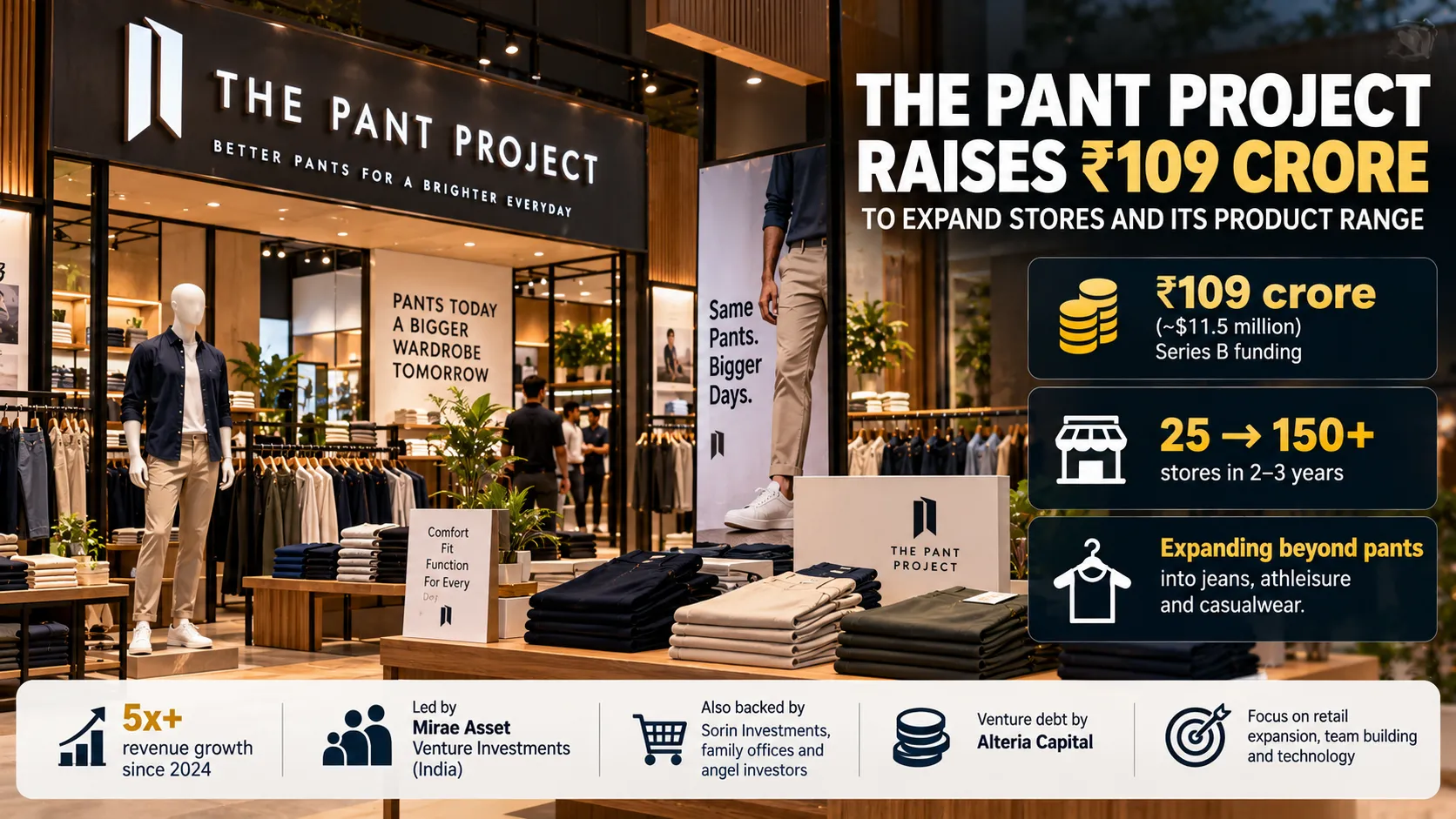
The Pant Project, a Mumbai-based menswear brand that built its business around a single product category, has raised ₹109 crore, or roughly $11.5 million, in a Series B round to expand its physical retail footprint and broaden its range.
The round, announced on October 19, was led by Mirae Asset Venture Investments (India). Existing investor Sorin Investments also participated, along with family offices and angel investors. According to reports, participants included Hyperscale Ventures, MGA Ventures, B2V Ventures, B&K Securities and Anisha Saraf, co-founder of skincare brand Dot & Key. Alteria Capital provided venture debt, the amount of which was not disclosed, and IndigoEdge acted as investment banker on the transaction.
The company did not disclose its valuation. The raise comes two years after its $4.25 million Series A in 2024, which was led by Sorin Investments.
From trousers to a full wardrobe
The Pant Project was founded in 2020 by brothers Dhruv Toshniwal and Udit Toshniwal. As its name suggests, it started as a digital-first business focused on trousers and other bottomwear, a category that the founders saw as under-served by brands offering a mix of fit, fabric and value for urban professionals.
Its products, including its Malai Pants and Inklock No Fade Black Jeans, are sold through its own website, on marketplaces such as Myntra and Amazon, and in physical stores. The company now plans to expand into jeans, athleisure and casualwear, extending its brand beyond its original niche.
Sorin Investments said revenue has grown more than fivefold since the 2024 Series A, citing repeat purchases and expansion across marketplaces and retail. The company has not disclosed current revenue or profitability figures.
Building a store network
The bulk of the new capital will go towards physical retail. The Pant Project currently operates 25 exclusive brand stores and plans to grow that number to more than 150 within the next two to three years, a roughly sixfold increase.
The company will also use the funds to strengthen its team and invest in technology, including systems that link its online and offline channels so customers can browse, buy and return products across both.
The shift towards stores reflects a wider trend among Indian direct-to-consumer brands. After building awareness and customer bases online, many have found that physical retail helps them reach new customers, improve conversion rates and reduce dependence on digital advertising, which has become more expensive. Stores also allow customers to try products such as trousers, where fit is critical, before buying.
The strategy carries risks. Opening stores requires significant capital for rent, fit-outs, inventory and staff, and poorly located outlets can quickly become a drain on cash. The use of venture debt from Alteria Capital alongside equity suggests the company wants to fund part of its expansion without diluting shareholders further.
A crowded menswear market
The Pant Project competes in one of the most crowded segments of Indian retail. Newer brands such as Snitch and Rare Rabbit have grown rapidly through a mix of online and offline channels, while established players including Bombay Shirt Company, Raymond, Blackberrys and Louis Philippe have deep store networks and strong brand recognition.


