StartupsLatest5 MIN READ

Kids' Snack Brand Troovy Raises ₹100 Crore Led by Fireside and Sharrp Ventures as 'Clean Label' Food Goes Mainstream

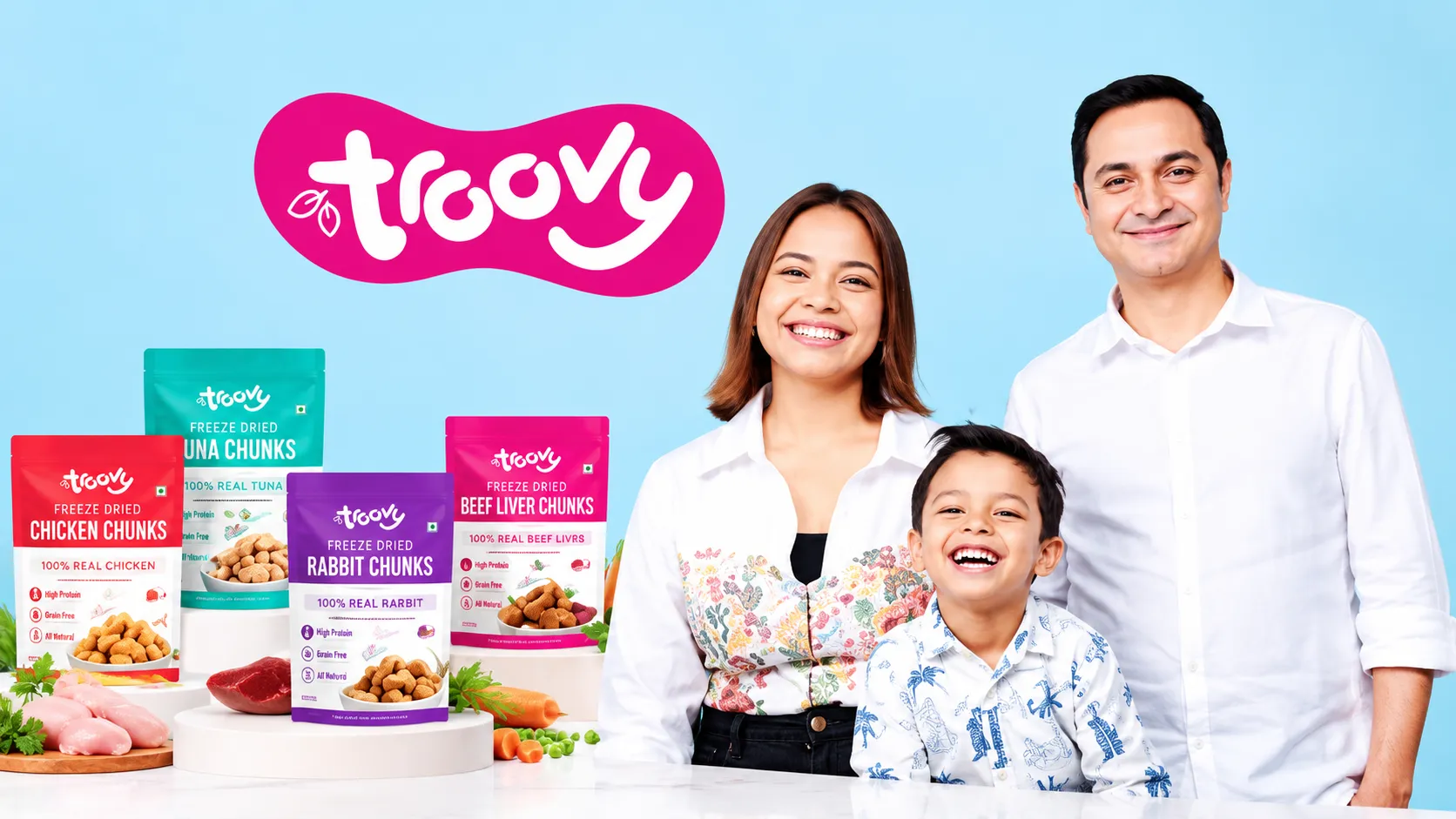
Troovy, the children's healthy snacking brand co-founded by Mansi Baranwal and Aditya Mukherjee, has raised ₹100 crore in a round led by Fireside Ventures and Sharrp Ventures to expand manufacturing, research and distribution across quick commerce and retail.

By Aravind Kumar · Author27 October 2026New
Kids' Snack Brand Troovy Raises ₹100 Crore Led by Fireside and Sharrp Ventures as 'Clean Label' Food Goes Mainstream

Troovy, an Indian brand that makes snacks and nutrition products for children, has raised ₹100 crore in fresh funding as investors bet on rising demand for healthier packaged food among Indian families.

The round, reported on 27 October, was led by Fireside Ventures and Sharrp Ventures, the family office of Marico founder Harsh Mariwala. Both firms also led the company's previous funding round.

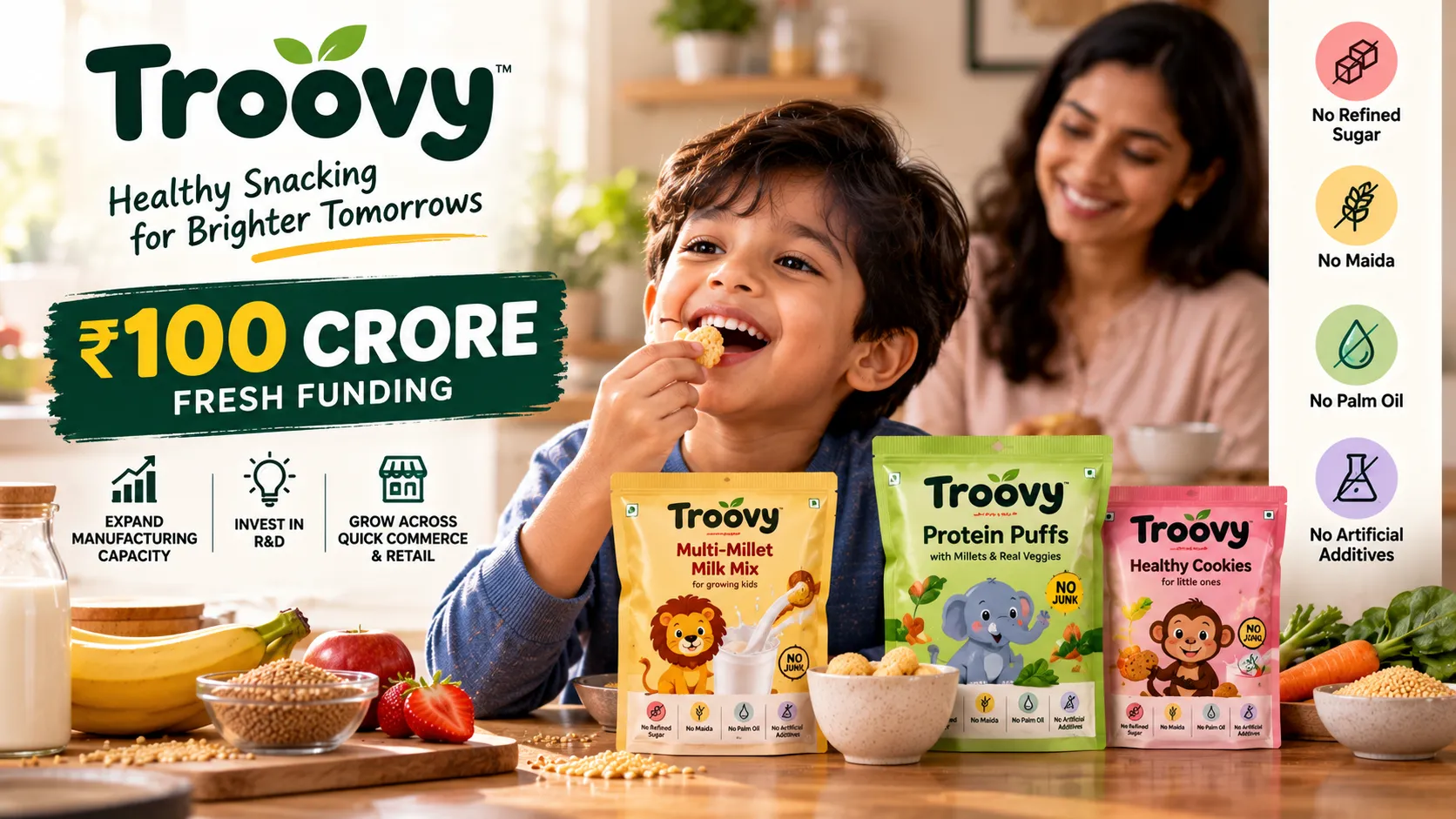
Troovy will use the capital to expand manufacturing capacity, invest in research and development, and strengthen its presence in both quick-commerce platforms and traditional retail stores.

A Rapid Funding Trajectory

The new round marks a significant step up for the company. In January 2026, Troovy raised $5 million, about ₹42 crore, in a Series A round led by Fireside Ventures and Sharrp Ventures, with participation from existing backers Spring Marketing Capital and Veltis Capital. Before that, it raised ₹20 crore in a pre-Series A round in May 2025.

At the time of its Series A, the company reported fivefold growth in sales over the preceding five months and set a target of reaching ₹100 crore in annual revenue over the next few years. The size of the latest raise suggests that investors are confident in its growth trajectory.

The 'No Junk' Promise

Troovy was founded in 2021 by Mansi Baranwal and Aditya Mukherjee. The brand makes children's snacks such as multi-millet milk mixes and protein-rich puffs, positioning its products around a "No Junk" promise: no refined sugar, no maida, or refined wheat flour, no palm oil and no chemical preservatives or artificial additives.

That positioning taps into growing concern among Indian parents about the ingredients in packaged foods marketed to children. Many popular snacks and drinks for children have faced criticism over high sugar content, refined flour and additives, and social media influencers have drawn widespread attention to the gap between marketing claims and nutrition labels.
3761987b-8997-4b03-a29d-5382ac0f495e.png

Why Investors Like the Category

Fireside Ventures is one of India's most active consumer-focused venture firms, with a portfolio of direct-to-consumer brands in food, personal care and lifestyle. Sharrp Ventures brings the experience of Harsh Mariwala, who built Marico into one of India's leading consumer goods companies with brands such as Parachute and Saffola.

Healthy snacking has become one of the most active segments in Indian consumer investing. Brands focused on protein, millets, low sugar and clean ingredients have attracted significant funding, as urban consumers become more health-conscious and willing to pay a premium for better products.

Children's nutrition is a particularly compelling niche. Parents are often willing to spend more on products they believe are healthier for their children, and brand loyalty can be strong once trust is established.

The Quick-Commerce Effect

Quick-commerce platforms, which deliver groceries within minutes, have transformed the distribution landscape for young consumer brands. Platforms such as Blinkit, Swiggy Instamart, Zepto and others allow emerging brands to reach urban consumers quickly without building extensive distribution networks across traditional retail.

Quick commerce has been particularly effective for impulse and snack purchases, categories in which Troovy competes. But reliance on these platforms carries risks, including high commissions, advertising costs and competition from the platforms' own private labels. Troovy's plan to expand in traditional retail reflects a recognition that sustainable growth requires a broader distribution base.


“Indian parents are reading labels as never before, and brands that can promise 'no junk' while still tasting good are finding a ready market.”
— TIGI Analysis

Manufacturing and R&D

The emphasis on manufacturing and research is notable. Many young consumer brands outsource production to contract manufacturers, which allows them to scale quickly but can limit control over quality, cost and innovation. Investing in manufacturing capacity can improve margins and ensure consistent quality, particularly important for products marketed on ingredient purity.

Research and development is essential for brands that promise healthier products without compromising taste. Removing sugar, refined flour and preservatives while maintaining flavour, texture and shelf life is technically challenging, and product innovation can be a key differentiator.

The Millet Moment

Troovy's use of millets aligns with a broader revival of these traditional grains in India. The government has promoted millets as nutritious, climate-resilient crops, and the United Nations designated 2023 as the International Year of Millets at India's initiative. Millets require less water than rice and wheat and are rich in fibre and micronutrients.

Consumer brands have embraced millets in products ranging from breakfast cereals and snacks to noodles and baked goods, though the category remains small relative to mainstream staples.

Regulatory Attention

The children's food category is drawing increasing regulatory scrutiny. India's food safety regulator, FSSAI, has taken action against misleading health claims on products, and there has been public debate over the labelling of sugar content and the marketing of so-called health drinks to children. Brands that position themselves on health must ensure their claims are accurate and compliant.

Competition on the Shelf

Troovy faces competition from both established food companies and other startups. Large FMCG companies have launched healthier variants of popular snacks and children's nutrition products, often with significant marketing budgets and distribution reach. Meanwhile, a wave of venture-backed brands has emerged in healthy snacking, protein foods and millet-based products, all competing for the attention of health-conscious urban parents.

Differentiation in this crowded market depends on product quality, taste, trust and price. Children are notoriously discerning consumers, and products that are healthy but unappealing will struggle to win repeat purchases. Pricing is another challenge: clean-label products often cost more to make, and while affluent urban families may pay a premium, expanding to a broader market requires careful attention to affordability. Troovy's investment in manufacturing and research could help it manage costs and develop products that balance nutrition, taste and price.

Troovy's founders have positioned the brand around transparency, publishing what their products do not contain as prominently as what they do. That approach reflects how purchasing decisions are increasingly made, with parents comparing labels on their phones before buying.

What Comes Next

With ₹100 crore in fresh capital, Troovy will seek to scale production, broaden its product range and reach more households across online and offline channels. Its challenge will be to grow rapidly while maintaining the product quality and trust on which its brand is built.

For India's consumer startup ecosystem, the round is another sign that investors see substantial opportunity in brands that respond to changing consumer preferences, particularly among parents seeking healthier choices for their children.

TagsTroovyMansi BaranwalAditya MukherjeeFireside VenturesSharrp VenturesHarsh MariwalaHealthy SnacksKids NutritionD2CFMCGQuick CommerceClean LabelMilletsConsumer BrandsIndia

Reader reviews

Sign in to rate and review this article.
Loading reviews…
