TechFuture Tech5 MIN READ

Chips, Rare Earths and AI Safety Top the Agenda as Trump and Xi Meet at the White House

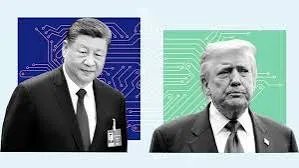
Donald Trump and Xi Jinping meet at the White House on September 24 with advanced chips, rare-earth export controls, AI safety and data-centre power among the technology issues shaping the talks.

By Nisha Omkumar · Author24 September 2026Live
Chips, Rare Earths and AI Safety Top the Agenda as Trump and Xi Meet at the White House

When President Donald Trump and Chinese President Xi Jinping sit down at the White House on Thursday, September 24, the conversation will range from tariffs and agriculture to Taiwan and Iran. But some of the most consequential issues on the table concern technology — the chips, minerals and artificial-intelligence systems that are increasingly central to economic and military power.

The summit is the centrepiece of Xi’s three-day state visit to Washington, which began on Wednesday when Trump personally greeted him at Joint Base Andrews. Artificial intelligence, rare-earth minerals, US auto-market access and the extension of the two countries’ trade truce are among the confirmed topics, according to published summit schedules. Treasury Secretary Scott Bessent said on Wednesday that the truce had already been extended to January 10, 2027.

The chip question

Advanced semiconductors remain among the most contested issues between the two powers. The US restricts exports of some advanced chips, chip-making equipment and related technology to China, arguing that the controls protect national security by limiting China’s ability to develop cutting-edge AI and military systems.

China has repeatedly criticised those restrictions, arguing that they hinder Chinese companies and distort normal economic activity. Beijing has sought greater access to advanced technologies, while Washington has continued to defend controls on strategically sensitive products. Neither side has indicated that this fundamental disagreement has disappeared.

CBS News framed the visit against the backdrop of US efforts to choke China’s supply of semiconductor chips for AI advancement. At the same time, Chinese companies have been accelerating efforts to develop domestic alternatives, investing heavily in AI chips and large language models to reduce dependence on US technology.

Rare earths as leverage

If chips are Washington’s leverage, critical minerals are Beijing’s. China dominates the global processing of rare earths and other critical minerals essential to technologies ranging from electric-vehicle motors and wind turbines to smartphones, advanced weapons and AI hardware.

China’s one-year suspension of sweeping rare-earth export controls, announced in October 2025, was due to expire on November 10, The National reported. Washington wants Beijing to deliver on commitments to ease restrictions on rare-earth exports, while China wants to retain its dominance over the processing and manufacturing of materials essential to the US technology and defence industries.

The World Economic Forum noted that the US continues to seek secure access to critical and rare-earth elements, while China wants assurances that export controls will not be used as blunt instruments — a sign that both sides see the other’s controls as a potential weapon.

AI safety cooperation

One of the less-discussed but potentially significant items on the agenda is cooperation on AI safety. Reuters reported that preparatory talks between the two sides had included possible cooperation on artificial-intelligence safety, alongside tariff reductions on some non-sensitive products.

The US and China are the world’s two leading AI powers, and both have an interest in managing risks associated with increasingly capable AI systems — from cybersecurity threats and misinformation to the use of AI in military systems. Even limited agreements on safety standards, testing or communication channels could be significant given the broader rivalry.
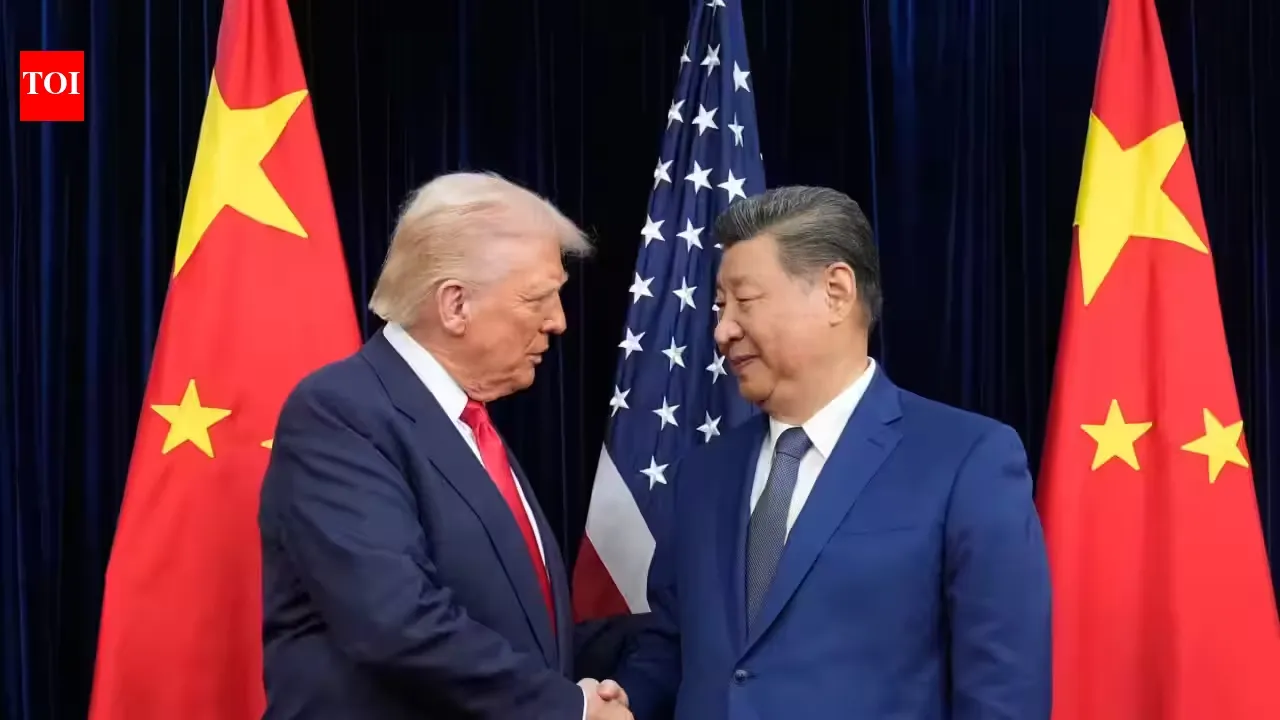

The AI issue at this summit is about far more than chatbots — it is about chips, security, energy and who sets the rules.
TIGI Technology Desk

However, any cooperation will be constrained by strategic competition. Both governments view leadership in AI as critical to economic growth and national security, making them reluctant to share sensitive information or accept limits on their own development.

image.png

Power and data centres

The AI conversation also extends to energy. Data centres that power AI systems require enormous amounts of electricity, prompting political debate in the US over who should pay for the additional infrastructure needed to support them, according to WJLA. The House recently passed legislation addressing potential electricity costs associated with large power users such as data centres.

As WJLA put it, the AI issue at the summit is about more than chatbots: it involves advanced chips, national security, AI safety, technological competition and the infrastructure needed to power the technology.

The Taiwan factor

Taiwan hovers over the technology discussion. The island is home to the world’s most advanced semiconductor manufacturing, making its security central to global chip supply chains. China regards Taiwan as part of its territory, while the US supports Taiwan’s ability to defend itself.

During Trump’s visit to China in May, Taiwan featured prominently, with Beijing describing it as the most important issue in China-US relations, The National reported. Markets have priced a very low probability of any shift in US policy, and any surprise in either direction would be significant for chip stocks and global supply chains.

What success would look like

Expectations for dramatic breakthroughs are low. Analysts broadly expect the summit to stabilise relations rather than resolve fundamental disputes. On technology, realistic outcomes might include commitments on rare-earth supply, clarifications on the scope of export controls, or agreement to continue talks on AI safety.

Even modest progress could matter for businesses. Companies dependent on rare earths need supply certainty, while chip makers and technology firms need clarity about which products can be sold to which markets. Uncertainty itself is costly, forcing companies to hold larger inventories, duplicate supply chains and delay investment decisions.

Implications for India

For India, the outcome matters. India is seeking to position itself as an alternative manufacturing base for electronics and semiconductors, and as a trusted partner in critical-mineral supply chains. Continued US-China tension over technology strengthens that strategic case, while any easing could reduce the urgency with which multinational companies diversify away from China.

India is also developing its own AI capabilities and semiconductor manufacturing ambitions, making the evolving rules of the US-China technology relationship directly relevant to its policy choices.

The bottom line

The White House summit will be judged by headlines on trade and diplomacy, but its most lasting consequences may lie in technology. Chips, rare earths and AI are the foundations of the next era of economic and military power. How the world’s two largest economies manage their competition in those areas — and whether they can find limited areas of cooperation — will shape markets, supply chains and geopolitics for years to come.

TagsTrump Xi SummitArtificial IntelligenceSemiconductorsExport ControlsRare EarthsCritical MineralsAI SafetyData CentresUS-China RelationsTechnology PolicyTaiwanGeopoliticsSupply Chains

Reader reviews

Sign in to rate and review this article.
Loading reviews…

