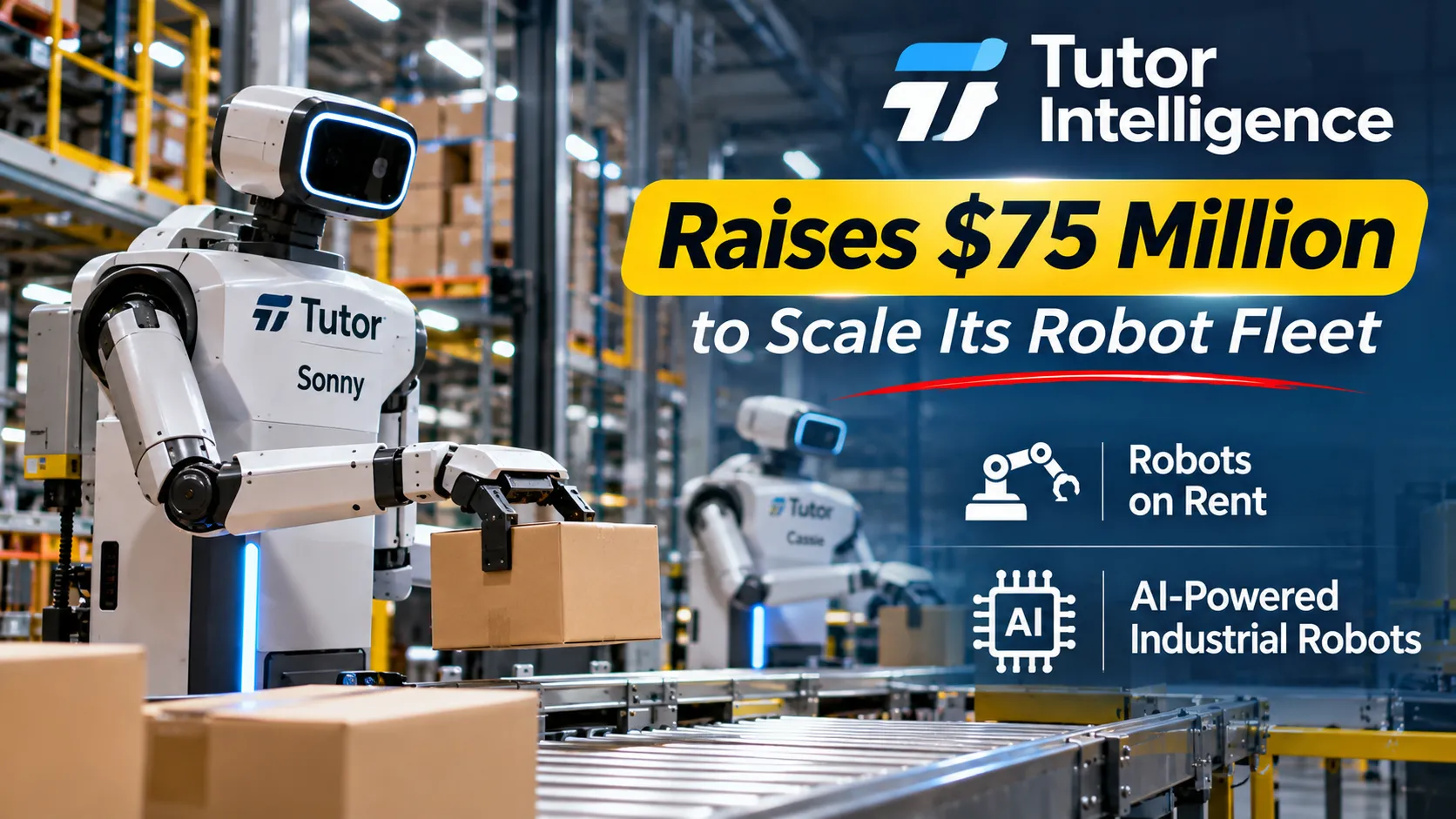
A Massachusetts startup that rents out robots the way staffing agencies supply temporary workers has raised $75 million to scale its fleet. The deal is a sign that investors increasingly see "physical AI", meaning artificial intelligence that acts in the real world, as the next major frontier after chatbots.
Tutor Intelligence said its Series B was led by Andreessen Horowitz (a16z), with participation from Union Square Ventures and Neo, which led its Series A and seed rounds respectively, Tech Funding News reported on November 3. The round brings Tutor's total funding to $117 million. The company did not disclose its valuation.
Robots on demand
Tutor's business model departs from the traditional way factories buy automation. Conventionally, a manufacturer that wants robots must buy expensive machines upfront, hire integrators to program them for specific tasks, and maintain them over years. The capital cost and complexity have kept automation out of reach for many small and mid-sized operations, and robots built for narrow, repetitive tasks often struggle when products or processes change.
Tutor instead rents robots by the hour or per pick, with no upfront purchase cost and no long-term contract. The company handles deployment, maintenance and software updates. For customers, robots become an operating expense that resembles paying for labour, rather than a capital investment. The company says the rental model allows it to recover the cost of building each robot over time without charging customers upfront.
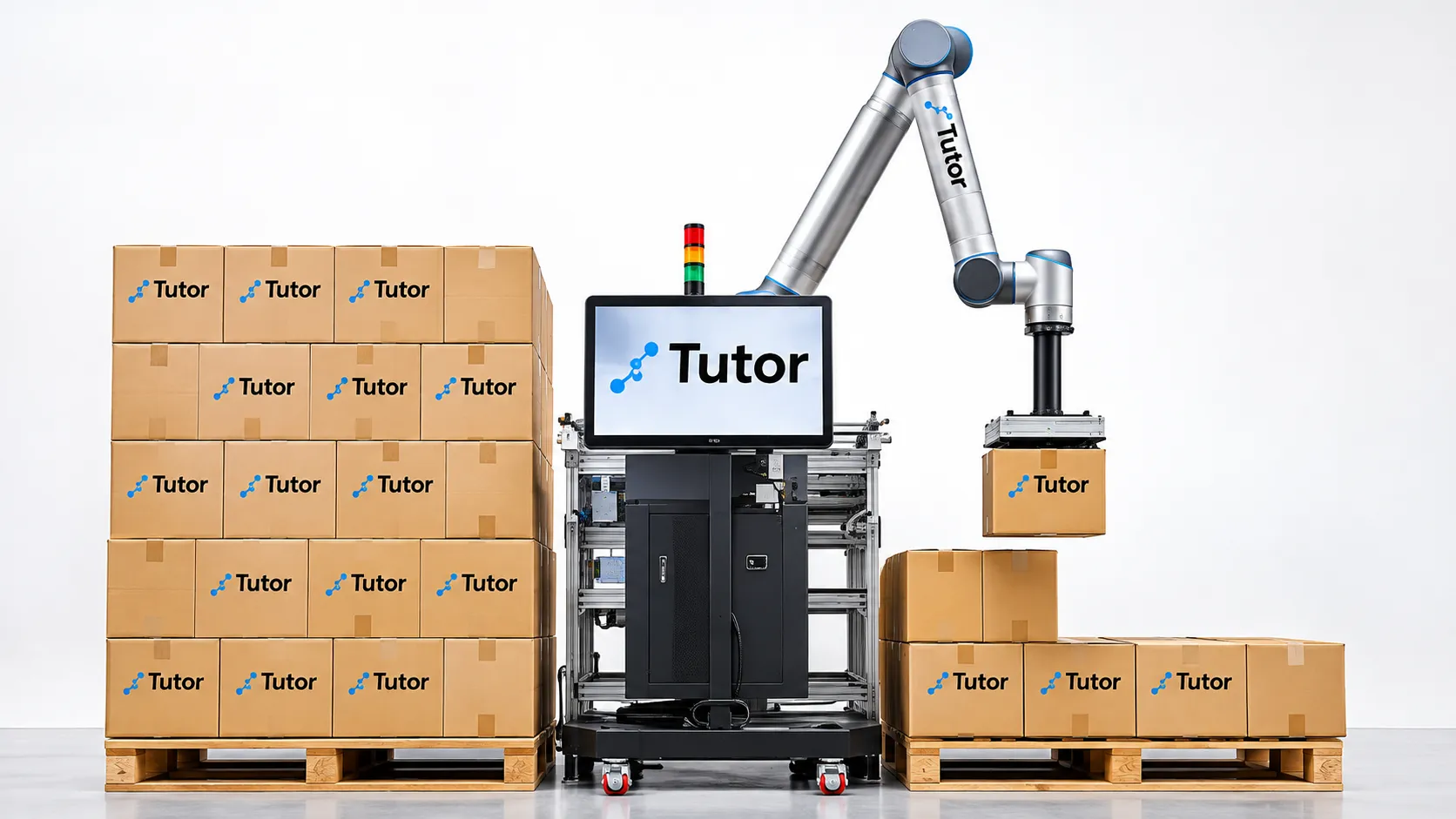
Its robots, named Sonny and Cassie, work in large US manufacturing and logistics networks, handling products ranging from breakfast cereals, snacks and candy to cosmetics, home goods and toys. Typical tasks include picking, packing and loading items on production and fulfilment lines, work that is repetitive, physically demanding and often hard to staff.
The 'robot data factory'
The more distinctive part of Tutor's approach is how its robots learn. The company was spun out of MIT's Computer Science and Artificial Intelligence Laboratory (CSAIL) in 2021 by co-founders Josh Gruenstein, who is chief executive, and Alon Kosowsky-Sachs, who met at MIT. From the start, the founders treated robot learning as a data problem.
The breakthroughs behind large language models came from training on vast amounts of text. Robotics lacks an equivalent dataset: there is no internet-scale archive of robots picking up objects, grasping irregular items or recovering from mistakes. The founders have argued that collecting robot data on the scale of vision or language datasets would cost millions, if not billions, of dollars.
Tutor's solution is to generate that data in the course of doing paid work. Remote human operators, whom the company calls "tutors", step in to guide robots when they encounter situations they cannot handle on their own. Every completed task, including those with human help, becomes training data for Tutor's robot foundation models. As the models improve, robots need less human help, which lowers costs and improves reliability across the fleet.
Raghu Raghuram, a general partner at a16z and former chief executive of VMware, said the company's insight is that deployment is not just the destination for robotics research. In Tutor's model, deployment is itself the engine of improvement.