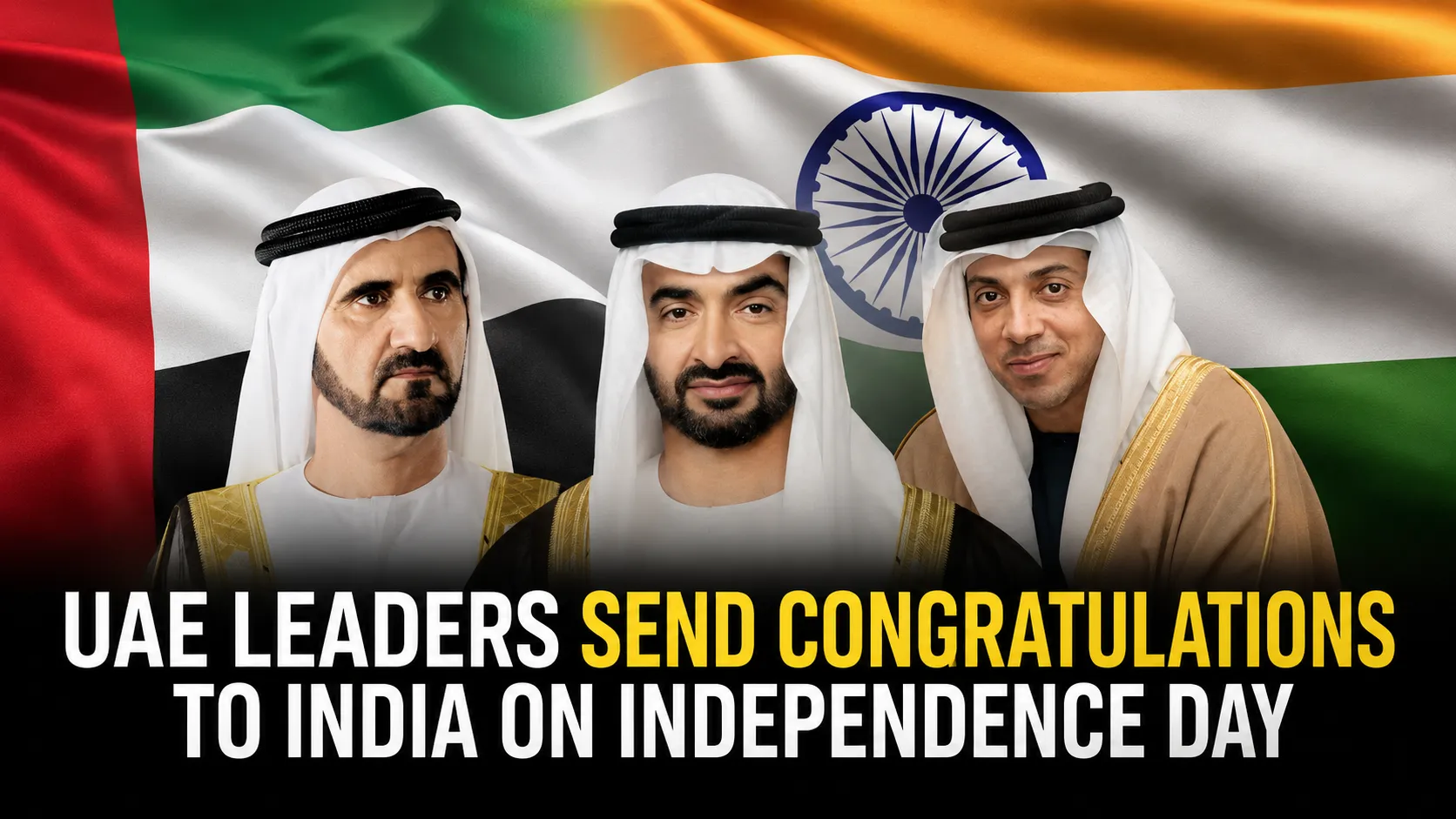
As India marked 80 years of independence on August 15, senior business leaders across the United Arab Emirates used the occasion to reflect on one of the world's fastest-growing bilateral economic relationships, pointing to the deepening ties between India and the UAE as a model of what sustained, trust-based collaboration between two nations can achieve. In a series of statements published to coincide with the milestone, prominent executives across banking, logistics, retail and manufacturing described a partnership that has moved well beyond traditional trade into talent mobility, cross-border investment and long-term residency for the millions of Indians who call the UAE home.
The commentary arrives against a backdrop of measurable economic momentum. Bilateral trade between India and the UAE has grown substantially since the Comprehensive Economic Partnership Agreement, or CEPA, entered into force in 2022, with total trade volumes surpassing the $100 billion mark for the first time last year. That growth has been mirrored by a steady expansion of the Indian business community within the UAE, which now represents the largest single international cohort operating out of major free zones including the Dubai Multi Commodities Centre, where Indian-registered companies have grown past the 4,000 mark and now account for more than 15 percent of the free zone's total membership base. For executives who spoke on the occasion, the significance of the milestone lay less in the trade figures themselves and more in what those figures represent structurally. Several described the relationship as having evolved from a transactional trading corridor, historically centred on commodities, gold and textiles, into a genuine two-way exchange of capital, skilled labour and entrepreneurial ambition. One senior banking executive noted that the India-UAE relationship today extends across talent, entrepreneurship, investment and long-term residency, predicting that the coming decade would establish it as one of the most consequential economic and people-to-people partnerships anywhere in the world. That sentiment was echoed across sectors. Leaders in logistics and maritime services pointed to the growing role Indian-origin executives now play in shaping UAE infrastructure strategy, from ports and customs operations to regional supply-chain management. In retail and consumer goods, executives highlighted the increasingly bidirectional nature of commercial exchange, with Gulf capital and market discipline increasingly flowing into Indian ventures even as Indian clinical, engineering and technology talent continues to strengthen Gulf-based institutions.
The framing offered by several executives centred on the shifting identity of the Indian professional in the UAE. Where earlier generations of Indian business leaders built their enterprises around imported goods, personal relationships and decades of accumulated trust within tightly-knit trading communities, today's cohort of entrepreneurs increasingly operates in a more digitally native, venture-driven mode, building companies designed for regional and global scale rather than purely bilateral trade. This generational shift, several leaders noted, presents its own structural challenge: ensuring that decades of hard-won commercial wisdom and relationship capital held by earlier generations of Indian business families in the UAE is not lost as younger, more digitally fluent entrepreneurs take the reins. Executives pointed to several concrete mechanisms already addressing that transition, including expanded access to business councils historically dominated by legacy trading families, and a growing number of structured mentorship programmes designed to connect veteran Indian business leaders in the UAE with younger technology entrepreneurs entering the market. The consensus among those who spoke was that legacy institutions within the Indian business community would need to become as adept at nurturing innovation as they have historically been at preserving trust and continuity across generations. The reflections also touched on the scale of continued Indian investment into the UAE economy specifically. Retail conglomerates with roots stretching back more than a century highlighted how their own growth trajectories have mirrored the region's broader retail evolution, moving from single storefronts trading imported goods into regional omnichannel operations spanning multiple Gulf markets and India itself. For these legacy business houses, the anniversary offered an opportunity to reflect on how entrepreneurial ambition on the Indian side and the UAE's broader vision for economic diversification have jointly created opportunities that neither market could have generated independently. Beyond commentary from established business leaders, the occasion also drew attention to the scale of the underlying demographic and economic relationship. Indian nationals represent the largest expatriate community in the UAE, a population whose economic contribution spans nearly every sector of the Emirati economy, from healthcare and engineering to finance, retail and hospitality. That demographic weight has increasingly translated into structural economic influence, with Indian-origin executives now holding senior leadership positions across major UAE-headquartered companies, banks and logistics operators.