Uber has agreed to buy ezCater, the largest US online marketplace for business catering, in an all-cash transaction valued at $2.3 billion, extending its food delivery business into the market for office meals, corporate events and large group orders.
The deal, announced on 6 October, adds to a run of acquisitions and partnerships aimed at turning Uber Eats into a broader food and commerce platform. Uber is separately in the process of acquiring Germany's Delivery Hero for about $15 billion, a bid backed by Delivery Hero's board in September.
The transaction is expected to close in the coming months, subject to regulatory approvals and customary closing conditions. ezCater's chief executive, Nihad Rahman, will remain in place.
What Uber is buying
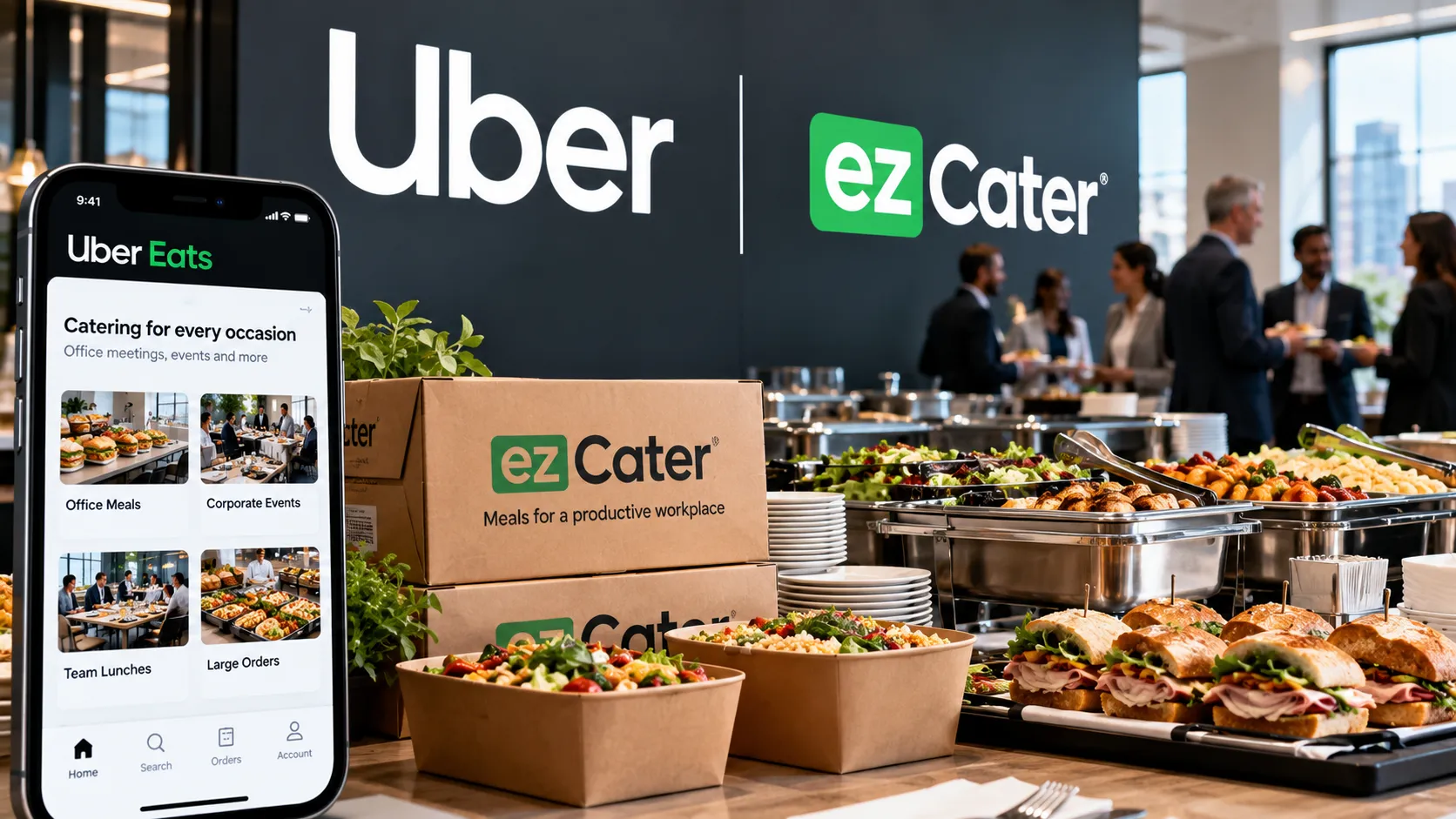
Billed as a leading US platform for catering and workplace meals, ezCater operates a marketplace that connects businesses needing food for meetings, events and employee programmes with more than 140,000 restaurants. It functions much like an online travel agency for catering, letting office managers compare menus, prices and reviews and place large orders in one place.
The business is substantial. ezCater generated more than $2.5 billion in gross bookings over the past 12 months, growing in the high teens year on year, according to Uber. Its average order value exceeds $400, many times higher than a typical consumer meal delivery, and it is profitable on a non-GAAP operating income basis. Uber expects the acquisition to be accretive to its margins.
That profile is attractive for a company that has spent years trying to make food delivery consistently profitable. Large orders spread delivery costs across many meals, business customers tend to order on predictable schedules, and corporate accounts can be sticky once integrated into expense and procurement systems.
Catering also brings a different kind of restaurant relationship. Independent restaurants and regional chains often earn a meaningful share of their revenue from large orders, which are planned in advance, allow better kitchen scheduling and carry higher ticket sizes. A marketplace that reliably feeds those orders can become an important partner, giving Uber a deeper relationship with merchants than consumer delivery alone, where restaurants frequently complain about commission levels.
The deal also represents a significant outcome for ezCater's founders and investors. Founded in 2007, the Boston-based company was bootstrapped for seven years before raising its first outside funding, a $4 million round, in 2014. It later raised substantially larger rounds from venture and growth investors as it scaled across the United States.
The strategic logic
Dara Khosrowshahi, Uber's chief executive, framed the deal as a way to help restaurants reach larger customers. "Catering is a big business, and can be a huge revenue stream for restaurants," he said. "With Uber's reach, we can bring that experience to millions more customers and help restaurants win more of these valuable orders."
For Uber, ezCater offers access to a customer segment its consumer app has struggled to reach systematically. Uber already runs Uber for Business, which manages employee rides and meal programmes for companies, and the combination could allow it to sell corporate customers a single package covering travel, meals and catering.
"We're thrilled to be joining forces with Uber," Rahman said, adding that ezCater's team was "energized to bring our catering and B2B expertise to Uber's global ecosystem." ezCater operates mainly in the United States, and Uber's international footprint gives it a potential route to expand catering into other markets where Uber Eats already operates.
Data is another prize. Corporate catering generates detailed information on where companies have staff in the office, how often they hold meetings and events, and how much they spend on food. Combined with Uber for Business's travel and meal data, that could help Uber design more tailored offers for corporate clients and give it a clearer view of workplace demand patterns across cities.
The deal also fits a pattern of Uber using acquisitions to buy scale in adjacent categories rather than building from scratch. It acquired Postmates in 2020 to strengthen its US delivery position and bought alcohol delivery platform Drizly in 2021, a business it later shut down in 2024. The mixed record of those deals is a reminder that integration, not just strategic fit, determines whether acquisitions succeed.
Consolidation in global food delivery
The acquisition comes amid a wave of consolidation in food delivery. DoorDash completed its acquisition of British rival Deliveroo in 2025, and Uber's pending purchase of Delivery Hero, if approved, would give it a much larger presence in Europe, the Middle East and Asia. Regulators in several jurisdictions are likely to scrutinise those larger combinations closely.
Catering is a niche within that landscape but a lucrative one. The return of workers to offices, at least part of the week, has revived demand for workplace meals, and companies have increasingly used food as an incentive to bring employees back. Platforms that can handle large orders reliably, with accurate delivery windows and set-up services, can command premium fees.
Uber is also investing in new delivery methods. It has partnered with and invested in drone delivery companies including Zipline and Flytrex, technologies that could eventually change the cost structure of delivery, though large catering orders are likely to remain a job for vehicles and people for the foreseeable future.
Paying in cash rather than shares also signals confidence in Uber's financial position. The company has turned consistently profitable and generates substantial free cash flow, giving it the capacity to fund acquisitions without diluting shareholders, though the combined cost of ezCater and Delivery Hero will draw attention to how it balances deal-making with share buybacks and debt.
For investors, the ezCater deal is relatively small compared with Uber's market value and its Delivery Hero bid, and its profitability makes it less risky than many earlier delivery acquisitions. The key questions will be how quickly Uber can integrate ezCater's restaurant network and corporate customers into its platform, and whether the combination can lift growth in a business already expanding at a high-teens rate.
For restaurants, the deal could widen the pool of business customers available through a single platform, but it also concentrates more of their orders in the hands of a dominant intermediary. How Uber prices commissions and fees on catering orders will shape whether restaurant partners see the acquisition as an opportunity or as one more source of margin pressure.