TechArtificial Intelligence5 MIN READ

UBS Warns 30% of America's Planned 2028 Data Centre Additions Are at Risk After Democrats' Midterm Sweep Puts AI Power Demand on Trial

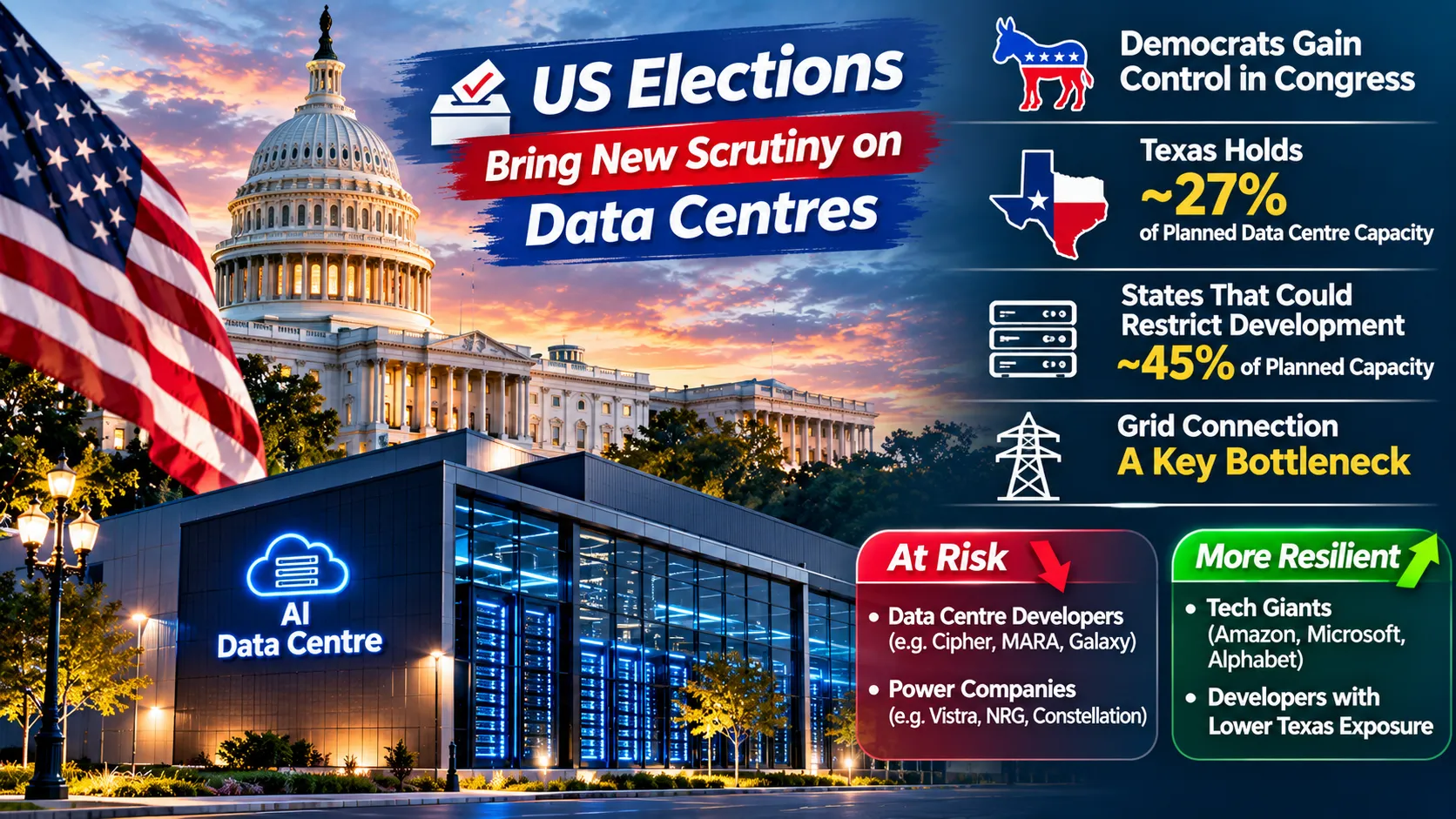
UBS estimates that about 30% of expected 2028 US data centre capacity additions, including 18 gigawatts in Texas, are at risk of delay after Democrats made sweeping gains in the November 3 midterm elections on promises to rein in data centres' strain on power grids and household bills. Goldman Sachs says states where Democrats could restrict development hold about 45% of planned US capacity.

By Aravind Kumar · Author6 November 2026New
UBS Warns 30% of America's Planned 2028 Data Centre Additions Are at Risk After Democrats' Midterm Sweep Puts AI Power Demand on Trial

The political backlash against data centres has moved from town hall meetings to the ballot box, and Wall Street is now trying to measure the cost.

UBS estimates that about 30% of the data centre capacity expected to be added in the United States in 2028 is now at risk of delay, following Democratic gains in the November 3 midterm elections, according to research cited by Finimize, Fox Business and a Reuters factbox published on November 5. Texas alone accounts for 18 gigawatts of the pipeline at risk.

"Data center pauses will slow the pace of buildout into 2028," UBS wrote, according to Fox Business.

The warning helped fuel one of the sharpest sell-offs in technology stocks in years. On Thursday, November 5, the Nasdaq Composite fell 5.5% and entered a correction, and the semiconductor index dropped more than 12%, as investors reassessed the outlook for AI infrastructure spending.

How the election changed the picture

Democrats won majorities in both chambers of Congress, according to Fox Business, and made gains at the state level, including in several states that host large shares of planned data centre capacity. Many Democratic candidates campaigned on concerns about data centres' electricity use, their effect on household power bills, their water consumption and their impact on local communities.

In Texas, the largest single market for planned data centres, Democrat Gina Hinojosa unseated Governor Greg Abbott after pledging to halt data centre approvals until the state legislature passes new protections, according to Tech Times. She takes office on January 19. Abbott had already paused grid connections and environmental permitting for data centres while regulators conducted an audit.

Wells Fargo estimates that 27% of planned US data centre capacity is in Texas, according to Tech Times. Goldman Sachs estimates that states where Democrats could restrict data centre development hold about 45% of planned capacity, with Texas accounting for about 25%, according to the Reuters factbox.

A survey by Data Center Watch found that 43% of 74 gubernatorial candidates across 36 states backed a moratorium or ban on data centres, according to Tech Times.

Grid connections are the bottleneck

UBS said that grid connection is often the key constraint for new data centres, according to Finimize. If regulators or utilities require developers to pay for grid upgrades, project costs rise and access to power can take longer.

The likely effect, UBS suggested, is that projects will be delayed, resized or phased in, rather than cancelled outright. The near-term signal to watch is whether spending shifts from 2027 into 2028.

Who wins and who loses

Analysts have begun to identify the companies most exposed to potential curbs. According to the Reuters factbox, Morgan Stanley named data centre developers with heavy Texas exposure, including Cipher Digital, MARA Holdings, Galaxy Digital and others, as potential losers. J.P. Morgan highlighted power companies such as Vistra, NRG Energy, Constellation Energy and Talen Energy, with exposure highest in Texas, Ohio, Pennsylvania and Georgia.

Baird said cloud companies such as Oracle and CoreWeave could be hit by construction delays or moratoriums, although it said the recent underperformance of so-called neoclouds had priced in "substantial, though clearly not all risk."

The likely winners are the largest technology companies. Amazon, Microsoft and Alphabet are expected to be resilient because of their diversified exposure and greater resources, and slower construction could raise the value of the capacity they already own or lease, according to the factbox. Developers with less Texas exposure and defensive utilities may also benefit.

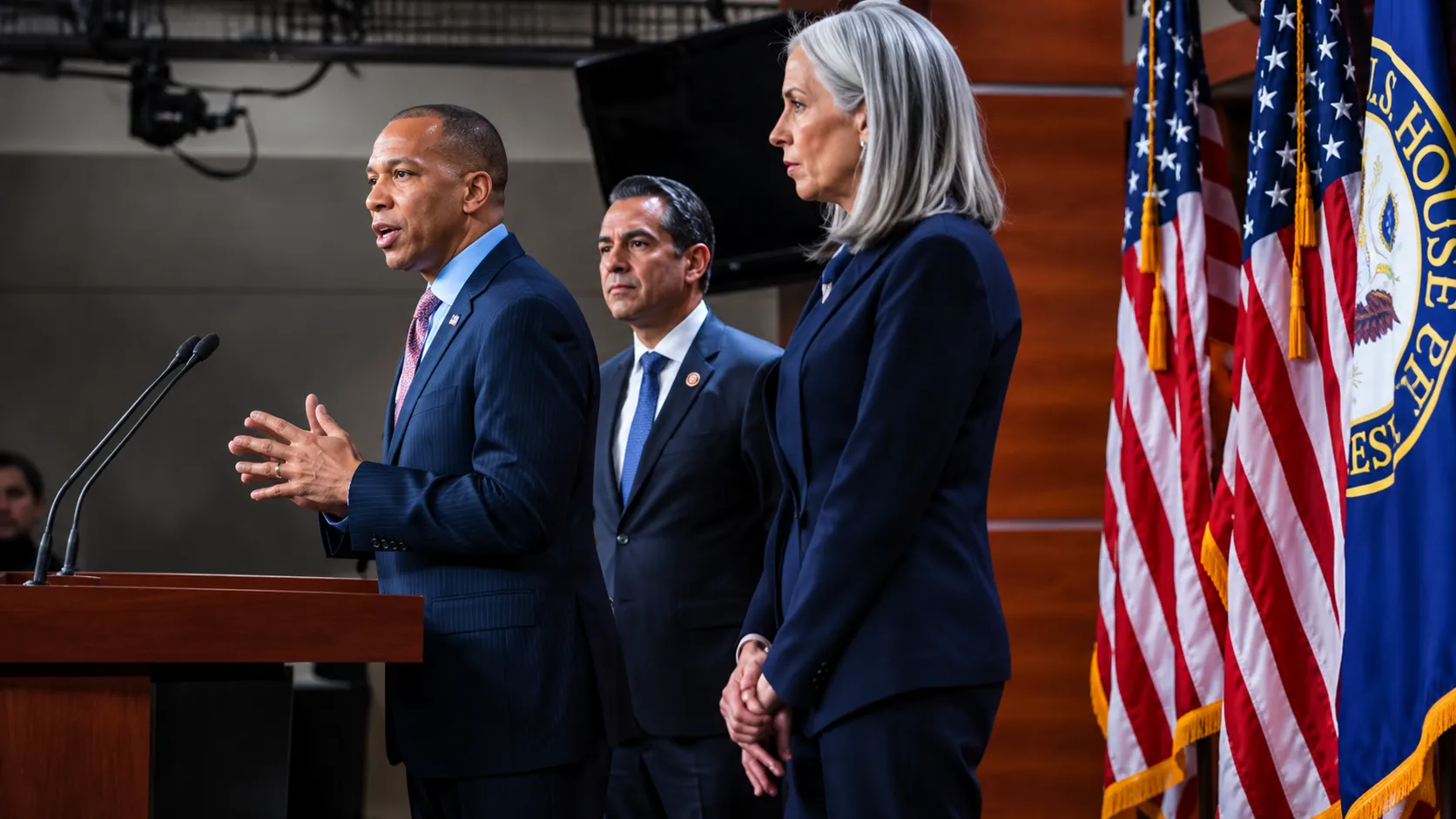
“Data center pauses will slow the pace of buildout into 2028.”
— UBS

Chipmakers could see growth slow into 2028 if construction pauses, UBS said, although it noted that semiconductor valuations are already near multi-year lows.

4f55a3b7-10ec-41f3-846a-5e6e5e52bb42.png

Not a ban, but higher hurdles

Many analysts believe the impact will be less severe than the market reaction suggests. J.P. Morgan noted that most states have not banned data centre development outright, and that "any new projects are expected to have higher hurdles for approval," which favours projects that have already been approved, according to the Reuters factbox.

Goldman Sachs expects Democrats in Texas, Georgia and Michigan to impose temporary pauses, but not long-lasting ones, according to Tech Times. At the federal level, a national moratorium bill introduced by Senator Bernie Sanders and Representative Alexandria Ocasio-Cortez has only 22 supporters in Congress and faces opposition from moderate Democrats and building trades unions. President Donald Trump, who has prioritised AI, would likely veto any such legislation.

State Street analysts Elliot Hentov and Christine Norton wrote that "congressional control alone would not be enough to curtail AI-related data center construction," and that "AI investment will likely continue to be robust in 2027," according to Fox Business.

Why data centres became a political issue

The rapid growth of AI has driven an unprecedented boom in data centre construction. Large AI data centres can consume as much electricity as a small city, and in some regions, utilities have warned that demand is outpacing their ability to add generation and transmission capacity. Residents in several states have complained about rising electricity bills, which some attribute partly to data centre demand.

Data centres have also faced opposition over water use for cooling, noise, land use and the tax incentives offered to attract them. These concerns have become potent political issues, cutting across party lines in some communities.

The sustainability dimension

The debate over data centres is also a debate about energy and climate. AI's electricity demand has led some utilities to delay the retirement of fossil fuel power plants and to build new gas-fired generation, raising concerns about carbon emissions. At the same time, technology companies have signed large contracts for renewable energy and nuclear power to supply their data centres.

Requiring developers to pay for grid upgrades, invest in clean energy or meet stricter environmental standards could make data centres more sustainable, but also more expensive and slower to build.

What it means for India

The turmoil in the United States could have implications for India's fast-growing data centre industry. Companies such as Bharti Airtel, which said on November 5 that it is working towards 1 GW of data centre capacity, Reliance, Adani and global cloud providers are investing heavily in Indian data centres. If US construction slows, some investment could be redirected to other markets, including India, although India faces its own challenges with power supply, water availability and land.

Indian IT stocks rallied on November 6 as investors bet that a slowdown in AI infrastructure spending could benefit Indian IT services companies.

What comes next

Investors will watch for concrete policy moves by incoming state governments, particularly in Texas, as well as commentary from technology companies on their spending plans. Utility regulators' decisions on grid connection costs will also be crucial. The coming months will show whether the political backlash against data centres marks a temporary speed bump or a lasting constraint on the AI boom.

Tagsdata centresAI infrastructureUBSmidterm electionsTexasGina Hinojosadata centre moratoriumpower gridelectricity pricesGoldman SachsMorgan StanleyJ.P. MorganhyperscalersOracleCoreWeaveVistrautilitiesBernie SandersIndia data centresinvestors

Reader reviews

Sign in to rate and review this article.
Loading reviews…

