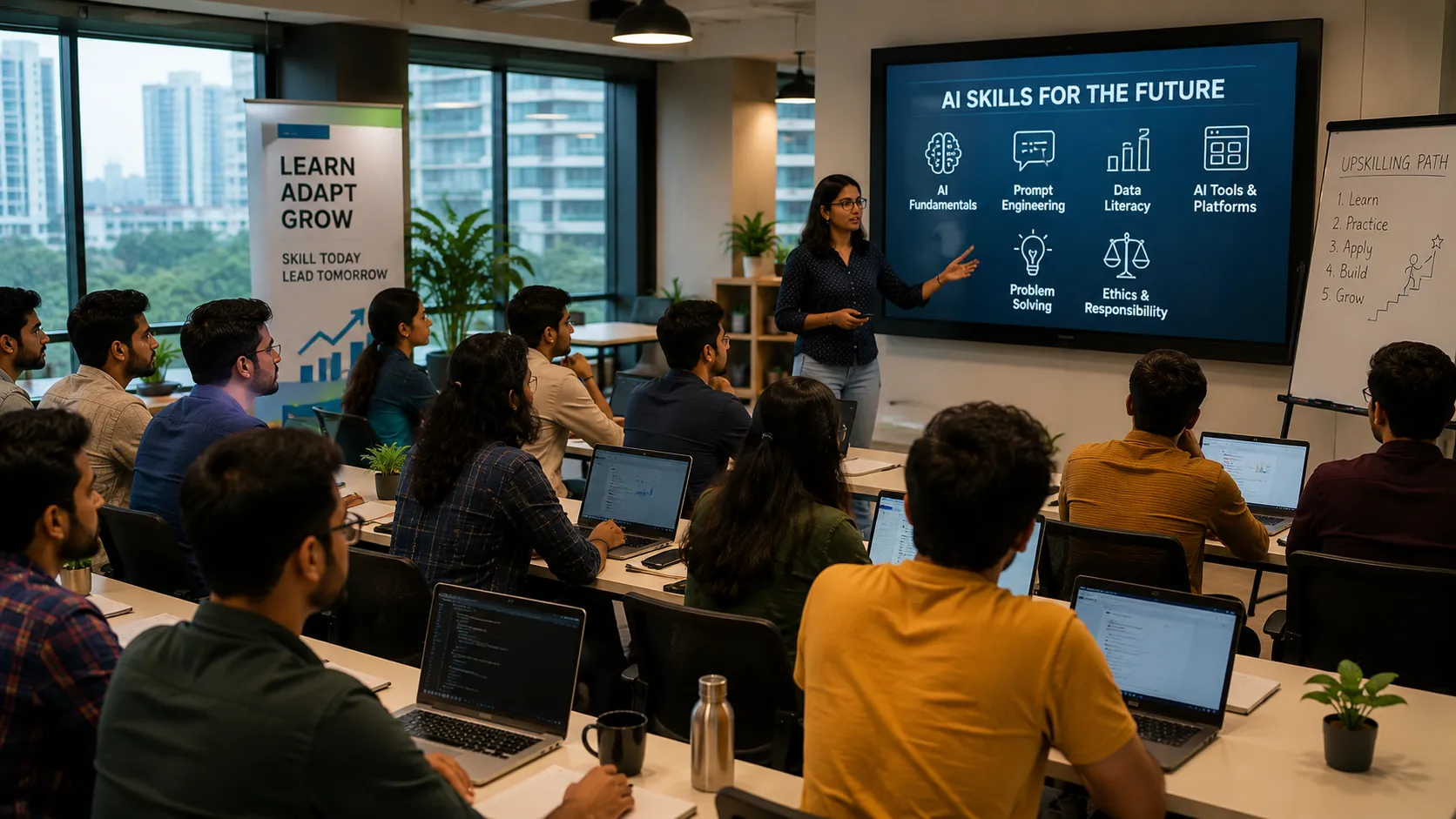
India's edtech sector, once the poster child of pandemic-era excess and the subsequent funding-winter reckoning that followed, has a new data point worth studying closely. upGrad, the Mumbai-headquartered online higher-education and upskilling platform founded by media entrepreneur Ronnie Screwvala, has crossed Rs 2,000 crore in gross revenue for the financial year 2025-26, according to figures reported this week, with EBITDA climbing an extraordinary eightfold over the previous year. For an industry that spent much of 2022 and 2023 defending its very business model, the numbers represent more than a single company's turnaround story — they are a signal that India's edtech reset has entered a genuinely constructive phase.
The scale of the EBITDA improvement is what distinguishes upGrad's FY26 performance from the incremental gains most of its peers have reported. An eightfold jump in operating profitability on a revenue base that itself grew meaningfully suggests the company has succeeded in doing what few edtech operators managed during the sector's boom years: converting enrolment growth into durable unit economics rather than simply buying market share through discounting and aggressive customer acquisition spend. Industry observers have long argued that Indian edtech's original sin was mistaking top-line velocity for a sustainable moat. upGrad's latest numbers suggest the company has spent the past two years quietly correcting that imbalance.
Much of the shift traces back to a strategic recalibration that began in earnest after the broader edtech correction of 2022, when marquee names across the sector faced layoffs, valuation markdowns and, in some cases, allegations of aggressive accounting. upGrad responded by consolidating its portfolio of acquisitions — which over the years has included international higher-education platforms, skilling academies and test-preparation businesses — and pushing harder into enterprise and higher-education partnerships that carry better retention and lower acquisition costs than pure consumer-facing courses. The company has also leaned into hybrid and offline-linked learning formats, addressing a criticism frequently levelled at pure online models: that completion rates and outcomes-linked value are difficult to sustain without some in-person anchor.
The FY26 results arrive at a moment when India's broader higher-education and skilling market is being reshaped by two parallel forces. On one side, enterprises are accelerating reskilling budgets in response to AI-driven changes to white-collar work, creating fresh demand for structured upskilling programmes rather than one-off certificate courses. On the other, traditional universities and global institutions are increasingly comfortable partnering with private platforms to deliver online degrees, a trend upGrad has been positioned to benefit from given its long-standing relationships with international academic partners. Together, these tailwinds have allowed the company to grow revenue without resorting to the subsidised pricing that characterised the sector's earlier, less disciplined phase.
For investors and the broader Indian startup ecosystem, upGrad's trajectory offers a template that may prove more instructive than any single funding round. As India's edtech companies weigh paths to public markets — with several peers already listed or preparing IPO filings — profitability metrics of this kind are likely to become the primary yardstick by which investors separate durable businesses from those that scaled on capital rather than demand. If upGrad can sustain this EBITDA trajectory through FY27, it will strengthen the case that India's edtech sector, far from being a cautionary tale, may be entering its most credible growth phase yet — one built on retained learners and repeatable revenue rather than headline valuations.
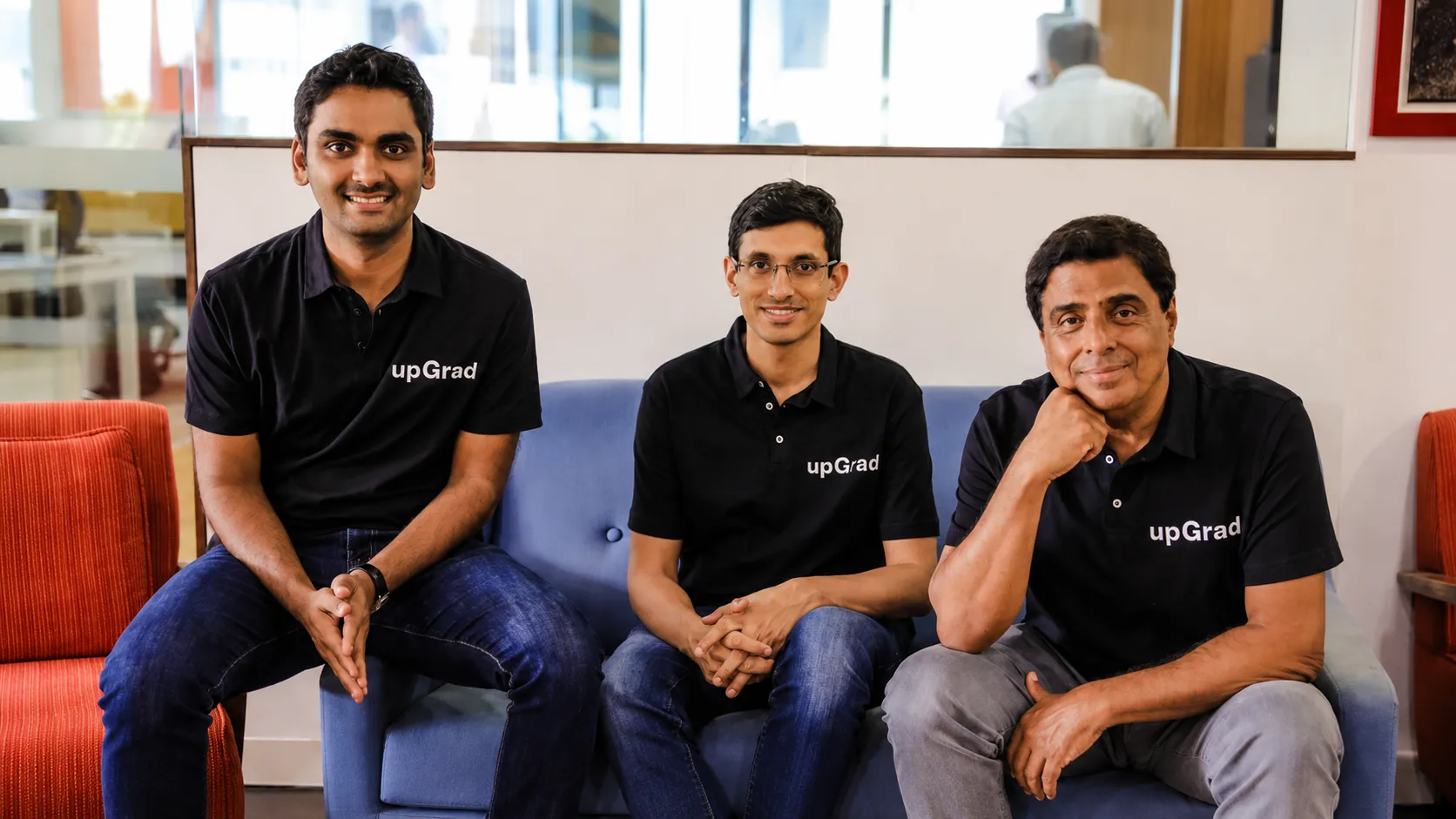
The company's founder, Ronnie Screwvala, has repeatedly framed upGrad's ambition in terms that go beyond conventional edtech metrics, positioning the platform as infrastructure for India's long-term workforce transition rather than merely a marketplace for courses. That framing matters commercially as much as narratively: enterprise and institutional partnerships, which typically carry multi-year contract structures and considerably lower churn than individual consumer subscriptions, have become an increasingly central pillar of upGrad's revenue mix. As Indian and multinational corporations expand structured reskilling budgets to address AI-driven shifts in job requirements, platforms with established enterprise learning-and-development relationships are positioned to capture disproportionate value relative to consumer-only competitors still dependent on paid digital marketing for growth.
The broader competitive landscape also offers useful context for interpreting upGrad's results. India's edtech sector emerged from its 2022–2023 correction considerably more consolidated, with a handful of well-capitalised survivors — upGrad among them — absorbing market share from smaller players that either shut down or were acquired at distressed valuations. That consolidation has, somewhat counterintuitively, improved the unit economics available to the remaining large platforms, since customer acquisition costs across paid digital channels have moderated as the total number of well-funded competitors bidding for the same keywords and ad inventory has shrunk considerably from the sector's 2021 peak.
Analysts covering the sector will also be watching how upGrad allocates the operating leverage generated by its improved EBITDA performance. Historically, Indian edtech companies flush with improving margins have faced a strategic choice between reinvesting aggressively into new geographies and course categories, or banking profitability to strengthen their positioning ahead of a prospective public listing. Given upGrad's history of both organic expansion and acquisitive growth — the company has absorbed several smaller learning platforms over the years — market watchers expect a continued blend of the two, with particular attention likely directed toward international markets where Indian edtech brands have found receptive audiences among diaspora learners and cost-conscious international students seeking credentialed alternatives to expensive Western degree programmes.
The FY26 numbers will also feed into a broader conversation among Indian policymakers and industry bodies about the role private edtech platforms should play alongside traditional public higher-education institutions in closing the country's persistent skills gap. With India's workforce entering the labour market at a scale that outpaces the capacity of traditional universities and vocational training infrastructure, platforms capable of delivering credentialed, outcomes-linked learning at scale — and demonstrating they can do so profitably — are likely to feature more prominently in both private investment theses and public policy discussions around skilling infrastructure through the remainder of the decade.
For the global Indian diaspora, upGrad's turnaround carries an additional layer of relevance. The company has steadily built out international degree partnerships and diaspora-focused course offerings aimed at professionals of Indian origin seeking recognised credentials without relocating for full-time study, a segment that has grown increasingly significant to its overall business mix. As remote and hybrid work arrangements continue to normalise credential-seeking behaviour among globally dispersed Indian professionals, upGrad's improving financial profile strengthens its capacity to sustain and expand these international offerings, reinforcing its position as one of the more visible Indian-origin education brands operating on a genuinely global stage.