NEW DELHI, Oct 8 — India's plan to start charging merchants a fee on larger Unified Payments Interface (UPI) transactions may be pushed back by more than two months, as the government weighs objections from retailers and considers a much wider exemption for small businesses.
The merchant discount rate (MDR), which was due to come into effect on October 15, could now be deferred to January 1, 2027, according to reports on Thursday. Officials are also considering exempting merchants with an annual turnover of up to ₹40 lakh, a significant expansion of the earlier carve-out, which covered merchants receiving up to ₹1 lakh a month through UPI.
Shares in listed payments companies, including Pine Labs, Paytm and MobiKwik, slipped on the reports, as investors recalibrated expectations for a revenue stream that the industry has lobbied for since UPI was made free for merchants.
Key facts at a glance
• Proposed MDR: 0.40% on P2M UPI payments above ₹2,000, capped at ₹300
• Bills, utilities, education and fuel: flat ₹5 per transaction
• Consumers: exempt
• Original start date: October 15, 2026; possible new date: January 1, 2027
• Exemption under consideration: merchants with turnover up to ₹40 lakh (earlier: up to ₹1 lakh a month in UPI receipts)
• Daily UPI limit: may rise from ₹1 lakh to ₹2 lakh
• September 2026 UPI: 24.07 billion transactions worth ₹29.37 lakh crore
What the fee would look like
Under the framework currently on the table, a merchant discount rate of 0.40% would apply to person-to-merchant (P2M) UPI payments above ₹2,000, capped at ₹300 per transaction. Payments for bills, utilities, education and fuel would attract a flat fee of ₹5. Consumers would not pay anything; the charge falls on the merchant receiving the payment.
The largest share of the fee — 0.28 percentage points — would go to the customer's bank as interchange, with the remainder shared among the payment service providers and the apps that process the transaction. That design is intended to compensate the banks and technology firms that carry the cost of running and securing the network, which processes tens of billions of transactions every month.
A system that outgrew its funding model
UPI has become the backbone of Indian retail payments. In September it processed 24.07 billion transactions worth ₹29.37 lakh crore, with volumes up 22.6% year on year and value up 18%. It is now used by street vendors and luxury retailers alike, and it has become a central exhibit in India's pitch to the world on digital public infrastructure.
That growth, however, has been built on a zero-MDR policy introduced to accelerate adoption. Banks and payment apps have long argued that the economics are unsustainable: the cost of servers, fraud monitoring, customer support and compliance rises with volume, while direct revenue from merchant payments is close to nil. Government subsidies have partly offset the cost, but industry participants say the support has not kept pace with the network's expansion.
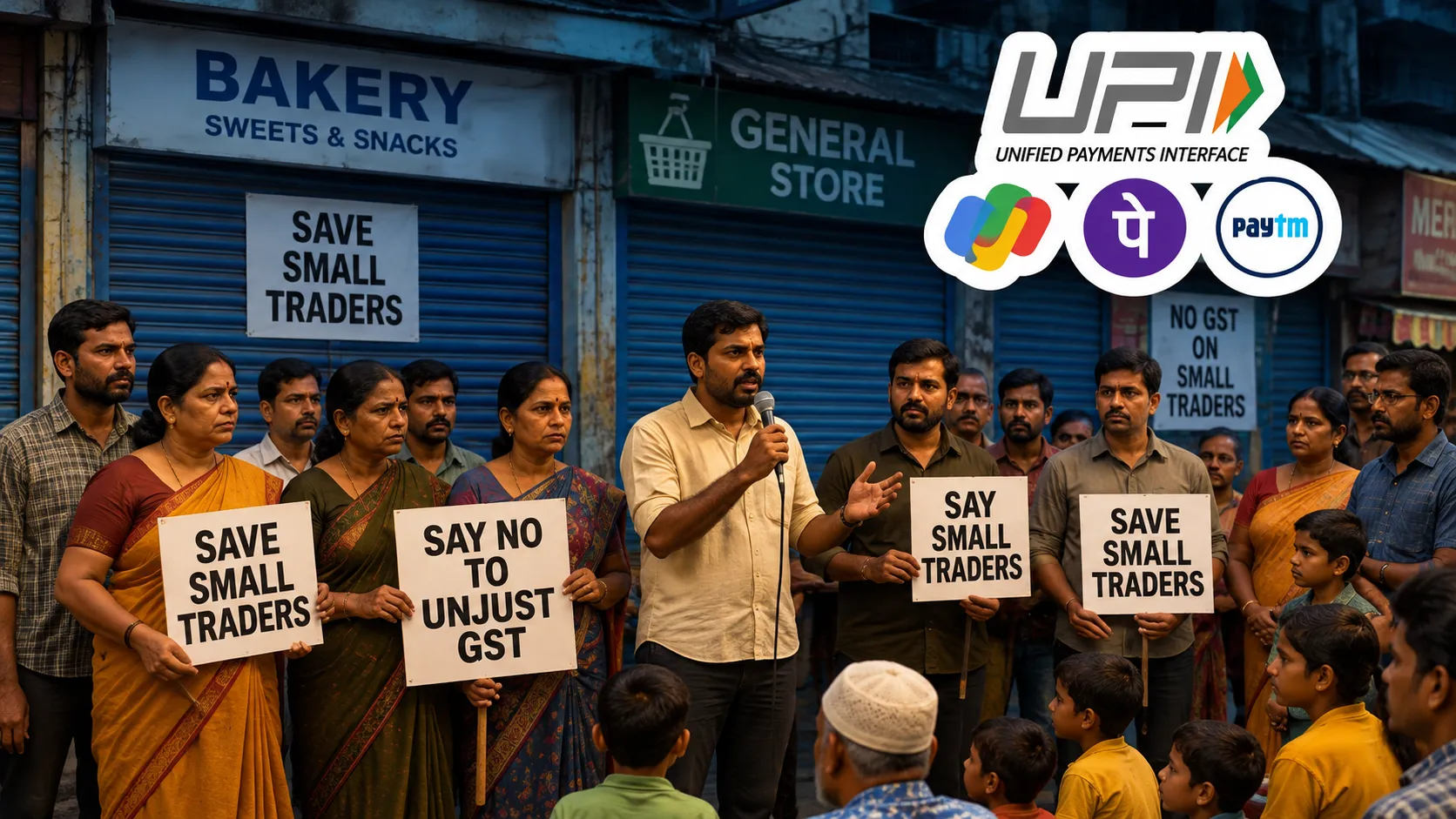
The pushback from traders
The proposed fee has triggered a strong reaction from retail trade bodies. The All India Mobile Retailers Association (AIMRA) and the All India Consumer Products Distributors Federation (AICPDF) had called for a "No UPI Day" protest on October 2, but called it off after meeting Finance Minister Nirmala Sitharaman on September 30.
AICPDF has estimated that the MDR could cost the trade between ₹7,000 crore and ₹9,000 crore a year. Distributors and retailers in low-margin categories such as mobile handsets and fast-moving consumer goods argue that a 0.40% charge on high-value transactions could wipe out a meaningful part of their profit and push some businesses back towards cash.
The government has countered that the impact is narrower than critics suggest, saying that 96% of merchant transactions would remain unaffected because they fall below the ₹2,000 threshold or come from exempt merchants.
What is being discussed
The NPCI-led UPI and Services Steering Committee has met to review the rollout. Alongside the possible deferral and the ₹40 lakh turnover exemption, the committee is also understood to be considering raising the daily UPI transaction limit from ₹1 lakh to ₹2 lakh, which would make the network more useful for larger business payments.
A turnover-based exemption would cover a far larger pool of small shops and kirana stores than the earlier monthly-receipt threshold, and could defuse much of the political opposition. But it would also shrink the revenue base for banks and payment firms, and it introduces the practical question of how turnover would be verified at the point of payment.
A question of design
How the fee is designed may matter as much as its timing. A threshold based on transaction size is simple to apply at the moment of payment, because the network can see the amount. A threshold based on annual turnover is fairer to small traders but harder to administer, because payment systems do not automatically know a merchant's total sales. Officials will need to decide whether merchants self-declare, whether data from GST filings or bank records is used, and how often eligibility is checked. Those choices will determine how smoothly the fee works in practice, and how much room there is for disputes between merchants, banks and payment apps.
What it means for fintech
For listed payments companies, the fee represents one of the few large, recurring revenue opportunities in a market where competition has compressed margins. Merchant acquirers and point-of-sale providers such as Pine Labs stand to benefit from any monetisation of UPI, as do wallet-and-payments platforms such as Paytm and MobiKwik. A delay pushes those gains into the next calendar year; a broad exemption could reduce them permanently.
For policymakers, the challenge is to fund the system without undermining the trust and ubiquity that made it a global case study. Countries from Southeast Asia to the Middle East and Europe have linked or are exploring links with UPI, and India has promoted it as a model for low-cost, interoperable payments.
For merchants and consumers, little changes for now. If the deferral is confirmed, the existing zero-fee regime will remain in place through the festive season, the busiest period of the year for Indian retail. What follows in January — and how wide the exemption net is cast — will determine whether UPI's next chapter is defined by sustainable economics or by a renewed fight over who pays for India's digital payments success.