India's homegrown digital payments system has set another milestone. During the festive month of October, the Unified Payments Interface handled more money in a single day, on average, than ever before, underlining how deeply digital payments have become woven into everyday life.
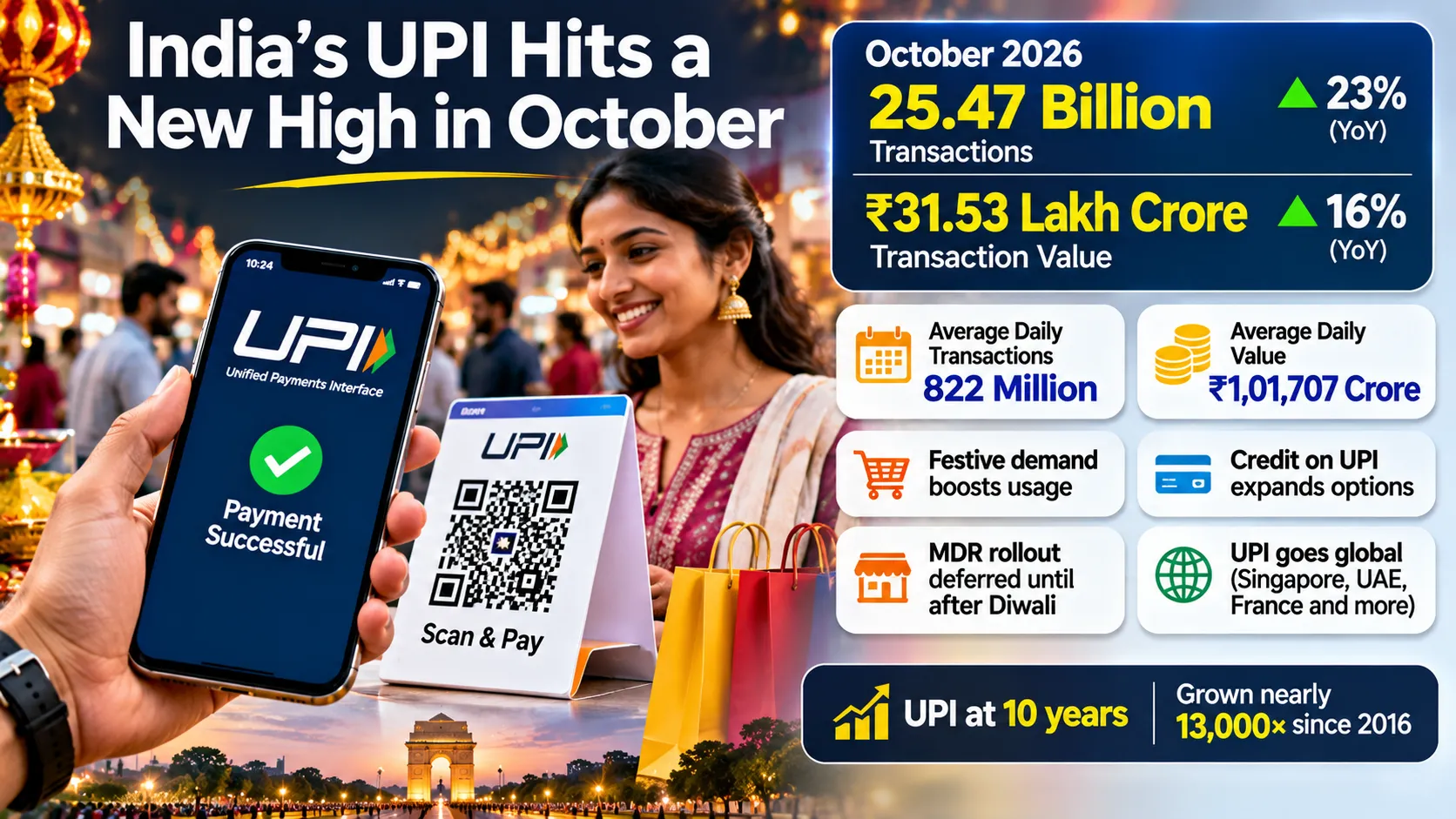
UPI processed a record 25.47 billion transactions in October 2026, up 23% from a year earlier, according to data from the National Payments Corporation of India (NPCI) released on Sunday, November 1, and reported by the Free Press Journal. The value of transactions rose 16% to ₹31.53 lakh crore.
Average daily transactions reached about 822 million, and the average daily value was about ₹1,01,707 crore, the first time UPI has averaged more than ₹1 lakh crore a day over a month.
Month-on-month growth
October's volume was about 5.8% higher than September's 24.07 billion transactions, and the value was about 7.4% higher than September's ₹29.37 lakh crore. September itself had set records, with daily transactions crossing 800 million for the first time.
The faster growth in value than in volume during October suggests that the average transaction size rose, as shoppers made larger purchases during the festive season, including electronics, clothing, jewellery and travel.
The festive surge
October included the Navratri and Dussehra festivals and the build-up to Diwali, the peak shopping period of the year. Consumers used UPI to pay for purchases in shops, online and on quick commerce apps, as well as to send money to family and friends for festivals.
Data released on the same day showed record car sales and second-highest-ever GST collections, painting a consistent picture of strong festive consumption across the economy.
How UPI became dominant
UPI was launched in 2016 by NPCI, an organisation promoted by the Reserve Bank of India and Indian banks. It allows users to send and receive money instantly between bank accounts using a smartphone, a virtual payment address or a QR code, 24 hours a day.
Its growth accelerated after the demonetisation of high-value banknotes in November 2016 and again during the Covid-19 pandemic, when people sought contactless payments. Today, UPI accounts for the vast majority of digital payment transactions in India by volume, and QR codes for UPI payments are ubiquitous, from street vendors to large retail chains.
UPI marked its tenth anniversary in 2026, having grown nearly 13,000-fold in transaction volume, according to YourStory.
The merchant discount rate question
A key policy issue for UPI is the merchant discount rate (MDR), the fee charged to merchants for accepting payments. UPI payments have largely been free for both consumers and merchants, which has driven adoption but has left payment companies and banks without a direct source of revenue from most UPI transactions.
NPCI had planned to introduce MDR on select merchant transactions from October 15 but deferred the rollout until after Diwali, according to the Free Press Journal. Under the proposed framework, select categories including railways, telecom, insurance and fuel would pay a flat ₹5 on transactions above ₹2,000, while payments to large merchants above that threshold would incur a fee of 0.4%, capped at ₹300 per transaction. NPCI estimates that only about 4% of merchant transactions would be covered, with more than 95% of person-to-merchant transactions remaining exempt.
The introduction of fees, however limited, is significant because it would provide payment companies and banks with revenue to invest in infrastructure and security.
Market concentration
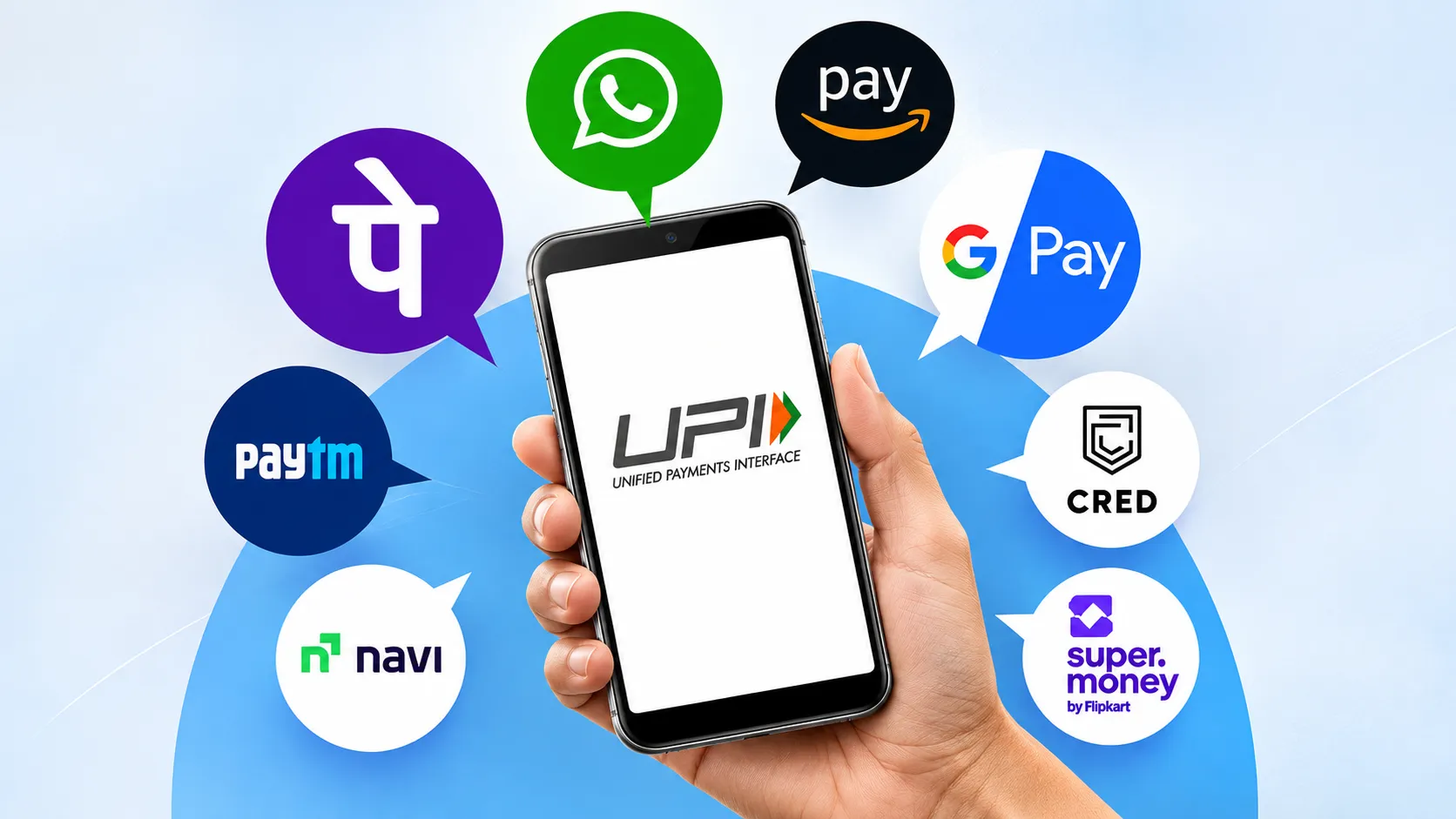
UPI is dominated by a few apps. PhonePe, owned by Walmart, and Google Pay together account for the large majority of transactions, with Paytm and others holding smaller shares. Regulators have discussed capping the market share of any single app to reduce concentration risk, but the implementation of such a cap has been repeatedly deferred.
High concentration raises concerns about the resilience of the system if a dominant app experiences technical problems, and about competition in the payments market.
IMPS and other channels
The Immediate Payment Service (IMPS), an older instant payment system, processed transactions worth ₹7.63 lakh crore in October, up 19% from a year earlier, with an average of 12.10 million transactions a day, according to the report. IMPS is often used for larger transfers, while UPI dominates smaller everyday payments.
UPI goes global
India has been promoting UPI internationally, signing agreements with countries including Singapore, the United Arab Emirates, France, Sri Lanka, Mauritius, Nepal and Bhutan to allow UPI payments or link payment systems. Indian travellers can use UPI in a growing number of countries, and the system's success has drawn interest from other developing countries seeking to build digital payment infrastructure.
For the Indian diaspora, cross-border UPI links could make it cheaper and faster to send money home, potentially reducing reliance on traditional remittance channels.
Security and fraud
The rapid growth of digital payments has been accompanied by a rise in fraud, including phishing, fake payment requests and scams. Regulators, banks and NPCI have introduced measures to improve security, such as transaction limits, alerts and fraud detection systems. Consumer awareness remains a key challenge, particularly among first-time digital payment users.
What it means for fintech
For fintech companies, UPI's scale creates both opportunities and challenges. The massive user base allows companies to offer additional services, such as credit on UPI, insurance and investments, but the absence of fees on most transactions makes it difficult to earn revenue from payments alone. Companies such as Pine Labs and Paytm have reported improved profitability by focusing on merchant services, lending and other revenue sources.
Credit on UPI
One of the most significant recent developments is the integration of credit with UPI. Customers can now link RuPay credit cards and pre-approved credit lines from banks to UPI, allowing them to make credit payments by scanning QR codes. This has the potential to expand access to credit for millions of Indians and to create new revenue streams for banks and payment companies, since credit transactions can carry fees that are not charged on regular UPI payments.
What comes next
November's data, covering the peak Diwali period, is likely to set further records. The timing and details of the MDR rollout, the implementation of market share caps and the expansion of UPI abroad will shape the system's future. With daily transactions now regularly exceeding 800 million and daily value topping ₹1 lakh crore, UPI has become one of the world's largest real-time payment systems, and a symbol of India's digital public infrastructure.