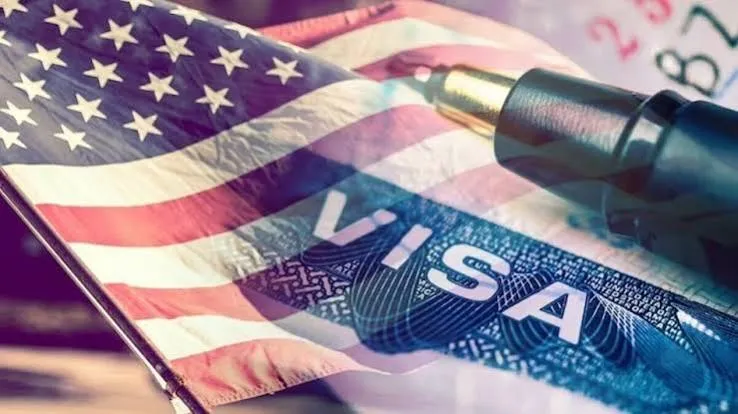
The United States has scrapped one of the foundational planks of its international student visa system, ending the long-standing "Duration of Status" (D/S) framework that allowed F, J and M visa holders to remain in the country for as long as they stayed enrolled in an approved academic programme. In its place, the Department of Homeland Security has introduced fixed periods of admission — a structural shift that takes effect September 15, 2026, and one that immigration attorneys and university international offices say will fundamentally change how foreign students, including the hundreds of thousands from India who make up the largest single nationality group in US higher education, plan their academic and post-graduate careers.
Under the D/S system that has governed international education in America for decades, an F-1 student's authorized stay was tied loosely to the length of their academic programme plus any authorized practical training, with US Citizenship and Immigration Services and consular officers rarely specifying an exact expiry date on the visa itself. The new rule removes that flexibility. According to the Federal Register notice issued by DHS, F, J and M nonimmigrants will now be admitted for a specific, fixed period tied to their program end date, and anyone wishing to remain beyond that period will need to formally apply for an extension of stay, or leave the country and re-enter, rather than simply continuing their studies uninterrupted.
The practical implications for Indian students are significant. India has for several years been either the largest or second-largest source of international students in the United States, with enrolment figures regularly running into the hundreds of thousands across undergraduate, graduate and doctoral programmes, concentrated heavily in STEM fields at research universities. Under the new regime, a delay in thesis submission, a change of major, a leave of absence for medical or family reasons, or even administrative processing delays at a university's international student office could now translate into a lapse of status if an extension application is not filed in time — a risk that simply did not exist in the same form under D/S.
Education consultants and immigration lawyers quoted in Indian media in the weeks following the announcement have urged current and prospective students to build far more conservative timelines into their study plans, treating the fixed admission date on their I-94 record as a hard deadline rather than an approximate marker. Universities, for their part, have begun updating advisories to international students, flagging the need to monitor Student and Exchange Visitor Information System (SEVIS) records closely and to file extension paperwork well ahead of expiry rather than at the last moment, given the potential for processing backlogs once the new system takes full effect this autumn.
New Delhi has registered its concern with Washington over the change. Ministry of External Affairs spokesperson Randhir Jaiswal, addressing reporters, confirmed that India is in contact with US authorities on the issue, saying only that "we've seen some reports regarding the visa rules," while officials familiar with the discussions indicate that the government's approach mirrors the position it has taken on previous rounds of US immigration tightening: raising the matter through established diplomatic channels while stopping short of public confrontation, given the scale of the two countries' educational and technology partnership.
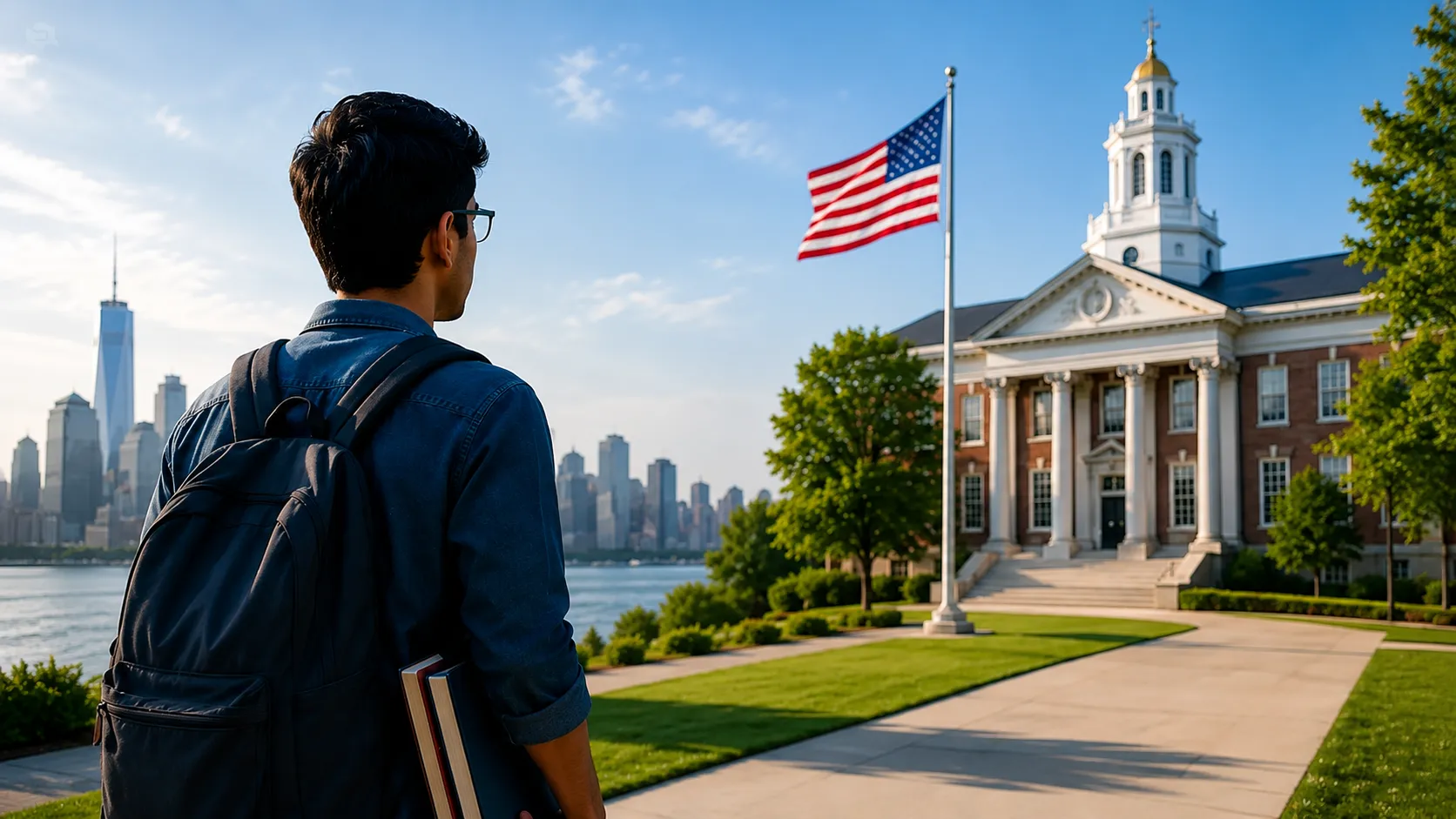
That partnership is not incidental to the policy debate. Successive Indian governments have pointed to the flow of Indian graduates through American universities — many of whom go on to work in Silicon Valley, in US healthcare systems, or in research institutions — as a pillar of the broader India-US relationship, one that predates and outlasts individual administrations in Washington. Indian industry bodies have separately noted that the students most exposed to the new fixed-period system are precisely those in multi-year STEM doctoral programmes, where research timelines routinely shift due to factors outside a student's control, from lab equipment delays to changes in a thesis advisor's own funding situation.
For now, the message from universities, consultants and the Indian diplomatic mission alike is one of preparation rather than alarm. The change does not reduce the number of visas available to Indian applicants, nor does it alter the substantive eligibility criteria for F, J or M status; it changes the administrative mechanics of how long a student may remain and what evidence they must proactively supply to extend that stay. Compliance, US-based advisers stress, is now squarely the applicant's responsibility rather than something that happens by default through continued enrolment.
The shift also arrives at a moment when Indian applicants are already weighing the US against a widening set of alternative destinations. Australia has tightened its own financial-proof requirements under a new "Genuine Student" rule, Canada has ended its fast-track Student Direct Stream and capped study permits outright, and the UK has raised visa fees, lifted English-language thresholds and signalled plans to trim post-study work rights and dependant allowances. Germany, by contrast, has kept its blocked-account requirement comparatively stable while continuing to offer a post-study Opportunity Card, and New Zealand has simplified its process even as it raises the financial bar. Against that backdrop, US education consultants argue that fixed admission periods, while more administratively demanding, do not by themselves make America markedly less attractive than its competitors — most of whom have tightened in parallel over the same eighteen-month period — but they do remove whatever comparative advantage US student visas previously held in procedural flexibility.
Whether the change measurably affects India's outbound student numbers for the 2026-27 academic cycle remains to be seen, and will likely depend on how efficiently US Citizenship and Immigration Services processes the anticipated wave of extension applications once the rule takes hold. What is clear is that the calculus facing a prospective Indian applicant to an American graduate programme has become more procedurally demanding than at any point in recent memory, adding one more variable — alongside financing, standardized testing and visa interview scheduling — to an already complex decision. University international offices, several of which have begun running dedicated webinars for incoming Indian cohorts ahead of the September 15 effective date, say the single most consistent piece of advice they are giving is to file any extension of stay well before the fixed admission date lapses, rather than assuming the kind of automatic continuation that defined the system for decades.