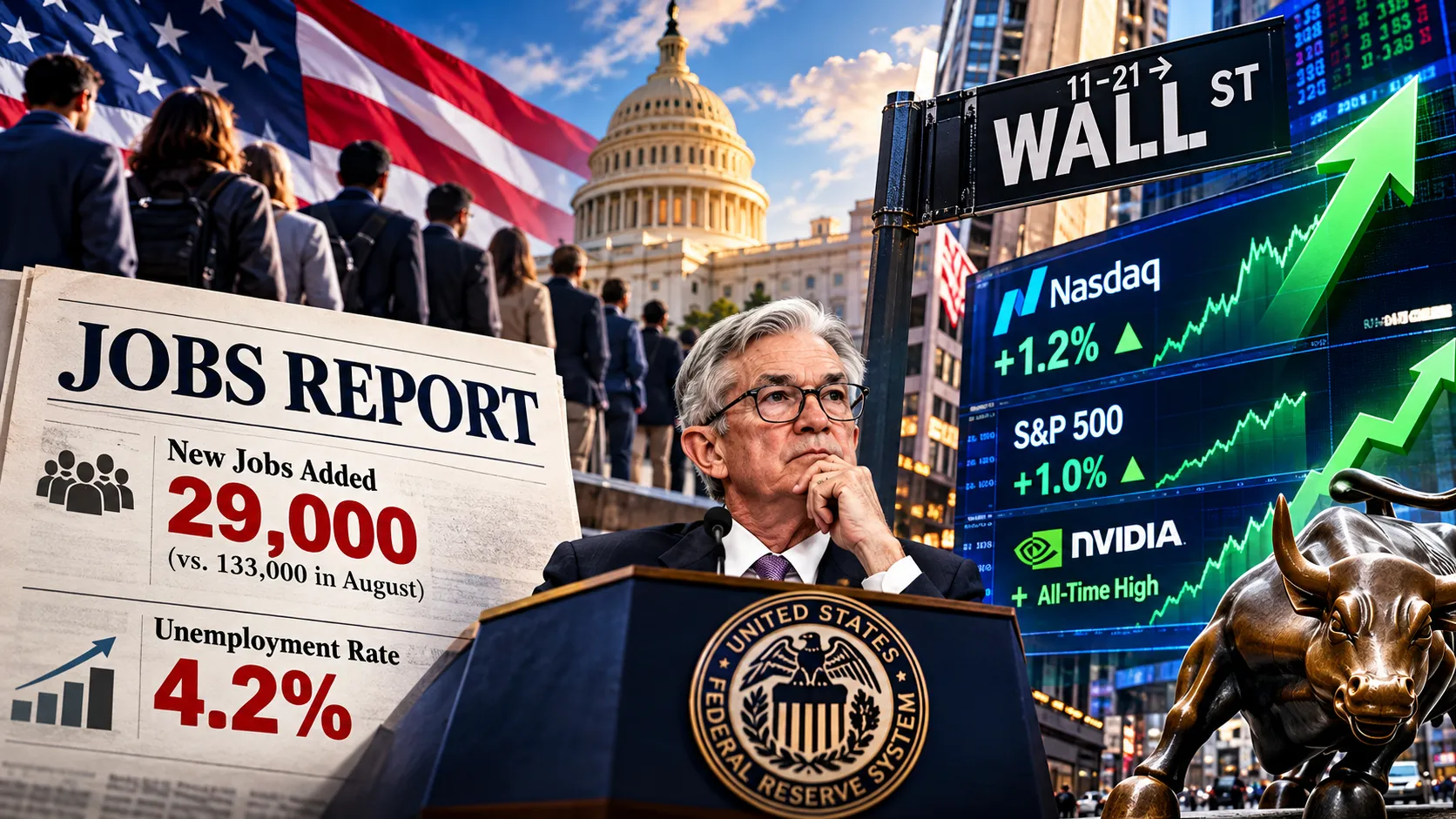
The US labour market cooled sharply in September, and Wall Street cheered. American employers added just 29,000 jobs last month, far fewer than economists had expected, the Labor Department reported on Friday, 2 October. The unemployment rate rose to 4.2%.
The weak figures eased fears that a still-hot economy would force the Federal Reserve to keep raising interest rates to contain inflation. Stocks rallied after the release, led by technology shares. The Nasdaq composite rose about 1.2% during the session, while the S&P 500 climbed to within about 1% of the record it set in August, according to the Associated Press. Nvidia shares hit a fresh all-time high.
The report marked a sharp slowdown from August, when employers had added 133,000 jobs. Revisions also showed that earlier months were weaker than first thought: combined, July and August payrolls were revised down by about 60,000 jobs.
"This report strengthens the case for the Federal Reserve to remain patient," said Adam Schickling, senior economist at Vanguard.
Bad news for workers, good news for markets
The market's reaction reflects the unusual position the US economy is in. Inflation has remained stubbornly above the Fed's target, and the central bank recently raised its benchmark interest rate for the first time in three years in an effort to cool prices. Investors had feared that strong hiring and wage growth would keep pressure on prices and push the Fed to tighten again.
Just a week before the report, financial markets were pricing roughly a 64% probability of another Fed rate increase in October, according to market commentary. After the data, those odds dropped sharply as traders concluded that a cooling labour market would give policymakers room to wait.
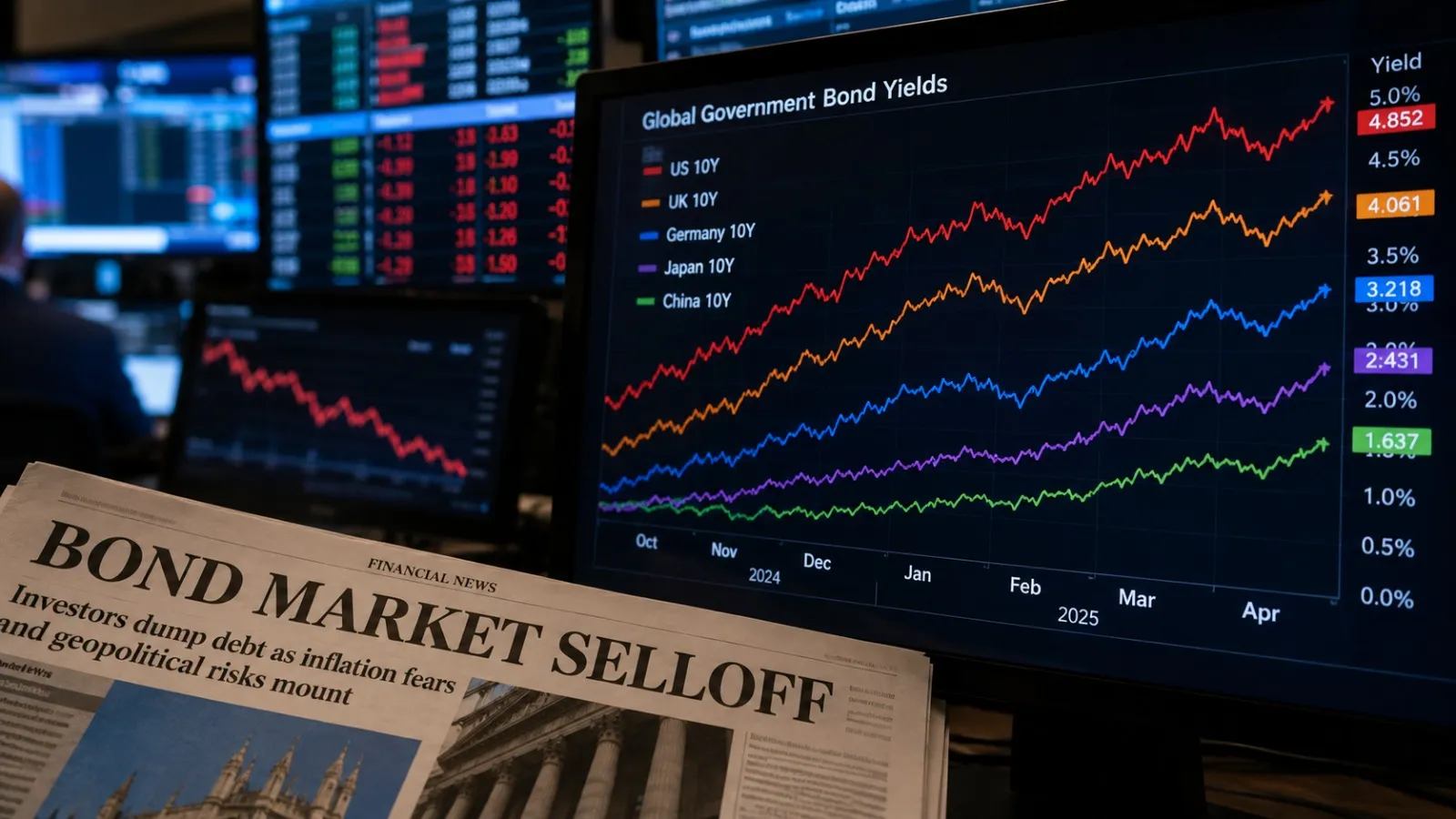
Bond markets reflected the shift. The yield on the 10-year Treasury note fell to around 5.18% immediately after the report, according to Yahoo Finance, though yields later moved higher again during a volatile session. Treasury yields at these levels remain far above where they were for most of the past decade, which keeps borrowing costs high for households, businesses and governments.
The session was far from smooth. Gains in equities were tempered at times by swings in bond yields and oil prices, a reminder that markets remain highly sensitive to any signal about inflation and energy costs.

Reading beneath the headline
Economists cautioned against reading the report as a sign of collapse. "The unemployment rate edged up as more people entered the labor force, but the unemployment-and-underemployment rate edged lower, taking some sting out of the headline," said Bill Adams, chief US economist at Fifth Third Commercial Bank.
In other words, part of the rise in unemployment reflected more people looking for work, which is often a sign of confidence rather than distress. Healthcare continued to add jobs, maintaining its role as one of the most reliable sources of employment growth in the US economy.
The broader pattern, however, is one of gradual cooling. People who already have jobs generally remain employed, but hiring of new workers has slowed. That combination tends to show up first in weaker payroll gains, and only later, if at all, in a sharp rise in layoffs.
Stocks on the move
Technology stocks led the rally as lower rate expectations boosted the appeal of growth companies whose valuations depend heavily on future earnings. Nvidia, the chipmaker at the centre of the artificial intelligence investment boom, reached a new all-time high. Semiconductor stocks more broadly gained; ON Semiconductor rose more than 4%.
Tesla shares climbed after the electric vehicle maker reported third-quarter deliveries that beat Wall Street expectations, despite a sharp decline in its US sales. The Dow Jones Industrial Average gained ground as well, rising around 300 points in early trading before giving back part of its advance.
The rally also comes against the backdrop of record activity in AI investment. Over the past week, Wall Street has digested a string of large deals, including AMD's agreement to acquire Fei-Fei Li's World Labs, and continued heavy spending on data centres. For investors, lower interest rates make those long-term bets easier to justify.
Why it matters for India
The Fed's path has direct consequences far beyond the United States. Higher US interest rates tend to draw capital away from emerging markets, including India, as investors can earn attractive returns in safe dollar assets. That can weigh on the rupee, push up borrowing costs for Indian companies that raise money abroad and reduce foreign portfolio flows into Indian equities and bonds.
A Fed that pauses rather than hikes would ease some of that pressure. It would also give the Reserve Bank of India more flexibility as it weighs its own policy decision in October, with some economists expecting the RBI to raise its repo rate by 25 basis points to contain domestic inflation.
Indian technology services companies, which earn a large share of revenue from US clients, also watch the American labour market closely. A cooling but stable US economy, rather than a sharp downturn, is generally the best scenario for their order books, as clients keep spending on technology without facing a recession. Currency markets will also be watching. A softer dollar outlook, if it materialises, would ease pressure on emerging-market currencies, including the rupee, and could encourage foreign investors to return to Asian equities after a cautious period. Commodity markets reacted as well. Gold, which tends to benefit when interest rate expectations fall, has been sensitive to every shift in the Fed outlook this year, while oil prices remain driven more by supply concerns in the Middle East than by US economic data.
The road ahead
The September report is one data point, and the Fed has emphasised that its decisions depend on the full range of economic information. Inflation data due later in October will be just as important as the jobs numbers. If price pressures ease alongside a cooling labour market, the case for holding rates steady will strengthen further. If inflation remains sticky, especially with energy prices volatile, the Fed may still decide that more tightening is needed.
Policymakers face a difficult balance. Raise rates too far, and they risk pushing a slowing economy into recession. Stop too early, and inflation could become entrenched. Friday's report tilted the balance, for now, towards patience.
For global investors, the message from the market was clear: in an economy fighting persistent inflation, slower job growth is welcome news. The test will be whether the labour market cools gently, as markets hope, or whether September marks the beginning of a sharper slowdown.