DiasporaWork5 MIN READ

US Bars Infosys, Tata, Wipro, HCL, Microsoft and Others From Green Card Sponsorship Programme Over Fraud Allegations

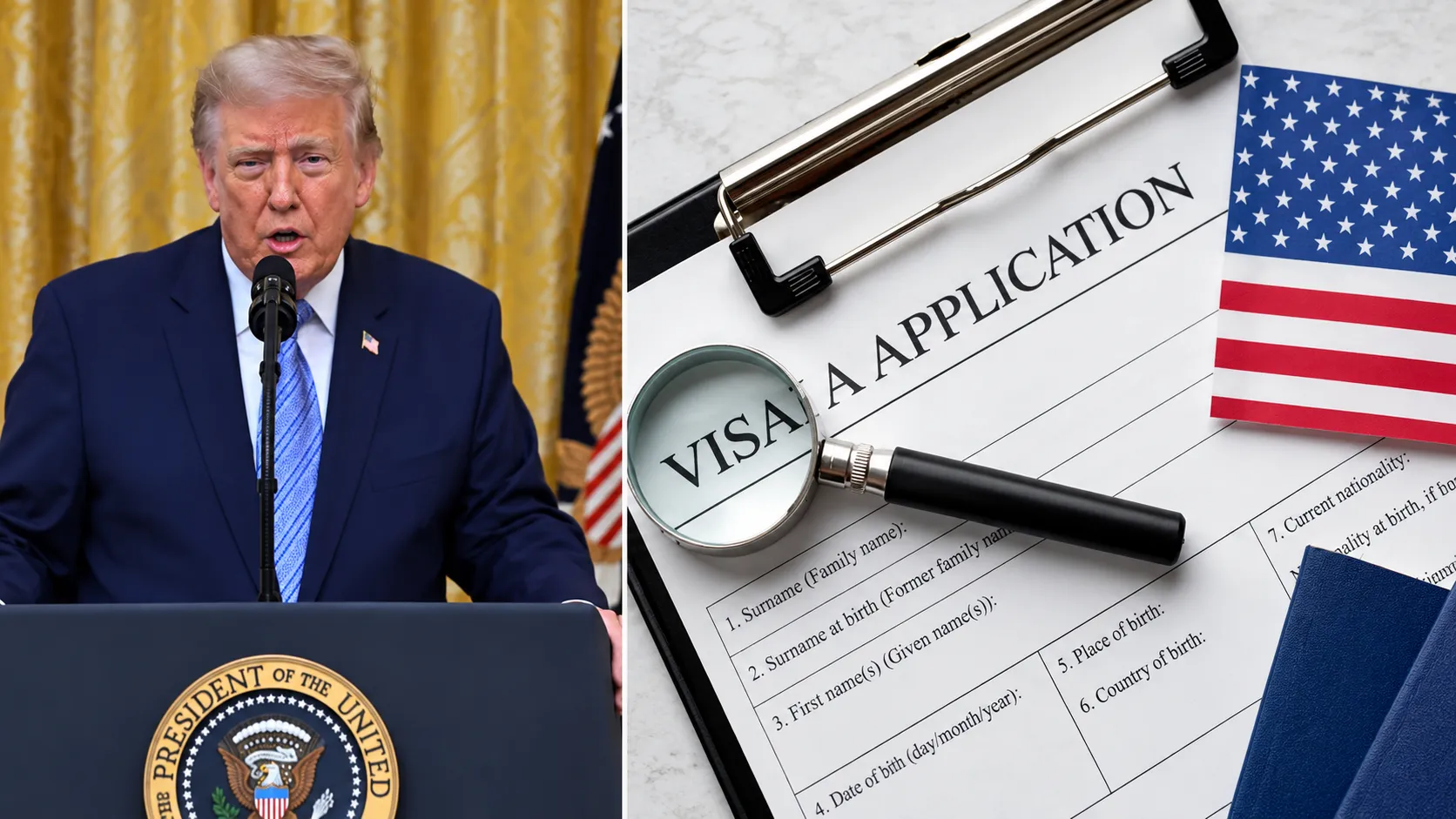
The Trump administration has suspended eight major employers from the permanent labour certification programme, the first step towards employment-based green cards, in a move that could hit thousands of Indian professionals.

By Aravind Kumar · Author9 October 2026New
US Bars Infosys, Tata, Wipro, HCL, Microsoft and Others From Green Card Sponsorship Programme Over Fraud Allegations

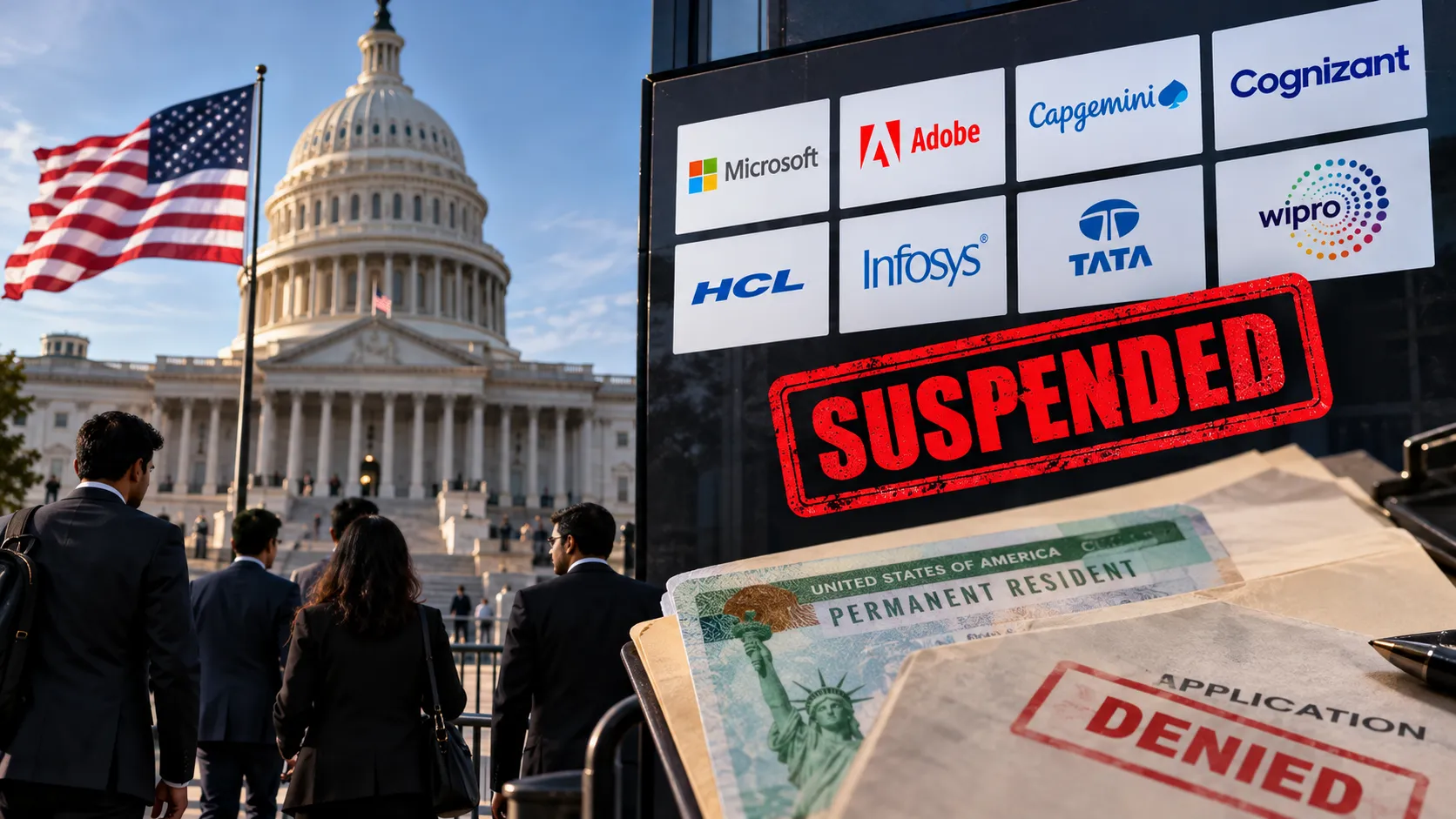
WASHINGTON, Oct 8 — The Trump administration has suspended eight major employers, including India's largest IT services companies and US technology giants Microsoft and Adobe, from the federal programme that allows companies to sponsor foreign workers for permanent residency, alleging fraud in their use of the system.

The companies named are Microsoft, Adobe, Capgemini, Cognizant, HCL, Infosys, Tata and Wipro. They have been barred from the permanent labour certification programme, the first and often most time-consuming step in obtaining an employment-based green card.

Keith Sonderling of the US Department of Labor said no new or pending applications from the suspended companies would be accepted. The decision could leave thousands of foreign professionals — a large share of them Indian nationals — uncertain about their path to permanent residency in the United States.

Key facts at a glance

• Action: suspension from the US permanent labour certification (PERM) programme

• Companies named: Microsoft, Adobe, Capgemini, Cognizant, HCL, Infosys, Tata and Wipro

• Reason given: alleged fraud in use of the programme

• Effect: no new or pending applications from the suspended companies will be accepted

• Related action: investigations into nine universities, including Harvard, Yale and Stanford

• Diaspora exposure: nearly three-quarters of H-1B visas go to Indian nationals (Associated Press)

A blunt message from the White House

Vice President JD Vance framed the move as a matter of putting American workers first. "You're a great American company, but you've got to hire great American workers," he said, addressing the companies affected.

The administration alleges that the companies have abused the labour certification process. That process, known as PERM, requires an employer to demonstrate to the Department of Labor that it tested the US labour market and could not find a qualified, willing and available American worker for the role it wants to fill with a foreign national. Critics have long argued that some employers run recruitment processes designed to fail, in order to sponsor workers they have already chosen.

The government has also opened investigations into nine universities, including Harvard, Yale and Stanford, as part of a broader scrutiny of how institutions use visa and immigration programmes.

Why it matters for Indian professionals

The impact is likely to be felt most acutely by Indian workers. Nearly three-quarters of H-1B visas go to Indian nationals, according to the Associated Press, and many of those professionals rely on employer sponsorship to obtain green cards.

For Indian nationals, the path to a green card is already exceptionally long. US law caps the number of employment-based green cards issued to citizens of any single country each year, and the very high demand from India means that many applicants face waits stretching many years — in some categories, decades. Labour certification is the starting point of that queue. A suspension that blocks new and pending PERM applications could delay or derail applicants who have spent years building careers in the United States.

Workers whose applications are in progress may face difficult choices, including seeking new employers who can sponsor them, a process that can mean restarting parts of the green card journey. Those on H-1B visas also need to maintain their status while their applications are pending, which can limit their flexibility to change jobs.

“You're a great American company, but you've got to hire great American workers.”
— JD Vance, US Vice President

Pressure on India's IT services giants

For Infosys, Tata, Wipro and HCL, as well as US-listed Cognizant and French-headquartered Capgemini, the suspension adds to a growing list of challenges in the US market. The companies employ large numbers of Indian engineers in the United States to deliver projects for clients in banking, retail, healthcare and technology.

Over the past year, the administration has already tightened rules around H-1B visas, including a $100,000 fee on new petitions announced in September 2025. Indian IT firms have responded by hiring more local workers in the US, expanding delivery centres in India and other countries, and using more automation and AI to reduce dependence on onsite staff.

The green card suspension could accelerate that shift. If companies can no longer offer a path to permanent residency, they may find it harder to retain experienced staff in the US, and some employees may seek opportunities elsewhere.

6d0f48ba-8acb-4f35-a765-11b93dcb571b.png

The inclusion of Microsoft and Adobe

The presence of Microsoft and Adobe on the list is significant. It suggests that the administration's scrutiny extends beyond the outsourcing firms that have traditionally been the focus of immigration critics to major American technology companies that sponsor large numbers of skilled workers.

Many of those workers are Indian engineers, researchers and managers who have become central to US technology companies' operations. Their uncertainty highlights how immigration policy can affect not only individual families but the competitiveness of the US technology sector itself.

How the green card process works

For most employer-sponsored applicants, the path to a green card has three main stages. First, the employer must obtain labour certification from the Department of Labor, proving it could not find a suitable US worker for the job. Second, the employer files an immigrant petition with US Citizenship and Immigration Services. Third, once a visa number is available under the annual quotas, the worker applies to adjust status or obtain an immigrant visa. Because labour certification comes first, a suspension at this stage blocks the entire process before it begins.

What comes next

The affected companies are expected to seek clarity from the Department of Labor about the allegations and the duration of the suspension, and legal challenges are possible. Immigration lawyers will be advising clients on their options, including whether pending applications can be transferred or refiled through other employers.

For the global Indian diaspora, the move is a reminder of how quickly the rules that shape their careers can change. It may also strengthen the case some professionals are already weighing — to return to India, where the technology sector and start-up ecosystem offer growing opportunities, or to consider other destinations such as Canada, the UK, Germany and the Gulf.

For India's government and industry bodies, the decision will add to the agenda of trade and technology discussions with Washington. The mobility of skilled workers has long been a sensitive issue in the relationship, and this suspension ensures it will remain high on the list.

TagsGreen CardPERMLabour CertificationInfosysTata GroupWiproHCLTechCognizantCapgeminiMicrosoftAdobeH-1BUS ImmigrationIndian DiasporaIT ServicesJD VanceDepartment of LaborSkilled WorkersEmployment-Based ImmigrationTrump Administration

Reader reviews

Sign in to rate and review this article.
Loading reviews…

