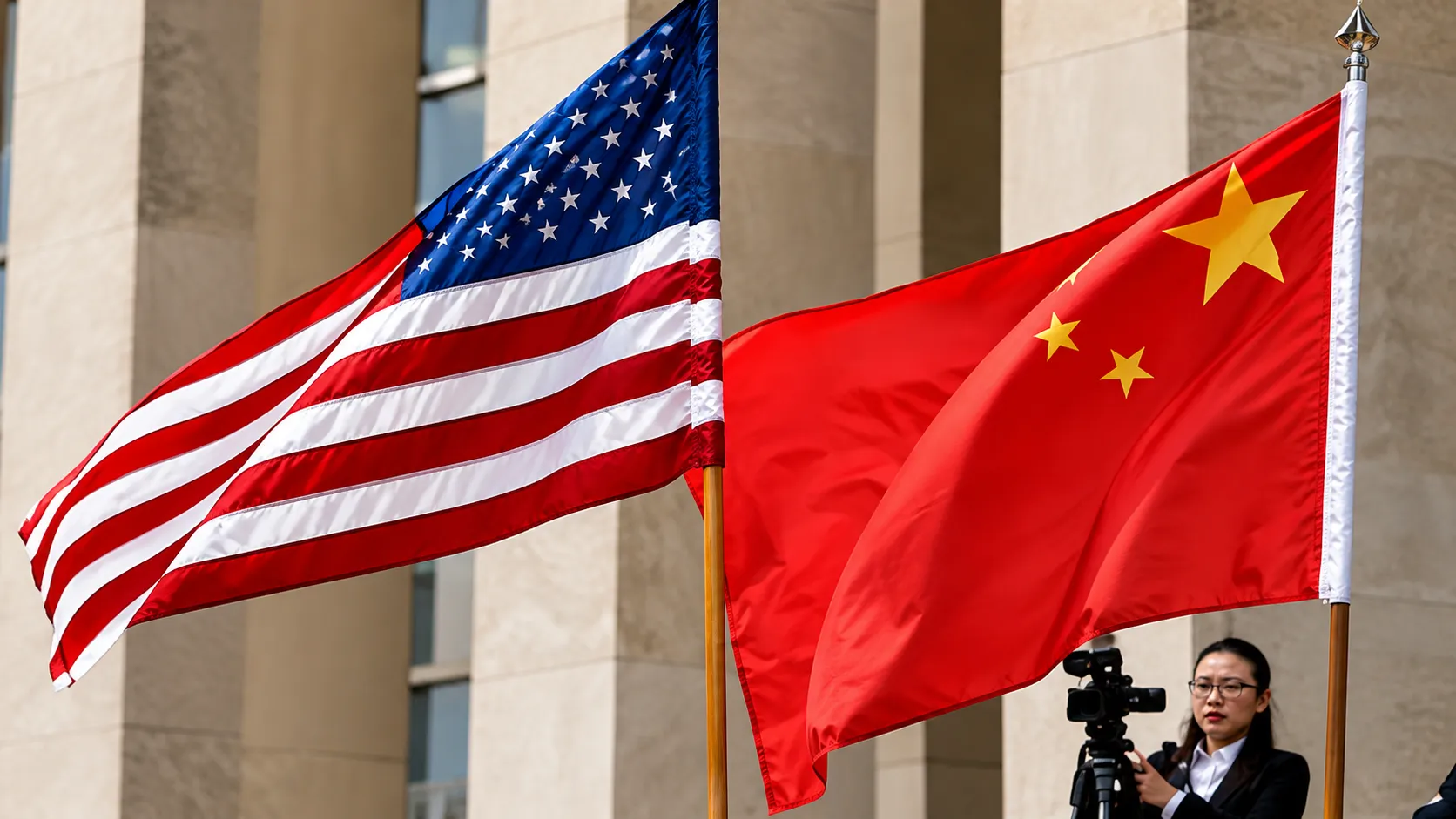
The technology rivalry between the United States and China is widening into biotechnology, as Washington moves to restrict American investment in Chinese biotech companies and Beijing threatens to retaliate.
The US Treasury Department on Thursday, October 22, proposed expanding its Outbound Investment Security Program, which limits investments by American individuals and companies in sensitive technologies in countries it designates as foreign adversaries. The proposal would add biotechnology as a newly targeted sector and tighten existing restrictions on investment in artificial intelligence, quantum information technologies, high-performance computing and supercomputing, and hypersonic systems in China, Russia and North Korea.
Treasury Secretary Scott Bessent pushed for the inclusion of biotechnology, according to reports. In a press release, the Treasury said the changes would strengthen the programme and prevent adversaries from using American investment to build critical technologies.
Beijing pushes back
China's Ministry of Commerce responded on Saturday, October 24, saying the proposal widened China-related restrictions in a discriminatory way and stretched the concept of national security too far. The ministry said the plan would damage bilateral economic ties, that China would monitor developments, and that it reserves the right to take countermeasures, without specifying what those might be.
The statement was reported by China's state-run Global Times and cited by US and international media.
How the programme works
The Outbound Investment Security Program, which took effect in January 2025, was created to stop American capital and expertise from helping countries of concern develop technologies with military applications. It prohibits some types of investment, such as stakes in companies developing advanced AI for military use, and requires notification of others.
Unlike export controls, which restrict the sale of technology, outbound investment rules restrict the flow of money, including venture capital, private equity and joint ventures. They reflect concern in Washington that American investors have funded Chinese companies that went on to strengthen China's military and technological capabilities.
Why biotech
Biotechnology has become a strategic priority for both countries. China has built a large and fast-growing biotech industry, with companies developing new drugs, gene therapies and biological manufacturing capabilities. Chinese biotech companies have increasingly licensed experimental drugs to Western pharmaceutical companies, and Chinese contract research and manufacturing firms play important roles in global drug supply chains.
US lawmakers and officials have raised concerns about genetic data, the potential military applications of biotechnology, and dependence on Chinese suppliers for drug ingredients and manufacturing. Congress has also pursued Biosecure legislation aimed at restricting federal contracts with certain Chinese biotech companies.
Adding biotech to outbound investment restrictions would make it harder for American venture capital and private equity firms to invest in Chinese biotech startups, potentially slowing the flow of capital to the sector.
The comment period
The proposal must go through a public comment period before the Treasury issues a final rule. Industry groups, investors and companies are expected to weigh in on the scope of the restrictions, including which biotech activities would be covered.
Defining the scope will be complex. Biotechnology spans a wide range of activities, from drug discovery and medical devices to agricultural biotechnology and industrial biology. Overly broad rules could affect legitimate medical research and commercial activity, while narrow rules might fail to address security concerns.


