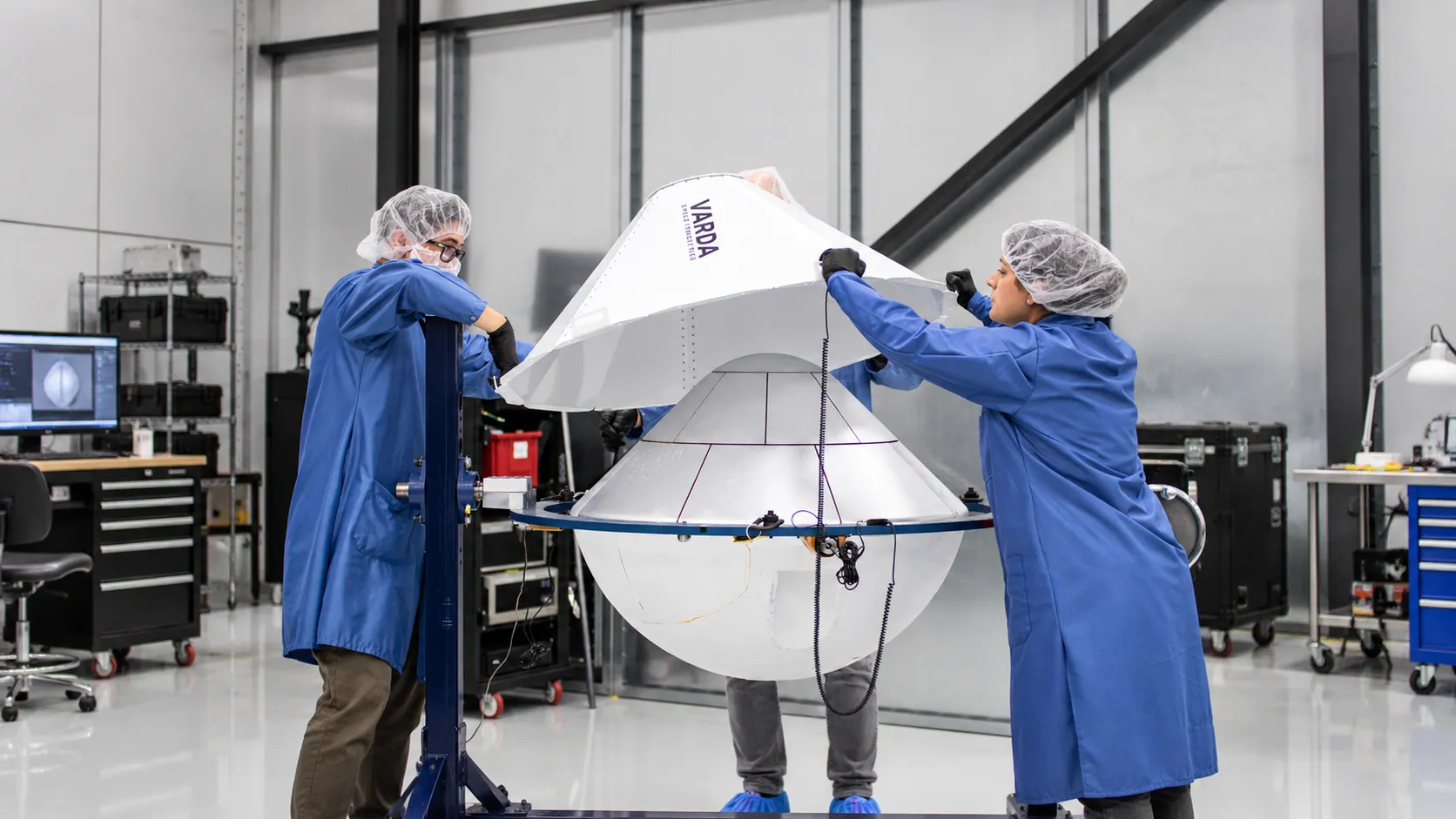
Varda Space Industries, a California company that processes pharmaceutical ingredients in orbit and returns them to Earth in reentry capsules, has raised $251 million in a Series D funding round. The financing, announced on 30 September 2026, was led by Lux Capital and Natural Capital and values the company at about $1.6 billion, according to reports.
Existing and new investors including Founders Fund, Khosla Ventures, Caffeinated Capital, General Catalyst, 8090 Industries, Giant Step and Also Capital also participated. The round is Varda's largest to date and brings its total funding to $598 million, following a $187 million Series C in July 2025 and a $90 million Series B in April 2024.
"We started Varda with the conviction that the first product manufactured in space and consumed on Earth would be a pharmaceutical," said Delian Asparouhov, Varda's co-founder and president. "This round gives us the resources to increase our cadence, deepen our pharmaceutical partnerships, get closer to delivering the first medicine made in space."
Why make drugs in space
The scientific case rests on the behaviour of materials in microgravity. On Earth, gravity drives convection, buoyancy and sedimentation, all of which affect how molecules come together when a substance crystallises. In orbit, those forces are largely absent, so active pharmaceutical ingredients can form crystals with different structures, sizes or uniformity.
That matters because the crystal form of a drug can affect how it dissolves, how stable it is, how it is absorbed by the body and how it can be delivered. Research aboard the International Space Station over many years has shown that some proteins and drug compounds crystallise differently in microgravity. Varda's aim is to turn that research curiosity into a repeatable, commercial manufacturing step.
The company is not trying to produce large volumes of finished medicines in space. Instead, it focuses on high-value processing steps, such as forming specific crystal structures, that could enable new formulations. The processed material is then returned to Earth for further development and manufacturing.
Capsules that fall from orbit at Mach 25
Varda's business depends on getting material to orbit and back reliably and cheaply. Its W-Series spacecraft ride to orbit on rideshare launches, carry automated processing equipment, and then return to Earth in small capsules that reenter the atmosphere at about Mach 25 before landing under parachute.
The company has flown six W-series missions so far. Its early capsules landed in Utah, and later missions have returned to the Koonibba Test Range in South Australia. It has more than a dozen further launches planned through 2028.
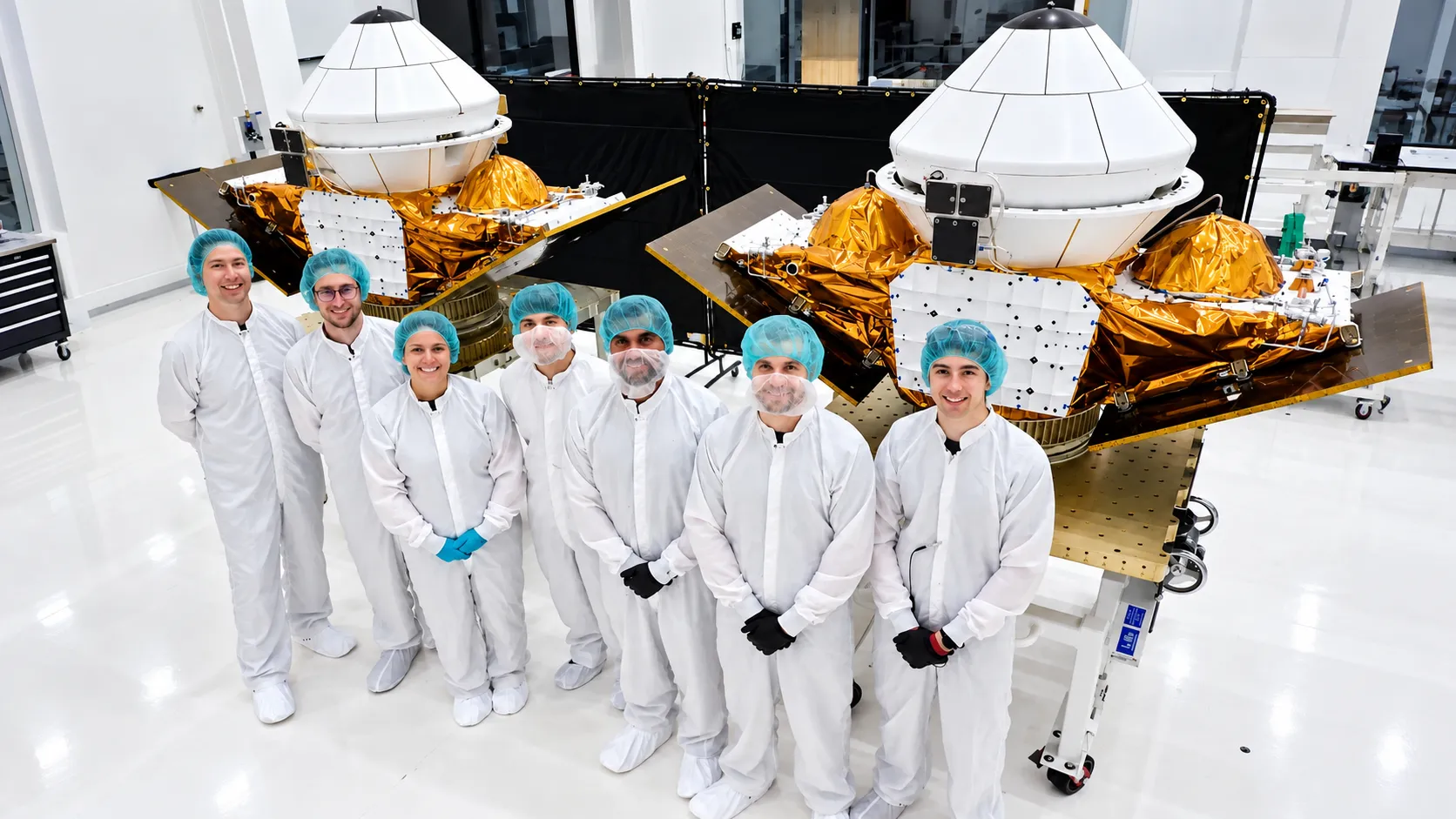
The next two spacecraft, W-8 and W-9, are scheduled to launch in early October on SpaceX's Transporter-18 rideshare mission from Vandenberg Space Force Base in California, the same flight that is due to carry Google's first Project Suncatcher satellite. W-8 will carry sensors to study the capsule's temperature and other data during reentry, along with thermal protection materials under a US military study. W-9 includes a Department of Defense payload to test navigation during hypersonic flight, and its exterior will test advanced heat shield tiles from materials company Syensqo.
A second business in hypersonics
Those defence payloads point to an important part of Varda's commercial model. Because its capsules reenter the atmosphere at hypersonic speeds, they provide a rare and relatively affordable platform for testing materials, sensors and navigation systems in conditions that are extremely difficult to replicate on the ground.
The US military has a strong interest in such testing as it develops hypersonic weapons and defences against them. Varda has worked with the US Air Force under its Prometheus programme and is involved in work connected with the Pentagon's Golden Dome missile defence initiative, according to reports. Semiconductor manufacturers have also shown interest in microgravity processing.
This dual focus gives Varda revenue from government contracts while its pharmaceutical work matures, a model similar to how many space companies have used defence and government contracts to fund commercial development.
Pharmaceutical partners
On the drug side, Varda announced in July 2026 a partnership with United Therapeutics, its first major publicly listed pharmaceutical partner. Such partnerships are crucial, because pharmaceutical companies own the drug candidates and are responsible for clinical development and regulatory approval.
The path from processed crystals in orbit to an approved medicine is long. Any drug product that incorporates space-processed material would need to meet the same regulatory standards as any other medicine, including demonstrating consistent quality across batches. That is why Varda emphasises launch cadence: frequent, reliable flights are essential if pharmaceutical companies are to treat space processing as a normal part of their development pipelines rather than a one-off experiment.
Competition is intensifying
Since Varda's first successful mission in 2023, at least half a dozen companies in the United States and Europe have begun building their own recoverable capsules and raising capital. At the same time, commercial space stations being developed to succeed the International Space Station could offer an alternative venue for microgravity research and manufacturing.
Varda's advantage lies in its operating record. It has already launched and recovered multiple capsules and has a production line building more, giving it a lead in experience and flight data that newer entrants will take time to match.
The investors' bet
Lux Capital and Natural Capital's decision to lead a $251 million round reflects growing investor appetite for space infrastructure companies with revenue and defence relevance. The participation of Founders Fund, an early Varda backer, signals continued support from insiders. Asparouhov is himself a partner at Founders Fund, and co-founder Will Bruey is a former SpaceX engineer.
The company operates from El Segundo, California, with additional offices in Washington, D.C., and Huntsville, Alabama, a hub for US space and defence programmes.
What it means for the space economy
For years, advocates of space manufacturing have argued that orbit could become a place to make products that cannot be made on Earth. Most of those ideas have remained theoretical. Varda's growing funding and mission record make it one of the strongest tests of whether that vision can work commercially.
If Varda can show that a space-processed ingredient leads to a medicine that reaches patients, it would mark a milestone not only for the company but for the broader space economy, proving that manufacturing in orbit can deliver value that justifies its cost. With fresh capital and two more capsules about to fly, the company now has the resources to try.


