FundingVenture Capital6 MIN READ

China's VAST Raises $446 Million to Push Generative AI Deeper Into 3D Creation

China-based generative 3D AI startup VAST has completed Series B and B+ financings totalling approximately $446 million, led by Matrix Partners China, as investors bet on 3D generation becoming a major new AI application category.

By Aravind Kumar · Author2 September 2026Breaking
China's VAST Raises $446 Million to Push Generative AI Deeper Into 3D Creation

China-based generative artificial intelligence startup VAST has completed Series B and Series B+ financings totalling approximately $446 million, or roughly RMB 3 billion, the company confirmed on September 1, in one of the largest AI application funding rounds recorded globally this year. Matrix Partners China led the rounds, joined by an extensive syndicate of industrial and financial investors including Perfect World, BlueFocus, Core Dynamic Investment, Thundersoft, CICC Capital, CMC Capital Partners, CDH VGC and existing shareholders Primavera Capital and Dachen Cai Zhi.

VAST operates Tripo, a generative AI platform capable of creating three-dimensional models from text and image inputs, positioning the company at the intersection of gaming, film production, industrial design, additive manufacturing and potentially the simulation environments increasingly used to train embodied AI and robotics systems. The scale of investor participation — spanning venture capital, media conglomerates, gaming publishers and state-linked institutional funds — signals broad-based conviction that generative 3D technology represents a strategically significant emerging AI category.

According to reporting from Chinese financial media outlet 36Kr, VAST has now raised approximately $446 million in less than six months, a pace of capital formation that places the company's fundraising trajectory closer to that of frontier foundation-model developers than conventional creative-software startups. This rapid succession of financings reflects the intensity of investor competition to secure positions in companies perceived as potential platform leaders within the generative 3D category.

The participation of major industrial investors including Perfect World and BlueFocus carries particular significance, as it suggests VAST's technology is attracting genuine commercial interest from companies with direct, near-term applications for generative 3D content — gaming studios seeking to accelerate asset production, media and entertainment companies exploring new content pipelines, and technology firms building simulation environments for robotics and autonomous-systems training. Such strategic investor involvement is often viewed within venture circles as a stronger signal of commercial validation than financial-investor participation alone.

Generative 3D technology sits at a compelling intersection of several converging trends reshaping the broader technology landscape: the maturation of generative AI beyond text and image generation into increasingly complex spatial and volumetric outputs, the growing demand for synthetic training data and simulation environments to support robotics and embodied AI development, and the persistent need across gaming, film and industrial design for faster, cheaper 3D content production pipelines than traditional manual modelling workflows can support.
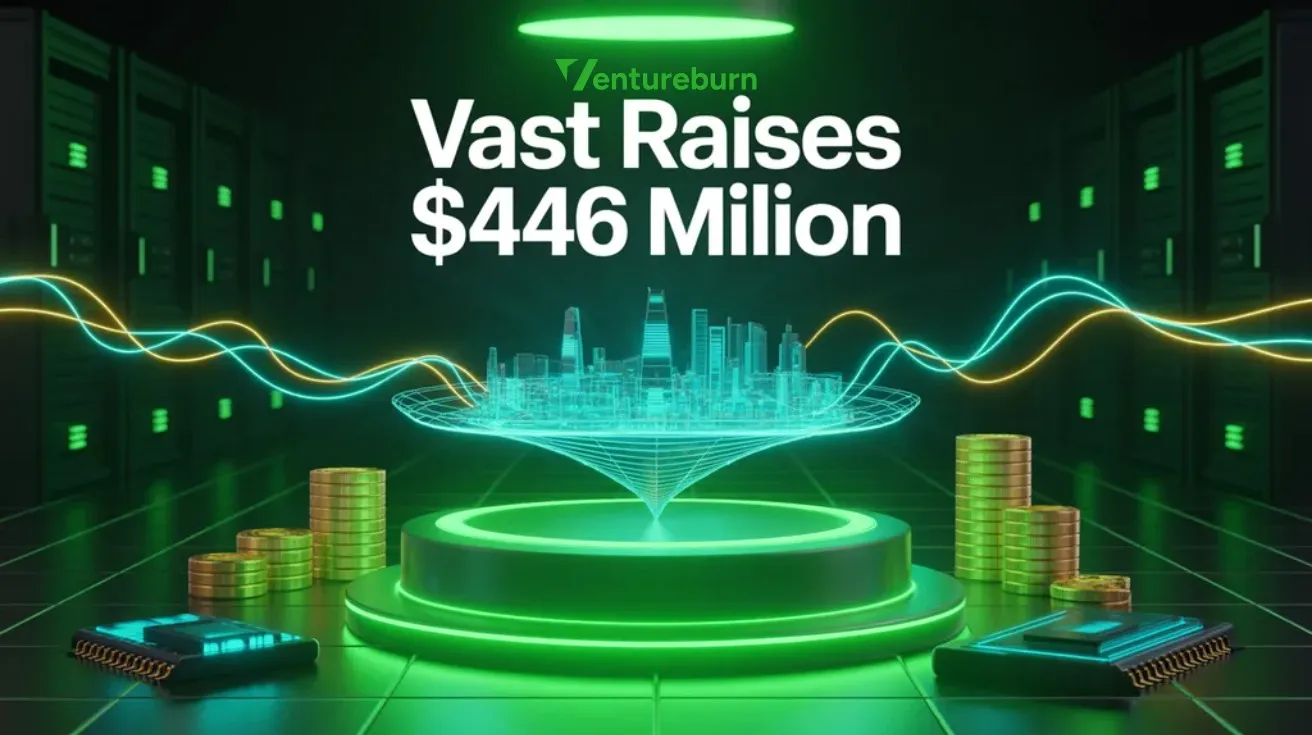
image.png

For China's broader AI sector, VAST's mega-round arrives amid intensifying domestic competition across foundation models, application-layer AI products and increasingly, specialised generative technologies targeting specific content modalities. The scale of capital VAST has attracted suggests Chinese investors are willing to make substantial, concentrated bets on companies perceived to hold first-mover advantages within emerging AI subcategories, even as broader macroeconomic and geopolitical uncertainties continue to shape China's technology investment landscape.


VAST's six-month, $446-million fundraising pace treats generative 3D less like a creative tool and more like a platform-scale AI category in the making.
TIGI Technology Desk

As VAST deploys its newly raised capital toward continued platform development and market expansion, the company's trajectory will likely serve as a bellwether for investor appetite toward generative 3D technology more broadly — both within China's domestic market and among international investors and industry players increasingly monitoring developments in this fast-emerging AI application category.

The round also underscores the increasingly bifurcated nature of global AI investment, where Chinese capital has continued flowing aggressively into domestic AI application companies even as geopolitical tensions have constrained cross-border technology investment and complicated international expansion ambitions for Chinese AI startups seeking Western customers. VAST's investor base, composed almost entirely of Chinese and Hong Kong-based funds and strategics, illustrates how China's AI ecosystem has increasingly developed its own self-contained capital-formation loop, somewhat insulated from the broader global venture-capital dynamics shaping AI investment in the United States and Europe.

Competitively, VAST's rapid ascent places pressure on rival generative-3D companies globally, including several well-funded startups in the United States and Europe pursuing similar text-to-3D and image-to-3D capabilities for gaming and industrial-design applications. The scale of VAST's war chest gives the company substantial runway to out-invest smaller competitors in both talent acquisition and compute infrastructure, two of the most significant cost drivers for any company attempting to train and refine large generative 3D models at a competitive level of output quality.

The round also raises important questions about how quickly generative 3D technology will move from impressive technical demonstrations toward genuinely production-ready content that gaming studios, film productions and industrial designers are willing to deploy directly within commercial pipelines, rather than treating current-generation outputs primarily as concept-stage references requiring substantial manual refinement. This gap between technical capability and production-ready reliability has proven a persistent challenge across multiple generative-AI content categories, and VAST's ability to close it convincingly will likely determine whether its current valuation trajectory proves durable.

For international observers, VAST's rise also illustrates the increasingly specialised, application-specific nature of frontier AI investment globally, moving beyond the earlier era's focus on general-purpose foundation models toward companies building deep technical moats within specific content modalities and industry verticals. Whether comparable Western companies pursuing generative 3D technology can match VAST's capital-raising pace, or whether China's distinct domestic capital ecosystem gives Chinese generative-AI application companies a structural fundraising advantage, is likely to remain a closely watched question across the global AI investment community through the remainder of the year.

Regardless of how that competitive question resolves, VAST's fundraising milestone has already reshaped expectations around what scale of capital a generative-AI application company can credibly raise within a single calendar year, setting a new reference point that founders and investors across the broader generative-AI landscape are likely to cite for months to come.

TagsVASTChinaGenerative AI3D TechnologyFundingSeries BTripo

Reader reviews

Sign in to rate and review this article.
Loading reviews…