FundingMarket Data Women5 MIN READ

Viking Therapeutics Soars About 30% on Obesity Drug Data as Asian Stocks Extend Six-Day Rally

Viking Therapeutics shares jumped about 30% after maintenance data showed its obesity drug VK2735 preserved most weight loss with less frequent dosing, while Asian equities rose for a sixth straight day on 23 September as chipmakers rallied and oil eased.

By Shaym Kumar · Author23 September 2026Breaking
Viking Therapeutics Soars About 30% on Obesity Drug Data as Asian Stocks Extend Six-Day Rally

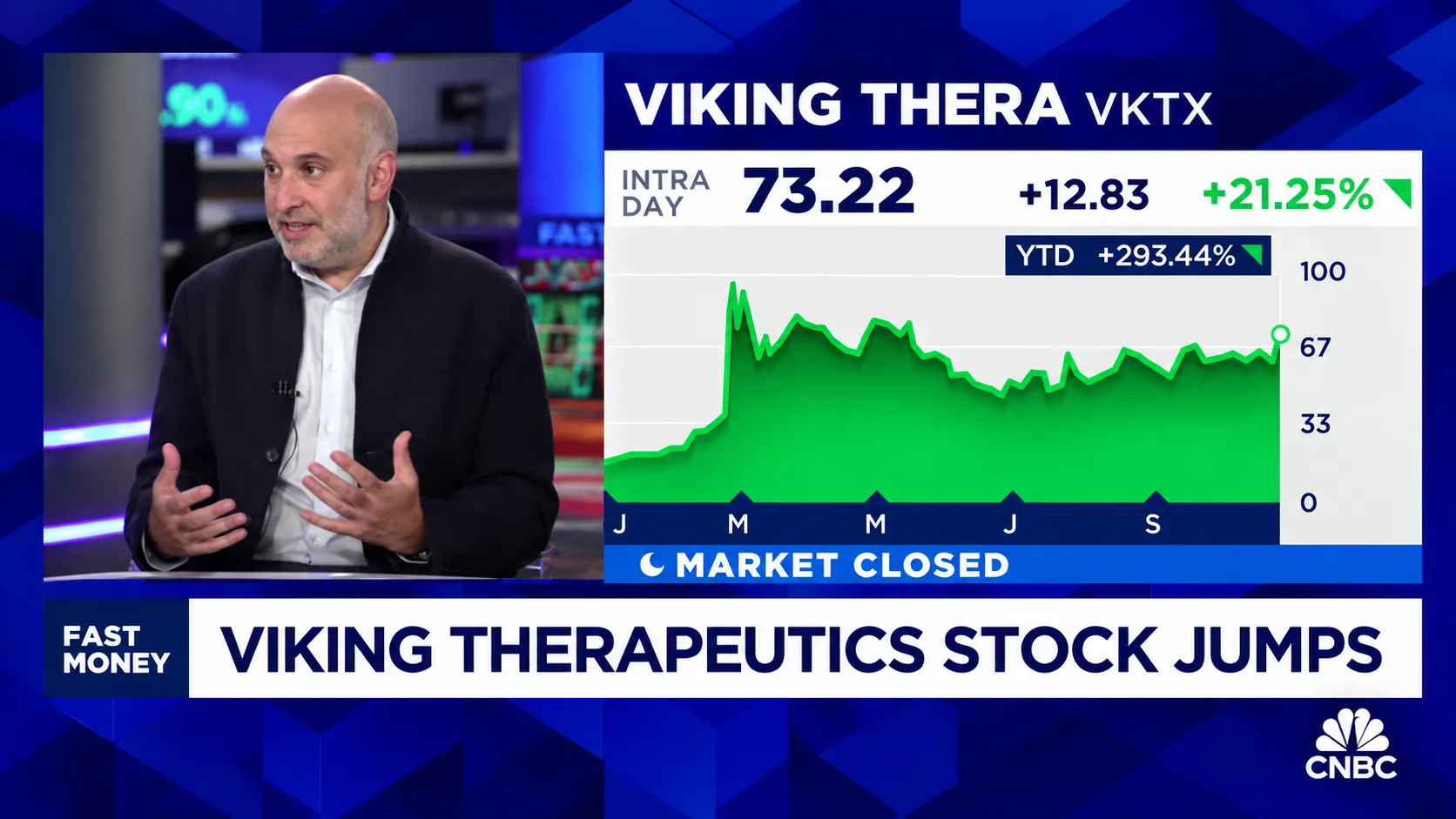
Shares of Viking Therapeutics surged about 30% on Tuesday, 22 September 2026, after the San Diego-based biotech reported data showing its experimental obesity drug VK2735 helped patients maintain most of their weight loss with less frequent dosing, as global equity markets remained buoyed by a rally in technology and chip stocks.

The move made Viking one of the standout gainers on Wall Street and marked its largest intraday gain since February 2024, according to market reports. By Wednesday, 23 September, Asian stocks were extending their own rally, with the MSCI Asia Pacific index rising for a sixth consecutive session.

What the Viking data showed

VK2735 is a dual agonist of the GLP-1 and GIP receptors, the same hormonal pathways targeted by Eli Lilly's blockbuster drugs Mounjaro and Zepbound. Viking is developing the drug in both injectable and oral formulations for obesity and other metabolic disorders.

The latest study examined maintenance dosing. Participants receiving weekly VK2735 injections achieved weight loss of approximately 16% to 19% after 21 weeks, compared with roughly 0% among those on placebo. At week 21, 98% of participants in the combined treatment groups had lost at least 5% of their body weight, 90% had lost at least 10%, 65% had lost at least 15%, and about 32% had lost at least 20%.

After the 21-week induction period, participants were moved to less frequent maintenance dosing, either every other week or monthly, for 12 more weeks. Those on every-other-week dosing maintained up to 97% of the mean weight loss achieved during the weekly phase, compared with 61% among those switched to placebo. Participants on monthly dosing maintained up to 90%.

An exploratory group that continued on 17.5 mg of VK2735 weekly for 33 weeks achieved placebo-adjusted weight loss of 21.7%, with no plateau observed. Viking said gastrointestinal side effects during the maintenance phase were comparable between drug and placebo groups.

Why maintenance matters

The results address one of the most important commercial and clinical questions in the obesity-drug market: how patients maintain weight loss over the long term. Studies of existing GLP-1 drugs have shown that many patients regain weight after stopping treatment, suggesting that obesity medications may need to be taken indefinitely.

Weekly injections for life present challenges in cost, convenience and adherence. A drug that allows patients to maintain most of their weight loss with monthly dosing could offer significant advantages, reducing the burden on patients and potentially lowering long-term treatment costs.

Viking chief executive Brian Lian said the results demonstrated the potential of extended dosing approaches following initial weight-loss treatment. The company plans to study oral maintenance regimens in a second part of the trial and has said it intends to advance an oral formulation of VK2735 into Phase III trials by the end of 2026.

Analysts turn more bullish

Wall Street analysts responded positively. Truist analyst Gregory Renza described the results as a best-case scenario, according to reports. Oppenheimer raised its price target on Viking from $100 to $120 while maintaining an Outperform rating.

The rally also reflected market positioning. Short interest in Viking was elevated, with about 19.6% of the available float sold short, according to recent data, which can amplify upward moves when positive news forces short sellers to buy back shares.

The obesity-drug race is shifting from how much weight patients lose to how easily they can keep it off, and Viking's data spoke directly to that question.
TIGI Markets Desk

Still, Viking remains a clinical-stage company without approved products or revenue, and its valuation reflects expectations of future success. The obesity market is also becoming increasingly crowded, with Eli Lilly and Novo Nordisk dominating current sales and numerous companies developing next-generation injectables and oral pills.

ChatGPT Image Sep 23, 2026, 10_33_59 AM.png

Wall Street's mixed session

Viking's surge came during a mixed day for broader US markets. The Nasdaq Composite gained 0.5% to close at a record 27,244, while the S&P 500 finished flat and the Dow Jones Industrial Average fell 185 points, or 0.36%, to 51,864.

Losses in the Dow were led by Cisco Systems, JPMorgan and American Express, while Amgen, Home Depot and Honeywell were among the top gainers. The small-cap Russell 2000 was among the better-performing major indexes, with healthcare and technology names prominent among the day's biggest movers.

The AI trade continued to support technology shares, following a strong reception for Meta's Muse AI agent earlier in the week.

Asia extends its winning streak

On Wednesday, 23 September, Asian markets built on the momentum. The MSCI Asia Pacific equity index rose about 0.3%, marking its sixth straight day of gains, with Japanese markets closed for a public holiday.

Bellwether chipmakers, including Samsung Electronics and SK Hynix, climbed as the rally in semiconductor stocks spread across the region. South Korea's memory-chip giants have been major beneficiaries of surging demand for high-bandwidth memory used in AI data centres.

Falling oil prices also provided support. Crude eased as diplomatic efforts to end the war involving Iran progressed. In his address to the United Nations General Assembly, US President Donald Trump said he faced a big decision on Iran, either to make a deal to end the war or to escalate, while indicating that he thought a deal would be reached after the US midterm elections.

What it means for Indian investors

For Indian investors, the global backdrop offers both support and caution. Easing oil prices are a significant positive for India, which imports most of its crude oil, and could ease pressure on inflation and the rupee. The rally in global technology stocks has, however, not translated into gains for Indian IT services companies, which have underperformed amid questions about AI's impact on their business.

The obesity-drug boom also carries relevance for India's pharmaceutical industry. Indian generic drugmakers are preparing for the expiry of patents on some GLP-1 drugs in various markets, and the country's contract research and manufacturing companies stand to benefit from the global expansion of metabolic-disease treatments.

Looking ahead

For Viking, the path forward includes further data on oral maintenance dosing and the planned start of Phase III trials. The company's ability to secure partnerships or financing to fund late-stage development will also be closely watched, given the substantial costs of bringing an obesity drug to market.

For global markets, attention will turn to central-bank commentary, oil prices and developments in the Middle East. The combination of AI enthusiasm, easing energy costs and diplomatic progress has lifted sentiment, but investors remain alert to the risks that could reverse the rally. For now, the week has belonged to chipmakers, AI-exposed stocks and, on Tuesday, a mid-cap biotech that gave investors fresh reason to believe in the next chapter of the obesity-drug story.

TagsViking TherapeuticsVK2735Obesity DrugsGLP-1BiotechStock MarketAsian MarketsSamsung ElectronicsSK HynixOil PricesIranGlobal MarketsHealthcare

Reader reviews

Sign in to rate and review this article.
Loading reviews…