
FundingMarket Data Women5 MIN READ

Vodafone Idea's Q2 Loss Widens to ₹5,975 Crore on a Treasury Mark-to-Market Hit, Even as ARPU Rises 10% to ₹198 and Capex Doubles

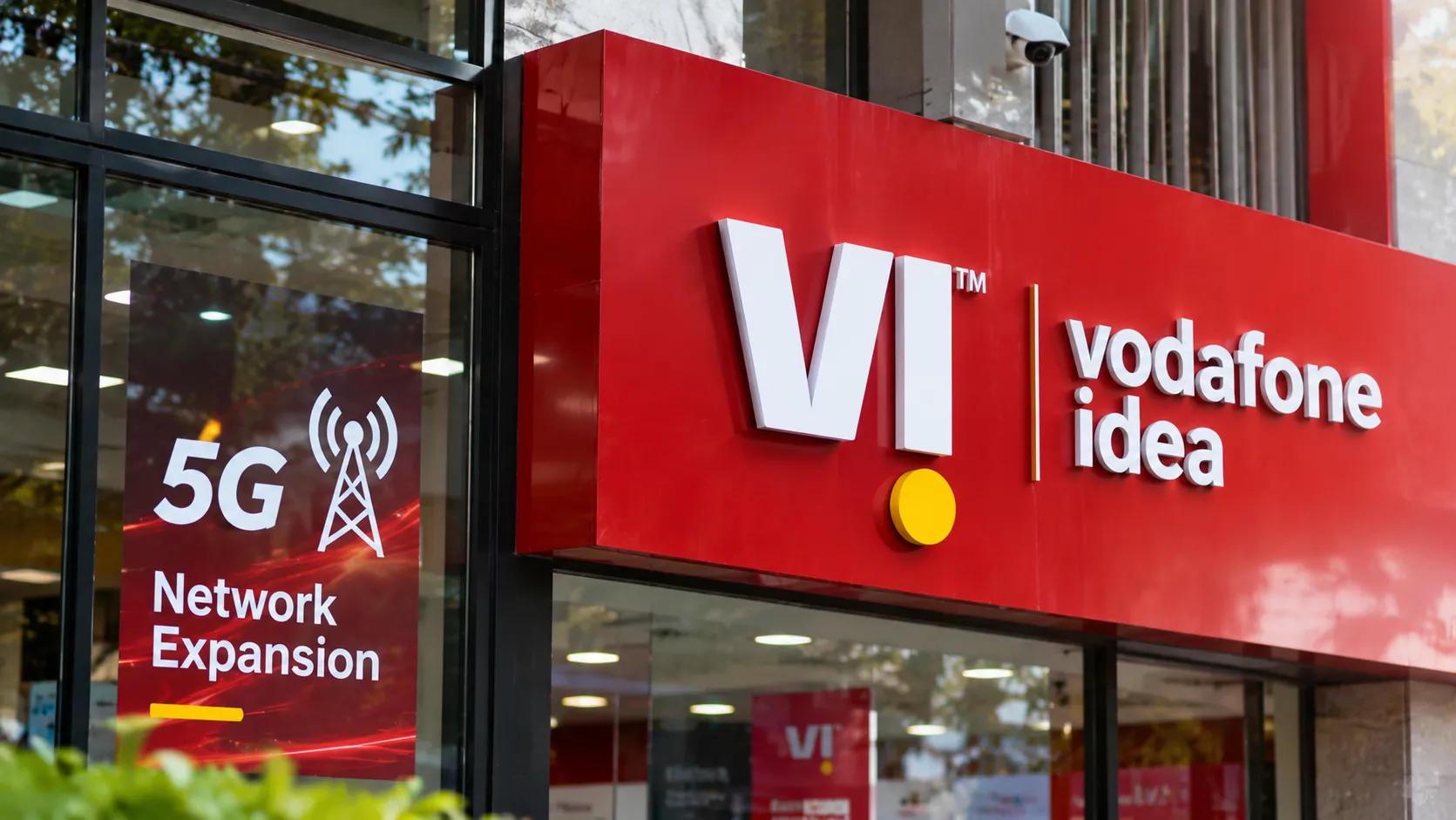
Vodafone Idea's consolidated net loss widened to ₹5,975 crore in the September quarter from ₹5,524 crore a year earlier, the telecom operator said on November 12, as a ₹462 crore mark-to-market loss on treasury assets offset operational gains. Revenue rose 6.2% to ₹11,884 crore, average revenue per user rose 10% to ₹198, and capital expenditure more than doubled to ₹3,946 crore.

By Shaym Kumar · Author13 November 2026New
Vodafone Idea's Q2 Loss Widens to ₹5,975 Crore on a Treasury Mark-to-Market Hit, Even as ARPU Rises 10% to ₹198 and Capex Doubles

Vodafone Idea, India's third-largest mobile operator, reported a wider quarterly loss, but the headline number obscures a business that is slowly strengthening its operations as it invests to catch up with its larger rivals.

The company's consolidated net loss rose to ₹5,975 crore for the July-September quarter, the second quarter of the 2026-27 financial year, from ₹5,524 crore a year earlier, according to results announced on Thursday, November 12, as reported by The Hans India. The loss was much wider than the ₹3,754 crore recorded in the April-June quarter.

The company attributed the increase to an "adverse impact of mark-to-market of treasury assets." It recorded an exceptional loss of ₹462 crore from remeasuring 328 crore shares held by Vodafone Group entities, compared with a gain of ₹1,816 crore on the same shares in the previous quarter.

Excluding exceptional items, the loss was ₹5,513 crore, slightly narrower than ₹5,562 crore a year earlier.

Revenue and profitability

Revenue from operations rose 6.2% year-on-year to ₹11,884 crore from ₹11,195 crore, and was up 1.7% from the previous quarter, according to The Hans India. EBITDA was ₹4,981 crore, up 6.3% year-on-year but down 1.1% sequentially, according to an Indian Opinion summary of reports by the Economic Times, CNBC-TV18 and BusinessLine.

The most encouraging metric was average revenue per user (ARPU), a key measure of how much each customer spends. ARPU rose 10% year-on-year to ₹198 from ₹180, which the company attributed mainly to customers upgrading to higher-value plans.

Subscribers

Vodafone Idea ended the quarter with 19.44 crore (194.4 million) subscribers, up from 19.31 crore in the June quarter but down from 19.67 crore a year earlier, according to The Hans India. The sequential increase extends a modest recovery after years of losing customers to Reliance Jio and Bharti Airtel.

Its 4G and 5G subscriber base rose to 131 million from 127.8 million a year earlier, reflecting the company's push to move customers to faster networks.
92360485-1b00-4c73-a0a8-1eb829744d4e.png

The capex push

Vodafone Idea's biggest challenge has been investing enough in its network to compete. Its capital expenditure more than doubled from the previous quarter to ₹3,946 crore, according to The Hans India. The company said it has placed capex orders worth more than ₹13,200 crore, of which nearly ₹6,000 crore has been executed.

The company has expanded its 5G coverage to 400 cities and added nearly 9,000 broadband towers in the quarter, the highest quarterly addition in nine quarters, according to Indian Opinion.

"The quarter's performance reflects steady progress against our priorities," chief executive Abhijit Kishore said. He indicated that further capex orders are tied to ongoing funding discussions.

The funding question

Vodafone Idea's survival has depended on repeated rounds of fundraising and government support. In 2023, the government became its largest shareholder after converting interest on deferred spectrum and adjusted gross revenue (AGR) dues into equity. The company has also raised money through a follow-on public offer and from its promoters, the Aditya Birla Group and Vodafone Group.

The company still carries a heavy burden of liabilities, including large dues to the government for spectrum and AGR. Securing bank funding for its network expansion has been a long-running challenge, and investors will watch closely for progress in debt-funding talks.

“The quarter's performance reflects steady progress against our priorities.”
— Abhijit Kishore, CEO, Vodafone Idea

A three-player market

India's telecom market has consolidated into three private operators, with Reliance Jio and Bharti Airtel holding the largest market shares and state-owned BSNL a distant fourth. Vodafone Idea's continued existence is important for competition: analysts have long warned that a duopoly could reduce choice and give the two leaders greater pricing power.

Tariff increases by all three operators in recent years have boosted ARPU across the industry, helping Vodafone Idea narrow its losses. But Jio and Airtel have used their stronger balance sheets to roll out 5G networks rapidly, leaving Vodafone Idea playing catch-up.

Why ARPU matters

ARPU growth is the clearest path to profitability for Indian telecom operators, which have historically charged some of the lowest mobile data prices in the world. Each increase in ARPU flows largely to the bottom line, since network costs are largely fixed. Industry executives have argued that ARPU needs to rise substantially further for the sector to earn adequate returns on its massive investments in spectrum and networks.

Vodafone Idea's ARPU of ₹198 still trails those of its larger rivals, reflecting a customer mix weighted towards lower-value prepaid plans.

The road to break-even

For Vodafone Idea to become profitable, it needs a combination of higher ARPU, subscriber growth, cost discipline and a manageable debt burden. The company's adjusted loss has been broadly stable, suggesting that operational improvements are being offset by high interest and depreciation costs.

The large investment in 5G and 4G networks is intended to stem subscriber losses and attract higher-value customers, but it will increase depreciation and interest costs in the short term.

What it means for consumers

For India's mobile users, a stronger Vodafone Idea means more competition and better service quality. The company's network expansion, including 5G in 400 cities, gives its customers access to faster speeds. However, operators may continue to raise tariffs to improve their finances, increasing costs for consumers.

What it means for investors

Vodafone Idea's shares are widely held by retail investors in India and are among the most actively traded stocks on the market. They tend to move sharply on news about funding, government support and AGR dues. The latest results show operational progress, but the company's financial position remains fragile, making it a high-risk investment.

Government as shareholder

The government's large shareholding gives it an unusual stake in Vodafone Idea's survival. Policymakers have repeatedly signalled that they want to preserve a three-player private market, and decisions on the treatment of the company's dues have been watched closely by investors as indicators of state support.

However, the government has also said it does not intend to run the company, and has left operational control with the Aditya Birla Group and Vodafone Group. Any further relief on dues, or additional conversion of liabilities into equity, would have significant implications for minority shareholders and for the company's ability to raise bank funding.

What comes next

Investors will watch for progress in Vodafone Idea's funding talks, further capex orders, subscriber trends and any government decisions on its dues. The pace of 5G expansion and ARPU growth will determine whether the company can stabilise its position in India's competitive telecom market.

TagsVodafone IdeaVitelecomQ2 FY27 resultsARPU5G4GcapexAbhijit KishoreReliance JioBharti AirtelAGR duesIndian telecomtariff hikessubscriber basedebtAditya Birla GroupVodafone GroupIndian stocksinvestors

Reader reviews

Sign in to rate and review this article.
Loading reviews…