US stocks ended a volatile week higher on Friday, recording their first weekly gain in three as renewed buying in companies tied to artificial intelligence and a retreat in oil prices helped investors look past another surge in Treasury yields.
The Dow Jones Industrial Average rose 478.64 points, or 0.93%, on Friday to close at 51,828.62. The S&P 500 gained 0.51% to 7,743.41, and the Nasdaq Composite added 0.5% to 27,068.72. The small-cap Russell 2000 edged up 0.1% to 2,837.55. For the week, the S&P 500 rose 1.2%, the Nasdaq 2.1% and the Dow 0.3%, while the Russell 2000 fell 0.8%. The S&P 500 ended the week about 0.7% below its record high set in August.
AI names lead the Friday rally
Technology companies linked to AI were among the strongest performers on Friday. Microsoft shares climbed 3.7% after the company unveiled new capabilities for its Copilot application, including a coding tool and an always-on AI agent. Qualcomm gained 4% and Dell Technologies 5%.
Akamai Technologies rose about 3% after announcing a multi-year cloud services agreement with Anthropic, under which the AI developer will pay Akamai $11.6 billion over seven years. Reuters reported that the deal includes a warrant that could give Anthropic an ownership stake of up to 5% in Akamai. The agreement is the latest example of AI developers locking in long-term computing capacity from infrastructure providers, and of the stock market rewarding companies that secure such contracts.
Wednesday's sell-off showed how sensitive markets have become to the bond market. The 10-year yield reached 5.135% that day, its highest level since July 2007, and posted its biggest one-day move since April 2025 after purchasing managers' index readings came in hotter than expected. Utilities and consumer discretionary stocks led the decline, each falling more than 1%, as investors priced in the possibility that the Federal Reserve, now chaired by Kevin Warsh, would need to raise rates again.
The week had started strongly. On Monday, the S&P 500 jumped 1.5% and the Nasdaq surged 2.3% to a record close as chip stocks rallied, with oil and bond yields both easing. The Nasdaq set another record on Tuesday. The mood turned on Wednesday, when hotter-than-expected business activity data pushed the 10-year Treasury yield above 5.1% and all four major indexes fell, with the Russell 2000 down 1.8%. Thursday was volatile but ended nearly flat.
Oil eases on Hormuz hopes
Oil prices provided relief at the end of the week. West Texas Intermediate crude fell 2.33% on Friday to settle at $92.41 a barrel, and Brent crude, the international benchmark, declined 2.14% to $104.32. Prices slipped on optimism that the Strait of Hormuz could be reopened, after Iran asked the United States to return to a memorandum of understanding from June that had failed to end the Middle East conflict. Reports said negotiators were exploring a phased arrangement under which Tehran would restore access through the strait while Washington lifted its blockade of Iranian ports.
Energy markets have been a central driver of sentiment for months. Higher oil prices raise costs for businesses and consumers and feed into inflation expectations, which in turn push up bond yields. The White House has also been weighing a ban on diesel exports as fuel prices rise ahead of November's midterm elections, a move the oil industry has warned could worsen the global fuel crisis.
Yields at levels last seen in 2007
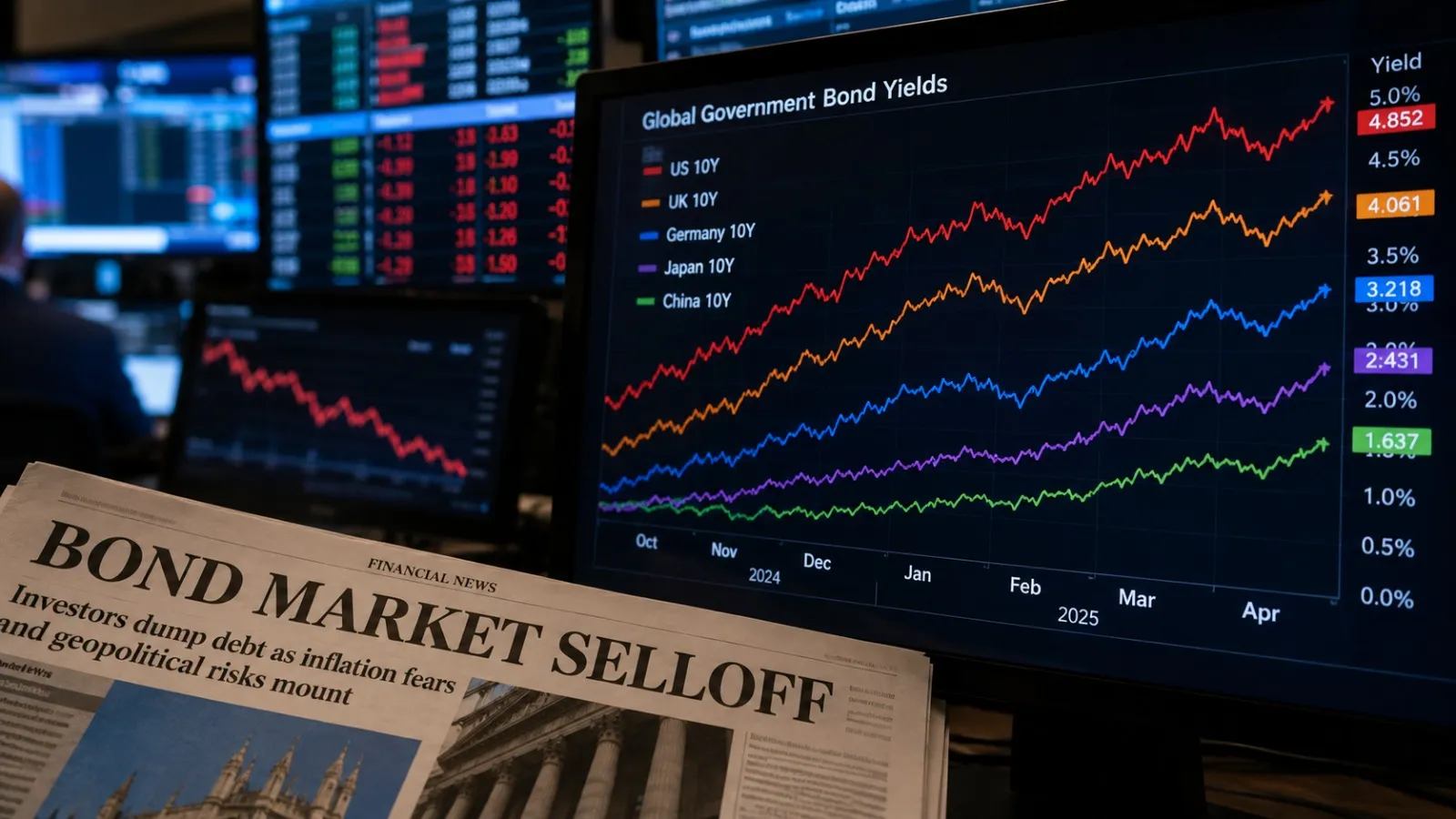
The bond market remained the biggest source of concern. The yield on the 10-year Treasury note rose to 5.20% on Thursday, its highest level since 2007, before easing as oil prices fell on Friday. The Federal Reserve raised interest rates earlier this month for the first time in three years, to a range of 3.75–4.00%, and markets are pricing in the possibility of further increases as inflation pressures persist.
Higher yields weigh on stocks in two ways. They raise borrowing costs for companies and households, and they make government bonds a more attractive alternative to equities, particularly for growth companies whose valuations depend on earnings far in the future. That the Nasdaq still gained more than 2% in a week when yields reached a 19-year high shows how strongly investors remain committed to the AI theme.
A narrow advance
The rally was not broad. The Russell 2000's weekly decline of 0.8%, compared with gains of 2.1% for the Nasdaq and 1.2% for the S&P 500, showed that large technology companies did most of the work. Smaller companies tend to be more sensitive to higher borrowing costs and domestic economic conditions, and their underperformance is a reminder that the benefits of the AI investment cycle are concentrated in a relatively small group of stocks.
Geopolitics also played a role. Chinese President Xi Jinping ended a state visit to Washington on Friday, during which the two sides extended their trade truce, and US and Chinese officials discussed AI and technology issues. Markets had hoped for a broader trade breakthrough, but the visit's outcome was more modest.
What it means for global and Indian investors
For investors outside the United States, including those in India, the direction of US yields and oil prices matters as much as the performance of Wall Street itself. High US yields have drawn capital away from emerging markets: foreign portfolio investors have been heavy sellers of Indian equities in September, and India's Sensex and Nifty have fallen for seven consecutive weeks. A sustained retreat in oil and a stabilisation in yields would ease that pressure.
Analysts described a market pulled between strong corporate profits in its heavyweight sectors on one side and geopolitical and monetary policy uncertainty on the other. "Geopolitical risk and bond market volatility continues to roil markets, although Wall Street remains remarkably resilient amidst the tumult," said Kyle Rodda, senior financial market analyst at Capital.com.
Next week, investors will watch US economic data, comments from Federal Reserve officials and any progress in US–Iran talks for signs of whether that ceiling is about to rise, or whether yields and oil will again set the market's direction.