Wall Street absorbed one of the most dramatic corporate leadership changes in years with surprising composure on Thursday, but beneath the calm headline numbers, investors were reshuffling their bets on the artificial intelligence trade.
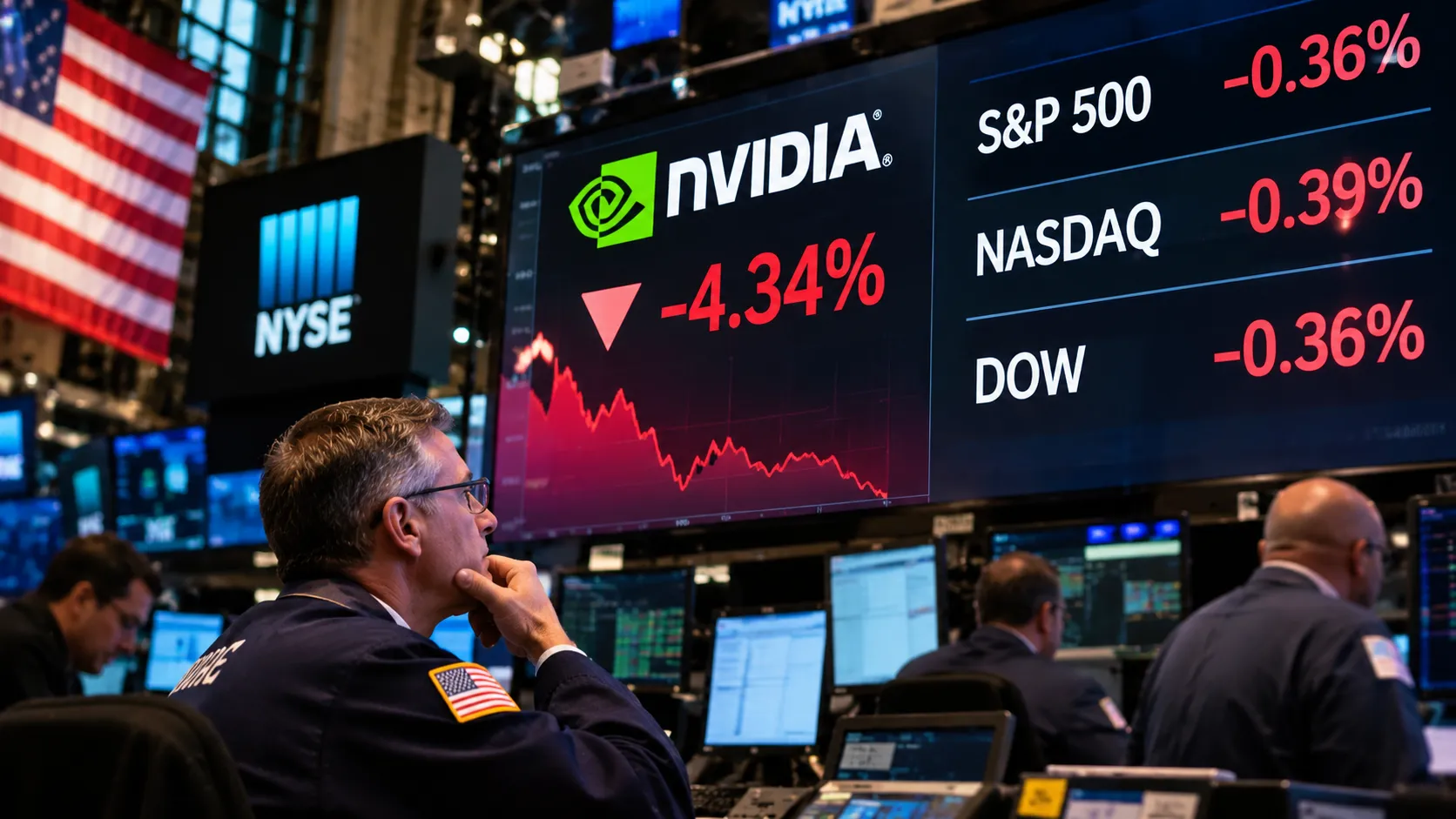
The S&P 500 fell 0.36% to 7,592.40 on November 12, the Nasdaq Composite slipped 0.39% to 25,366.09 and the Dow Jones Industrial Average declined 0.36% to 52,297.09, according to The Motley Fool. Small-cap stocks fared worse, with the iShares Russell 2000 exchange-traded fund falling 1.64%, according to StockTitan.
The day was dominated by Nvidia, whose co-founder and chief executive Jensen Huang resigned before the market opened. Nvidia's shares fell as much as 14.35% to $148.80, their lowest level in 52 weeks, shortly after trading began, before recovering to close 4.34% lower at $166.19.
Rivals rally
Investors moved quickly to position for a possible shift in the competitive landscape. Advanced Micro Devices, Nvidia's main rival in graphics processors, rose 5.86%, and Broadcom, which designs custom AI chips for large technology companies, gained 5.54%, according to The Motley Fool.
The moves reflected speculation that customers might diversify their suppliers if Nvidia's leadership transition creates uncertainty. Large cloud providers and AI companies have already been developing their own chips and buying from multiple suppliers to reduce their dependence on Nvidia.
Other AI-linked stocks fell. Super Micro Computer, a maker of AI servers built around Nvidia chips, fell 11.3%, and AI cloud provider Nebius fell 16.84%, according to StockTitan.
Nvidia's heavy trading
Nvidia's trading volume of about 748 million shares was more than five times its average of 141 million, according to The Motley Fool, as investors reacted to the news. The company's market value at the close was about $4.01 trillion.
Nvidia's shares have fallen almost 11% since November 6 and are about 31% below their record close of $239.24 on October 6, according to StockTitan. The decline reflects the board's investigation into Huang's conduct, reports linking him to a woman suspected of ties to Chinese intelligence, and broader concerns about AI spending.
Yields edge towards 5%
Rising bond yields added to the pressure on stocks. The 10-year US Treasury yield climbed to about 4.98%, approaching the 5% level last seen during periods of intense market stress, according to The Motley Fool. Higher yields raise borrowing costs for companies and consumers and make bonds more attractive relative to stocks.
Investors are bracing for a possible interest rate increase by the Federal Reserve in December after hotter-than-expected inflation data earlier in the week. Traders had priced in a high probability of a rate hike, according to market reports earlier in the week.
Housing market strain
Economic data released on Thursday highlighted the impact of high interest rates. Existing-home sales fell 5.5% in October from September to an annual pace of 3.75 million, the lowest since August 2010, according to the National Association of Realtors, as reported by StockTitan. Sales were 8.8% lower than a year earlier.
The median existing-home price rose 0.4% from a year earlier to $416,700. The association's chief economist said mortgage rates are at their highest level since 2000, apart from one month in 2023.
Initial jobless claims rose by 9,000 to 200,000 in the week ended November 7, according to the Labor Department, a level that still indicates a relatively healthy labour market.