FundingMarket Data Women5 MIN READ

Walmart Raises Full-Year Outlook as E-Commerce Jumps 23% and Advertising Grows 37% in the US, While Flipkart Sale Timing Shifts Growth

Walmart reported third-quarter revenue of $188.8 billion, up 5.2%, on November 19 and raised its full-year sales and earnings guidance, as US e-commerce sales rose 23% and US advertising revenue grew 37%. The retailer said the timing of Flipkart's Big Billion Days sale shifted about 500 basis points of international growth into the fourth quarter. Shares fell about 1%.

By Shaym Kumar · Author20 November 2026New
Walmart Raises Full-Year Outlook as E-Commerce Jumps 23% and Advertising Grows 37% in the US, While Flipkart Sale Timing Shifts Growth

The world's largest retailer is increasingly powered by its websites, apps and advertising business, and its latest results show the strategy is working.

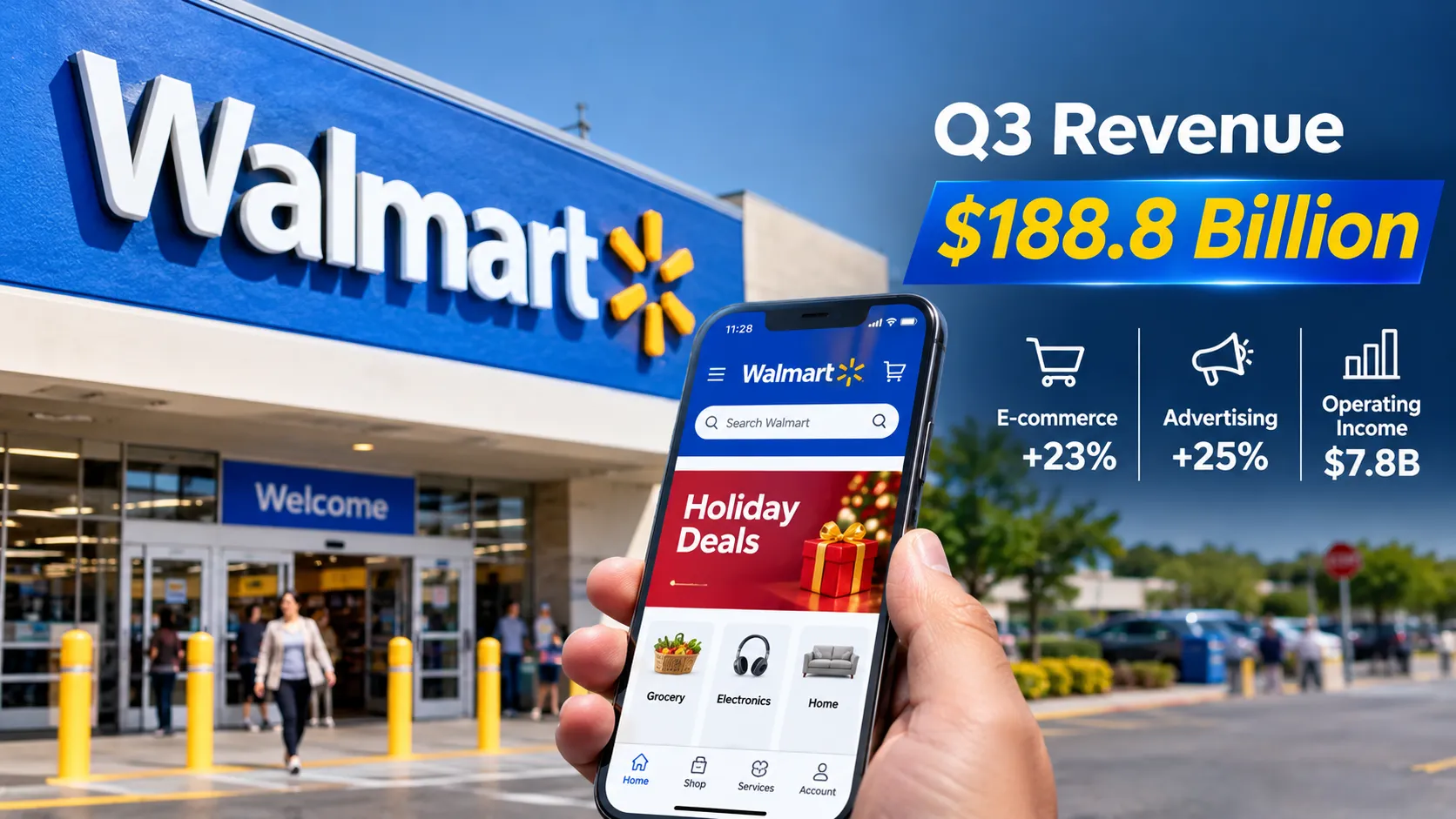
Walmart reported revenue of $188.8 billion for the third quarter of its 2027 financial year on Thursday, November 19, up 5.2% from a year earlier. The company raised its full-year guidance for sales and earnings.

The key numbers

US comparable sales, which exclude the impact of store openings and closures, rose 2.9%. US e-commerce sales grew 23%, while global e-commerce sales increased 17%.

Global advertising revenue grew 25%, with US advertising, through the Walmart Connect platform, up 37%. Operating income rose 16% to $7.8 billion.

Earnings per share were $0.62 on a reported basis and $0.65 on an adjusted basis.

Raised guidance

Walmart now expects full-year sales growth of 4.9% to 5.2% in constant currency, and adjusted earnings per share of $2.84 to $2.89.

The raised outlook reflects confidence in consumer demand heading into the holiday season, the most important period of the year for retailers.

A new CEO's first holiday season

John Furner, who became Walmart's chief executive earlier this year, succeeding Doug McMillon, is overseeing his first holiday season in the top job. Furner previously led Walmart's US business and has emphasised the company's strategy of combining stores, e-commerce and advertising.

The Flipkart effect

Walmart said the timing of Flipkart's Big Billion Days sale, the Indian e-commerce company's biggest annual sales event, shifted about 500 basis points of international growth from the third quarter into the fourth quarter.

Walmart owns a majority stake in Flipkart, one of India's two largest e-commerce platforms, along with Amazon. The Big Billion Days sale, held during the festive season, generates a significant share of Flipkart's annual sales. When the sale falls in a different quarter from the previous year, it affects reported growth comparisons.

Walmart's international business includes Flipkart and PhonePe in India, Walmex in Mexico and Central America, and operations in Canada, China and elsewhere.

Why advertising matters

Advertising has become one of Walmart's most important growth drivers. Brands pay to promote their products on Walmart's website and app, in its stores and through its data on customer shopping behaviour. Advertising revenue is highly profitable compared with retail sales, helping to improve Walmart's overall margins.

Retail media, the advertising businesses run by retailers, has become one of the fastest-growing segments of the advertising industry, with Amazon the global leader and Walmart a strong second in the US.

E-commerce profitability

Walmart's e-commerce business has grown rapidly while improving profitability, helped by faster delivery, higher order volumes, advertising revenue and membership income from Walmart+. The company has invested heavily in automation in its fulfilment centres and in delivery options, including deliveries in under three hours for many customers.

Why shares fell

Despite the strong results and raised guidance, Walmart shares fell about 1% on Thursday. The decline came on a day when the broader market fell sharply, with the Dow Jones Industrial Average dropping more than 1,100 points on concerns about a Federal Reserve rate increase.

Walmart's shares had also performed strongly ahead of the results, so expectations were high. Investors may also have been cautious about consumer spending in an environment of elevated inflation and rising interest rates.

“Walmart's growth engine is no longer just its stores. It is e-commerce, advertising and the data that connects them.”
— TIGI Markets Desk

The US consumer

Walmart's results are closely watched as an indicator of the health of the US consumer, because the company serves a broad range of households across income levels. Walmart has gained market share among higher-income households seeking value, while lower-income customers have been under pressure from inflation.

What it means for India

Walmart's investment in Flipkart and PhonePe makes it one of the largest foreign investors in India's digital economy. Flipkart has been preparing for a potential public listing in India, which would be one of the country's largest IPOs. PhonePe, India's leading UPI payments app, is also preparing for an IPO.

Walmart is also one of the largest buyers of goods from India, with a goal of sourcing $10 billion of products a year from the country by 2027.

37198dd9-b4ca-48b7-84ab-97019dd2378e.png

The membership engine

Walmart has also grown its membership businesses, including Walmart+ in the US and Sam's Club. Membership fees provide a steady, high-margin income stream and encourage customers to shop more frequently. Walmart+ offers benefits such as free delivery, fuel discounts and streaming content.

Membership income, together with advertising, has become an important part of Walmart's strategy to grow profits faster than sales, giving the retailer more resilient earnings across economic cycles.

Tariffs and pricing

Like other US retailers, Walmart has had to manage the impact of tariffs on imported goods. The company has said it seeks to keep prices low for customers while working with suppliers to manage costs, and its scale gives it more bargaining power than smaller competitors.

Increasing sourcing from countries such as India and Mexico can help Walmart diversify its supply chain and reduce reliance on any single country.

Flipkart's road to an IPO

Flipkart has been restructuring ahead of a planned public listing in India, including moving its holding company from Singapore to India. A listing would allow Walmart to realise some of the value of its investment, which it made in 2018 when it acquired a majority stake for about $16 billion.

Flipkart faces intense competition from Amazon, Reliance's JioMart, Meesho and quick-commerce platforms, which have changed how Indian consumers shop for groceries and everyday items.

The holiday outlook

Walmart's raised guidance suggests the company expects a solid holiday season, despite concerns about inflation and interest rates. The retailer has invested in lower prices on key items, expanded its range of gifts and seasonal products, and increased its delivery capacity to meet demand during the busiest weeks of the year.

Retail analysts will compare Walmart's holiday performance with that of rivals such as Target, Costco and Amazon to assess the health of the US consumer and the competitive position of each retailer. Walmart's broad customer base and focus on value have helped it gain market share in recent years, particularly among higher-income households seeking lower prices.

What comes next

Investors will watch Walmart's holiday season performance, the growth of its advertising and e-commerce businesses, and progress on Flipkart's listing plans. The fourth quarter, which includes the holiday season and the shifted Flipkart sale, will be a key test of the raised guidance.

TagsWalmartearningsQ3 FY27John Furnere-commerceretail mediaadvertisingFlipkartBig Billion DaysPhonePeWalmart IndiaguidanceUS consumerretailSam's ClubWalmart Connectstock marketWall StreetIndia e-commerceinvestors

Reader reviews

Sign in to rate and review this article.
Loading reviews…

