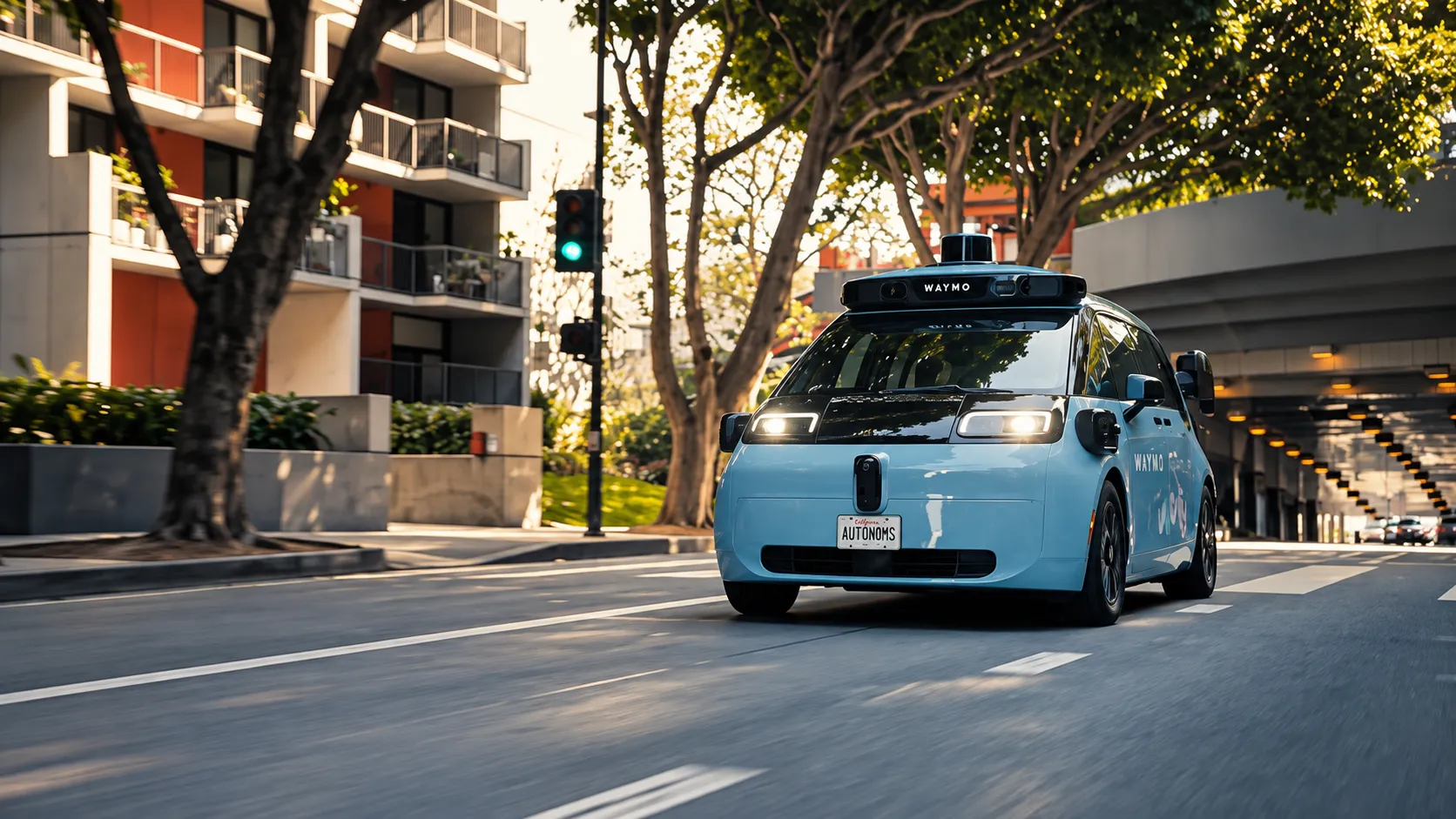
SAN FRANCISCO, Oct 8 Waymo, the autonomous driving company owned by Alphabet, has closed a $5 billion loan, its first ever debt financing, as it seeks to fund a rapid expansion of its robotaxi fleet across the United States and overseas.
The lender group reads like a roll call of the world's largest asset managers and private credit firms: PIMCO, Blackstone, Sixth Street, Capital Group, Loomis Sayles, T. Rowe Price, Apollo, Blue Owl, Diameter Capital, Franklin Templeton, Fidelity, HPS and Oaktree. Goldman Sachs acted as sole lead bookrunner.
The deal comes just months after Waymo raised $16 billion in equity in February 2026 at a valuation of $126 billion, in a round led by Dragoneer, DST Global and Sequoia Capital. Together, the two transactions give the company one of the largest war chests in the technology industry outside the leading AI labs.
Key facts at a glance
• Deal: $5 billion loan, Waymo's first debt financing
• Lenders: PIMCO, Blackstone, Sixth Street, Capital Group, Loomis Sayles, T. Rowe Price, Apollo, Blue Owl, Diameter Capital, Franklin Templeton, Fidelity, HPS, Oaktree
• Arranger: Goldman Sachs, sole lead bookrunner
• Latest equity: $16 billion in February 2026 at a $126 billion valuation, led by Dragoneer, DST Global and Sequoia Capital
• Earlier rounds: $3.2 billion (2020), $2.5 billion (2021), $5.6 billion Series C (2024)
• Footprint: 15 markets; testing in London and Tokyo
• Scrutiny: NHTSA and NTSB inquiries related to school-bus incidents
Why debt, and why now
For most of its history, Waymo has been funded by Alphabet and by outside equity investors. Its previous external rounds included $3.2 billion in 2020, $2.5 billion in 2021 and a $5.6 billion Series C in 2024, followed by this year's $16 billion raise.
Turning to debt marks a significant shift. Lenders, unlike venture investors, need confidence that a borrower can generate predictable cash flows to service and repay the loan. The willingness of conservative fixed-income investors and private credit funds to lend $5 billion suggests they see Waymo's operations — and the vehicles and infrastructure that underpin them — as increasingly tangible, revenue-generating assets.
Debt also offers advantages for the company. It allows Waymo to finance capital-intensive expansion — such as buying and equipping vehicles, building depots and charging infrastructure — without diluting existing shareholders. As robotaxi fleets scale, financing them begins to resemble financing other asset-heavy transport businesses, such as airlines or car-rental companies, where debt plays a central role.
A fast-growing footprint
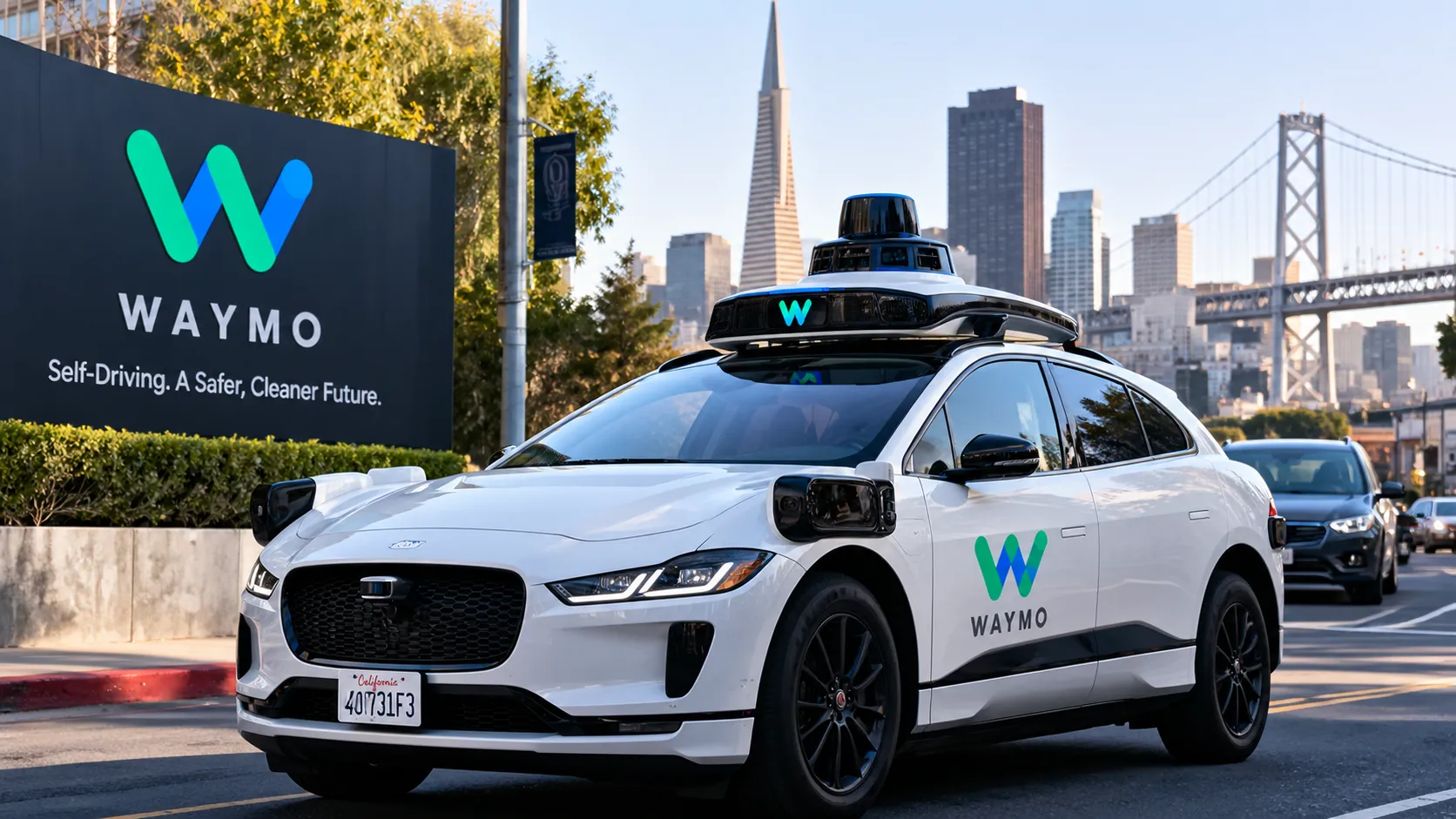
Waymo now operates in 15 markets and is testing in London and Tokyo, its first major steps outside the United States. The company has expanded steadily from its early base in Phoenix to cities including San Francisco, Los Angeles and Austin, offering fully driverless rides to the public.
Each new city requires detailed mapping, local testing, regulatory approvals and a fleet large enough to provide reliable service. The $5 billion loan gives Waymo the financial capacity to accelerate that process, potentially adding more cities and vehicles at a faster pace than equity funding alone would allow.
The private credit boom
The deal also reflects the growing role of private credit in financing technology. Firms such as Blackstone, Apollo, Blue Owl, HPS and Sixth Street have raised enormous pools of capital in recent years and have become major lenders to companies building data centres, chip plants and other AI-related infrastructure. Lending to a robotaxi operator extends that trend into autonomous transport.
For investors, loans to companies with strong backers like Alphabet can offer attractive yields relative to traditional corporate bonds. For borrowers, private credit can provide large sums quickly and with flexible terms. The participation of traditional asset managers such as Capital Group, T. Rowe Price, Fidelity and Franklin Templeton alongside private credit specialists points to broad institutional appetite for the deal.
Regulatory headwinds
Waymo's expansion has not been without scrutiny. The company faces investigations by the National Highway Traffic Safety Administration (NHTSA) and the National Transportation Safety Board (NTSB) related to incidents involving school buses. How those probes are resolved could influence regulatory attitudes towards autonomous vehicles more broadly.
Safety remains the central question for the industry. Waymo has published data arguing that its vehicles are involved in fewer injury-causing crashes than human drivers over comparable distances, but each high-profile incident attracts intense attention. Regulators, city officials and the public will continue to scrutinise performance as fleets grow.
Analysts will also watch how Waymo deploys the capital across vehicles, depots and new markets, and whether further debt raises follow as the fleet grows.
The unit economics question
For lenders, the critical question is whether robotaxi operations can generate reliable cash flow. Each autonomous vehicle carries significant costs: the base vehicle, sensors and computing hardware, maintenance, cleaning, insurance, remote assistance staff and depot space. Against that, a driverless vehicle avoids the largest cost of conventional ride-hailing — the driver — and can, in principle, operate for many more hours each day.
The economics improve as hardware costs fall and as vehicles are used more intensively. Waymo's expansion into more cities and denser service areas should increase utilisation, while each new generation of sensors and computing hardware has tended to be cheaper than the last. Debt financing is a bet that this trajectory will continue.
The competitive picture
Waymo's funding advantage comes as competition in autonomous driving intensifies. Tesla is pursuing its own robotaxi ambitions, Chinese companies such as Baidu's Apollo Go and Pony.ai are expanding at home and abroad, and ride-hailing platforms including Uber are partnering with multiple autonomous vehicle developers to offer driverless rides on their networks.
With $16 billion in fresh equity and $5 billion in debt, Waymo is well positioned to outspend most rivals as it races to expand. For India's technology professionals and the global Indian diaspora — many of whom work in AI, robotics and software engineering in the US — Waymo's growth also signals expanding demand for talent in autonomous systems.
The larger message for global investors is that autonomous driving is entering a new phase. When some of the world's most conservative lenders are willing to finance robotaxis, the technology is no longer viewed purely as a moonshot. It is becoming an infrastructure business — one that will be judged on safety, scale and the ability to generate returns.