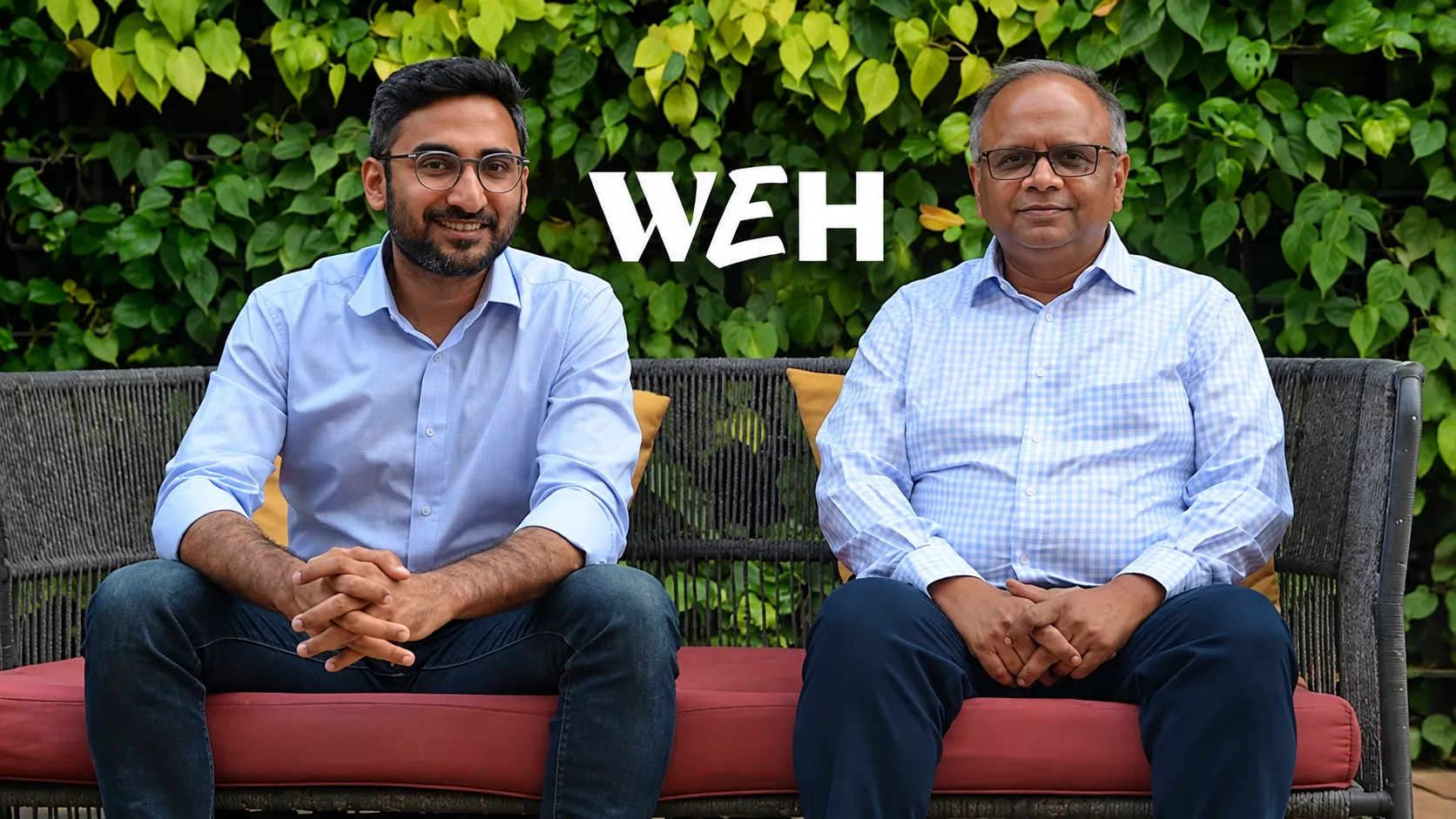
WEH Ventures, the seed-stage venture capital firm behind early bets on companies such as Smallcase, Jar, Pratilipi and Animall, has announced the first close of its third fund, which is targeting a corpus of ₹250 crore. The firm did not disclose how much it raised in the first close.
The new fund will back 20 to 25 early-stage Indian startups across sectors including artificial intelligence, healthcare, financial technology and advanced manufacturing. WEH Ventures expects to reach a final close by the middle of 2027.
The announcement, made on 29 September 2026, adds to a steady flow of new domestic venture funds in India, many of them focused on the earliest stages of company building. It also offers a window into who is backing seed-stage investing in the current market: increasingly, it is family offices, successful founders and senior executives rather than only large institutional investors.
Who is backing Fund III
The first close has drawn a mix of international and domestic investors. Play Capital, a Nordic fund of funds, is among the early backers, alongside family offices including Eraya, Twin & Bull Investments and Heritage Investments. Exited founders from companies such as Oziva, the plant-based nutrition brand, and GS Labs, the technology services firm, have also committed capital.
The limited partner base extends to senior corporate leaders. Chief executives and senior executives from companies including Thermax, Haleon, Lenovo and PNB MetLife are participating, as are senior Silicon Valley executives associated with companies such as Arlo and Intuitive Surgical.
This composition is notable. Institutional limited partners, such as pension funds and endowments, have historically been reluctant to commit to smaller Indian funds, particularly at the seed stage, where returns take longer to materialise and risks are higher. Operators and entrepreneurs who have built and sold companies bring a different perspective. They understand the difficulty of early company building and are often willing to back managers whose judgement they trust, while also offering networks and mentorship to portfolio founders.
A seed specialist's record
WEH Ventures has been investing since 2017 and has backed more than 30 companies. Its portfolio includes Smallcase, a platform that lets investors buy curated baskets of stocks; Jar, a savings app that helps users put small amounts into digital gold; Pratilipi, a storytelling platform for regional-language readers and writers; and Animall, a marketplace for buying and selling dairy cattle.
Those investments share a common thread: products built for large Indian audiences that were underserved by existing offerings, from first-time investors to rural dairy farmers. Several have gone on to raise substantial later-stage funding from larger investors, a key marker of success for any seed fund.
Where the money will go
WEH Ventures has identified four focus areas for Fund III. Artificial intelligence is the most prominent, reflecting a global surge in investor interest and a growing number of Indian startups building AI-native products for enterprises and consumers. Healthcare offers opportunities in diagnostics, care delivery and health financing, where India's large population and uneven access to services create significant demand.
Financial technology remains a core theme for many Indian investors, despite tighter regulation in areas such as digital lending. The firm's history with Smallcase and Jar suggests continued interest in wealth and savings products for mainstream consumers. Advanced manufacturing, meanwhile, aligns with India's broader push to strengthen domestic production in electronics, components and industrial technology, supported by government incentives and global supply chain diversification.
With a target of 20 to 25 companies, the fund will make relatively concentrated bets. That approach allows the firm to reserve capital for follow-on investments in its best-performing companies, a practice that has become increasingly important as seed-stage companies take longer to reach their next funding milestone.
The state of seed investing in India
The launch comes amid a mixed picture for early-stage funding. Data from Tracxn show that Indian technology companies raised about $10.3 billion in the first nine months of 2026, around 7% more than in the same period of 2025. But the recovery has been uneven. Seed funding has fallen even as early-stage rounds have strengthened, meaning that fewer companies are securing their first institutional cheques.
That dynamic creates both a challenge and an opportunity for seed specialists. Founders have fewer options, which can improve terms for investors, but the companies that do raise must clear a higher bar to secure their next round. Larger funds are also moving earlier: Peak XV this week raised the ceiling for its Surge programme to $5 million per startup, underlining the competition for the most promising founders.
## What founders can expect
For entrepreneurs, a seed investor's value often lies as much in its support as in its cheque. WEH Ventures' limited partner base gives it a bench of operators with deep experience in consumer brands, technology services, insurance and industrial manufacturing. Founders in the fund's portfolio can expect introductions to potential customers, senior hires and later-stage investors, the kind of help that can decide whether a young company survives its first two years.
The fund's concentrated structure also implies closer engagement. With a limited number of companies, the partners can spend more time with each founder, helping with hiring, pricing, go-to-market strategy and fundraising. That hands-on model has become a point of differentiation for smaller funds competing against larger firms that can offer bigger cheques but less individual attention.
Why domestic capital matters
The rise of funds backed by Indian family offices and entrepreneurs is part of a broader shift in the country's venture ecosystem. For much of the past two decades, Indian startups relied heavily on foreign capital, particularly from the United States, Japan and Singapore. Domestic capital pools have grown as wealth creation from listed companies, startup exits and family businesses has increased, and as regulators have made it easier to invest through alternative investment funds.
That diversification can make the ecosystem more resilient. When global investors pulled back during the funding downturn of 2022 and 2023, domestic funds and angel networks helped sustain early-stage activity. WEH Ventures' Fund III, with its blend of Nordic, Indian and Silicon Valley backers, reflects that more balanced model.
For founders, the new fund adds another source of early capital from an investor with a record of backing products for mass Indian audiences. For the ecosystem, it is a further sign that seed investing, despite its risks, continues to attract people who have built companies themselves and want to help others do the same.