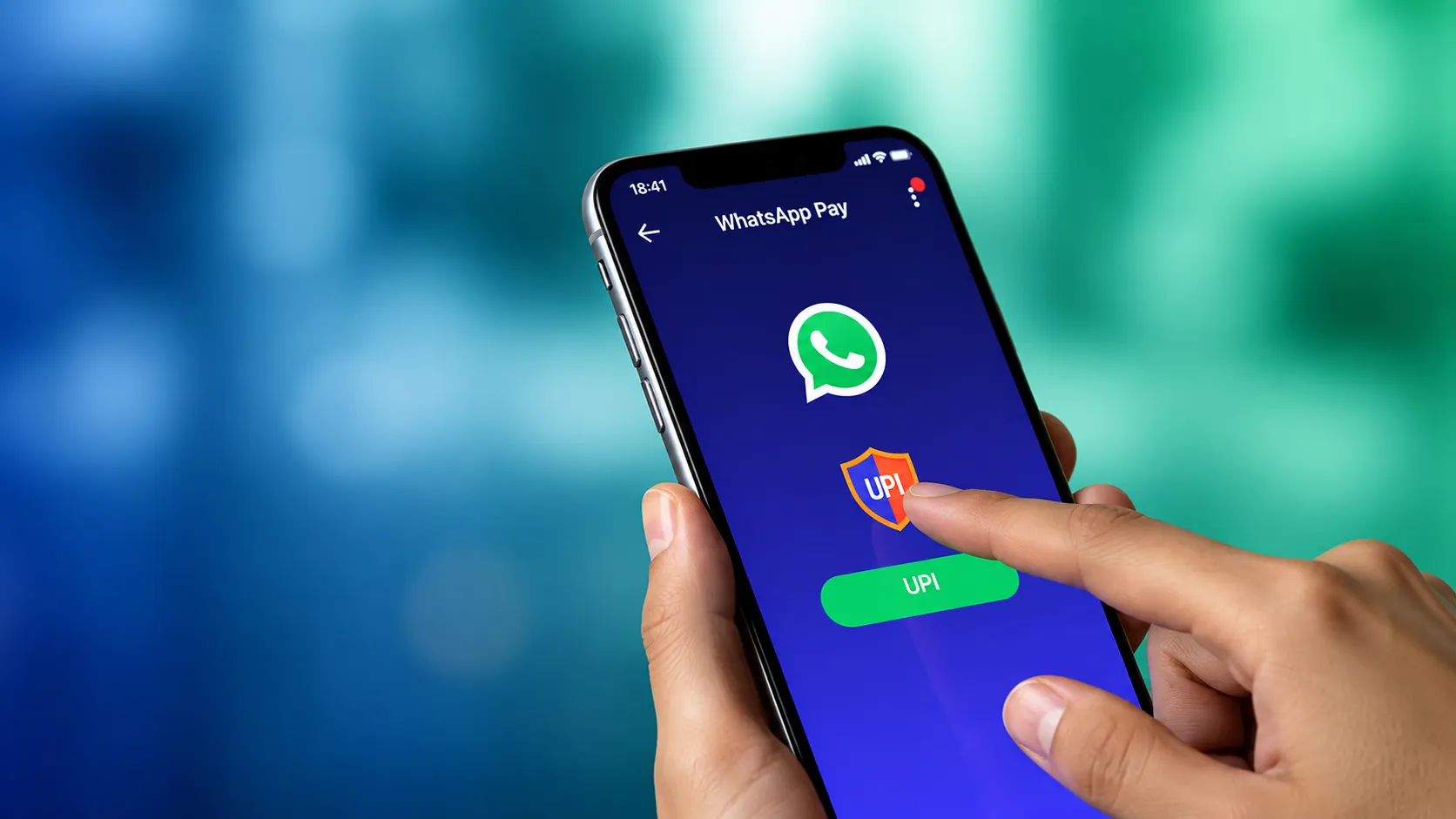
WhatsApp has launched an in-app bill payment feature for its Indian user base, allowing customers to find, manage and pay household and utility bills directly within the messaging app rather than switching to a dedicated payments application. Powered by the Bharat Connect network, the feature covers 22,722 billers across 30 categories, including electricity, gas, water, FASTag, insurance and loan repayments, and is being rolled out gradually across both Android and iOS devices.
The launch represents Meta's most direct move yet to convert WhatsApp's enormous reach in India, where the app is used by hundreds of millions of people daily, into a genuine competitor within the country's crowded digital payments landscape, a market that has so far been dominated by dedicated fintech applications rather than messaging platforms.
The rollout also arrives at a moment when India's Unified Payments Interface ecosystem has come under growing regulatory attention regarding market concentration, with the two dominant players controlling a substantial majority of overall transaction volume, prompting policymakers to periodically discuss measures aimed at encouraging greater competitive balance across the broader UPI application landscape.
Fintech professionals note that bill payment functionality, while seemingly incremental compared with broader payment features, has historically served as an effective wedge product for driving sustained app engagement, since the recurring, calendar-anchored nature of utility bills creates predictable monthly touchpoints that platforms can build broader financial services engagement around over time, a pattern industry practitioners expect WhatsApp's product strategy to lean into further as its India payments ambitions continue to evolve.
The feature places WhatsApp in more direct competition with PhonePe, Google Pay and Paytm, all of which have offered bill payment functionality for years and built substantial user habits around their respective platforms. WhatsApp Pay, despite its association with one of India's most widely used apps, still trails those market leaders by a considerable margin, having processed 16.78 crore Unified Payments Interface transactions worth INR 12,957 crore in July 2026, a volume that ranks it eighth among the country's UPI applications.
That gap illustrates a broader challenge for WhatsApp's payments ambitions in India: despite unmatched reach as a messaging platform, converting casual chat users into active, habitual payments customers has proven more difficult than industry observers initially expected when the feature first launched several years ago.
Bharat Connect, the underlying bill payment infrastructure network that powers WhatsApp's new feature, has itself become an increasingly important piece of India's digital public infrastructure stack, standardising biller integration across thousands of utility providers, insurers and lenders in a way that allows multiple competing payment applications to plug into a common backend rather than each negotiating separate integration agreements with every individual biller.
The 22,722 billers covered at launch span a notably broad range of categories from municipal utilities to private insurers, a scope that required WhatsApp's team to coordinate extensive backend integration work with the Bharat Connect network well before the consumer-facing feature became visible, underscoring the considerable infrastructure investment required to make bill payments function reliably at the scale WhatsApp's Indian user base demands.
The bill payments push has, however, gained fresh momentum since CRED founder Kunal Shah took over as global head of WhatsApp's payments business in June, a leadership change that industry watchers have interpreted as a signal of renewed strategic focus on India's payments market from Meta's broader leadership team. Shah's background building a consumer fintech brand known for polished user experience and habit-forming design suggests WhatsApp may be preparing a more aggressive push into adjacent financial services categories beyond simple peer-to-peer transfers.
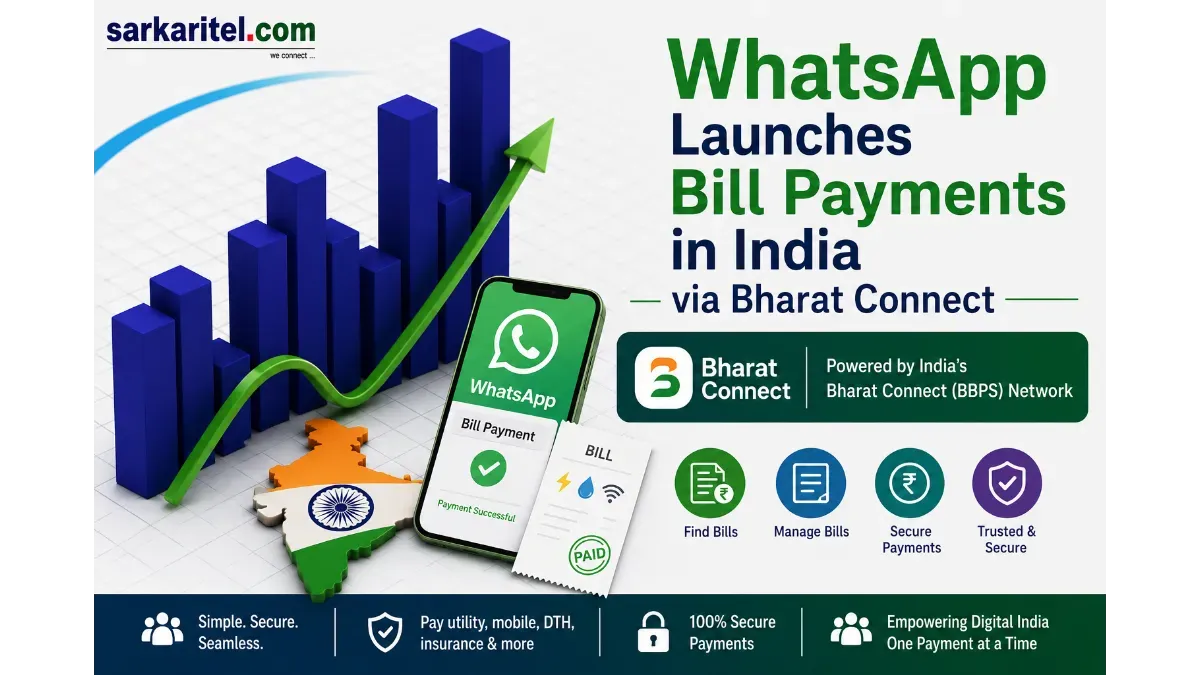
Bill payments, in particular, represent a category with naturally recurring usage, unlike one-off peer-to-peer transfers, making it a strategically sound entry point for a platform trying to build sustained payments engagement among users who may otherwise open a competing app only when a bill happens to be due.
Kunal Shah's appointment to lead WhatsApp's global payments effort has been closely watched within India's fintech industry given his track record building CRED around a similarly habit-forming, high-frequency use case, and industry observers have speculated that his mandate may extend well beyond bill payments into a broader suite of financial services features designed to deepen WhatsApp's engagement within India's crowded digital finance ecosystem.
For business leaders and policymakers focused on India's digital public infrastructure, WhatsApp's expanded payments push underscores both the opportunities and the competitive tensions inherent in building interoperable systems like the Unified Payments Interface, which allow multiple large technology platforms to compete on a shared underlying rail rather than each building proprietary, closed payment networks.
For India's broader digital payments ecosystem, WhatsApp's expanded push adds another well-capitalised player into an already intensely competitive market, one where user acquisition costs have risen steadily even as the overall pool of digital payments users approaches saturation in urban India. Whether WhatsApp can meaningfully dent the market share of entrenched leaders will likely depend less on feature parity and more on whether it can convert its unmatched daily engagement into genuine payments habit formation.
The coming months will be a useful test of that thesis, as WhatsApp's rollout reaches a broader share of its Indian user base and industry data begins to reveal whether bill payments specifically can succeed where earlier attempts at broader payments adoption have struggled to move the needle against incumbents.
For incumbent payment applications, WhatsApp's expanded push represents a competitive threat that is difficult to dismiss given the platform's sheer scale of daily active usage across virtually every demographic segment in India, even though converting passive messaging engagement into active financial services usage has historically proven more difficult in practice than platform reach alone might suggest.
For India's diaspora, many of whom use WhatsApp as a primary communication channel with family and business contacts in India, the expanded payments functionality could eventually offer a more integrated way to support bill payments and remittances for relatives back home, provided the feature's rollout extends to include the kind of cross-border payment capability that remains a persistent gap across most of India's current domestic-focused digital payment infrastructure.
The bottom line for TIGI's readers: WhatsApp's bill payments push is the clearest evidence yet that Meta intends to compete seriously for India's payments market, and Kunal Shah's leadership will be central to whether that ambition finally converts into real market share.