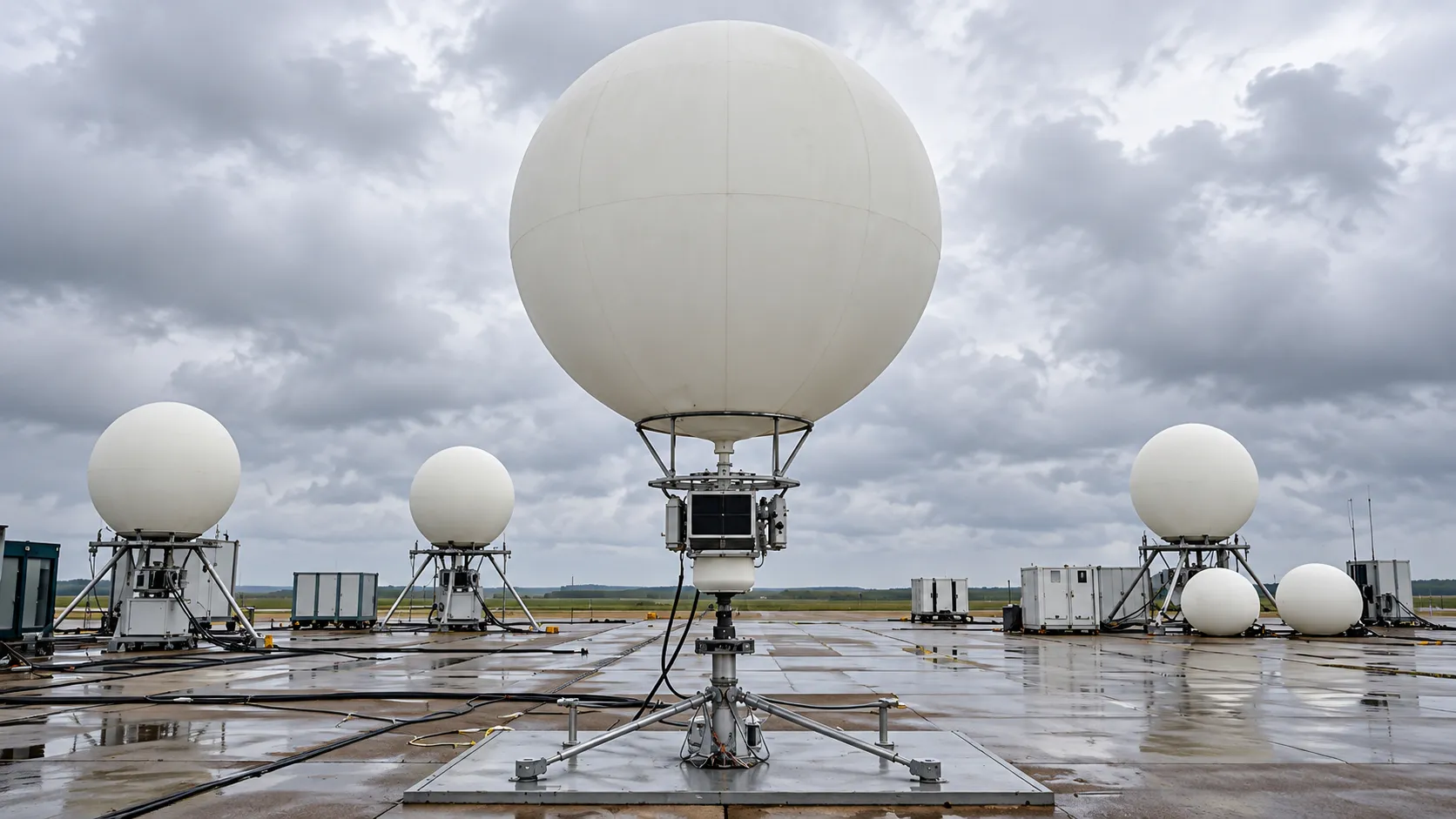
WindBorne Systems, a California startup that flies fleets of autonomous weather balloons and builds AI forecasting models, has won a contract with the US Air Force worth up to $49 million, the largest in the company’s history.
Under the agreement, reported by TechCrunch, the Air Force will buy atmospheric data collected by WindBorne’s balloons, which drift around the globe gathering sensor readings at altitudes that ground stations and satellites struggle to measure directly. The Air Force pays only as it needs data, placing orders for specific regions at specific times. So far it has ordered about $1.7 million worth, and company executives expect more orders to follow.
The contract was awarded without competitive bidding, which WindBorne says reflects the uniqueness of its capability. It comes as governments and militaries increasingly turn to private companies and AI to improve forecasting in an era of more frequent extreme weather.
A constellation in the sky
WindBorne currently has about 700 weather balloons aloft. Founded in 2015 and based in Redwood City, California, the company designed long-duration balloons that can adjust their altitude to ride different wind currents, allowing them to stay airborne for extended periods and steer towards areas where data is scarce.
Traditional radiosondes, the instrument packages carried by weather balloons released from hundreds of stations worldwide twice a day, burst after a couple of hours and cover mostly land. Vast stretches of ocean and remote regions remain poorly observed, creating blind spots in the data that feed weather models. WindBorne’s balloons are designed to fill those gaps.
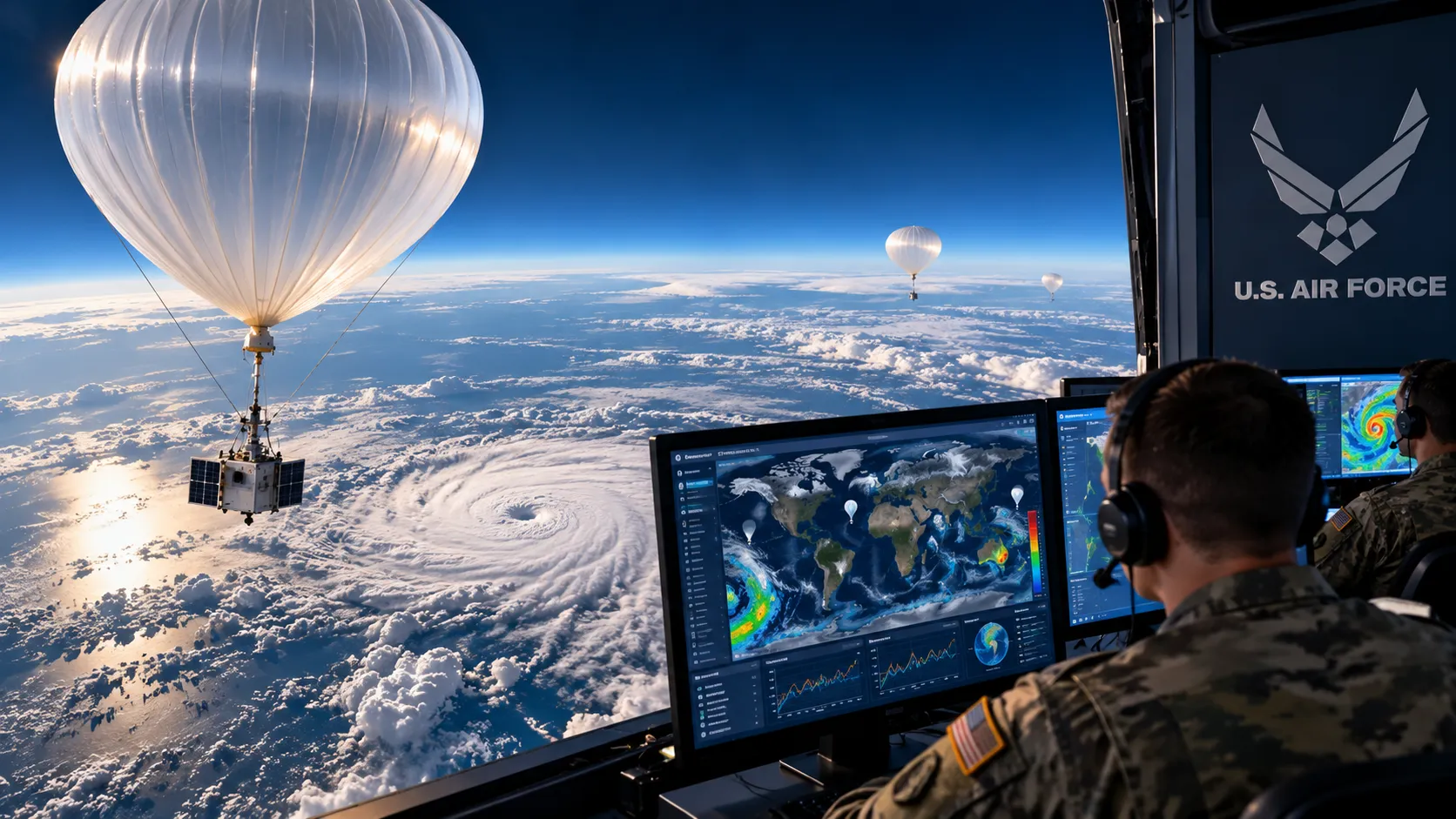
The company has worked closely with US government agencies, including the National Weather Service, the Air Force and the Navy. Its balloons have flown into extreme weather systems, including the eye of Typhoon Dolphin, gathering data from conditions that are difficult and dangerous to observe by other means.
Why the Air Force wants it
Accurate weather data is critical to military operations, from planning flights and missile tests to deploying ships and troops. The Air Force’s weather wing supports operations around the world, often in regions where observation networks are thin.
WindBorne co-founder and chief technology officer Andrey Sushko said the contract would support further growth of the balloon constellation as well as research and development to improve the hardware and performance of the balloons. “This is largely a vehicle through which continued growth of the constellation can be supported,” he told TechCrunch.
He described the sole-source award as “a determination by the government that for this capability of collecting global data, we were the only company able to provide it in the way that met their needs for these operations.”
Data meets deep learning
WindBorne is not only a data provider. It also builds its own AI forecasting model, WeatherMesh, and was one of the first organisations to feed empirical observations directly into a deep-learning weather model. Earlier this year it released WeatherMesh 6, which the company says delivers more accurate forecasts than the physics-based model run by the European Centre for Medium-Range Weather Forecasts (ECMWF), long regarded as the global gold standard.
AI weather forecasting has become one of the most productive applications of deep learning. Traditional forecasting relies on supercomputers solving equations that approximate atmospheric physics. AI models trained on decades of historical weather data can produce forecasts far faster and, increasingly, with comparable or better accuracy for many variables. Google DeepMind, Nvidia, Microsoft and national meteorological agencies have all released AI weather models.


