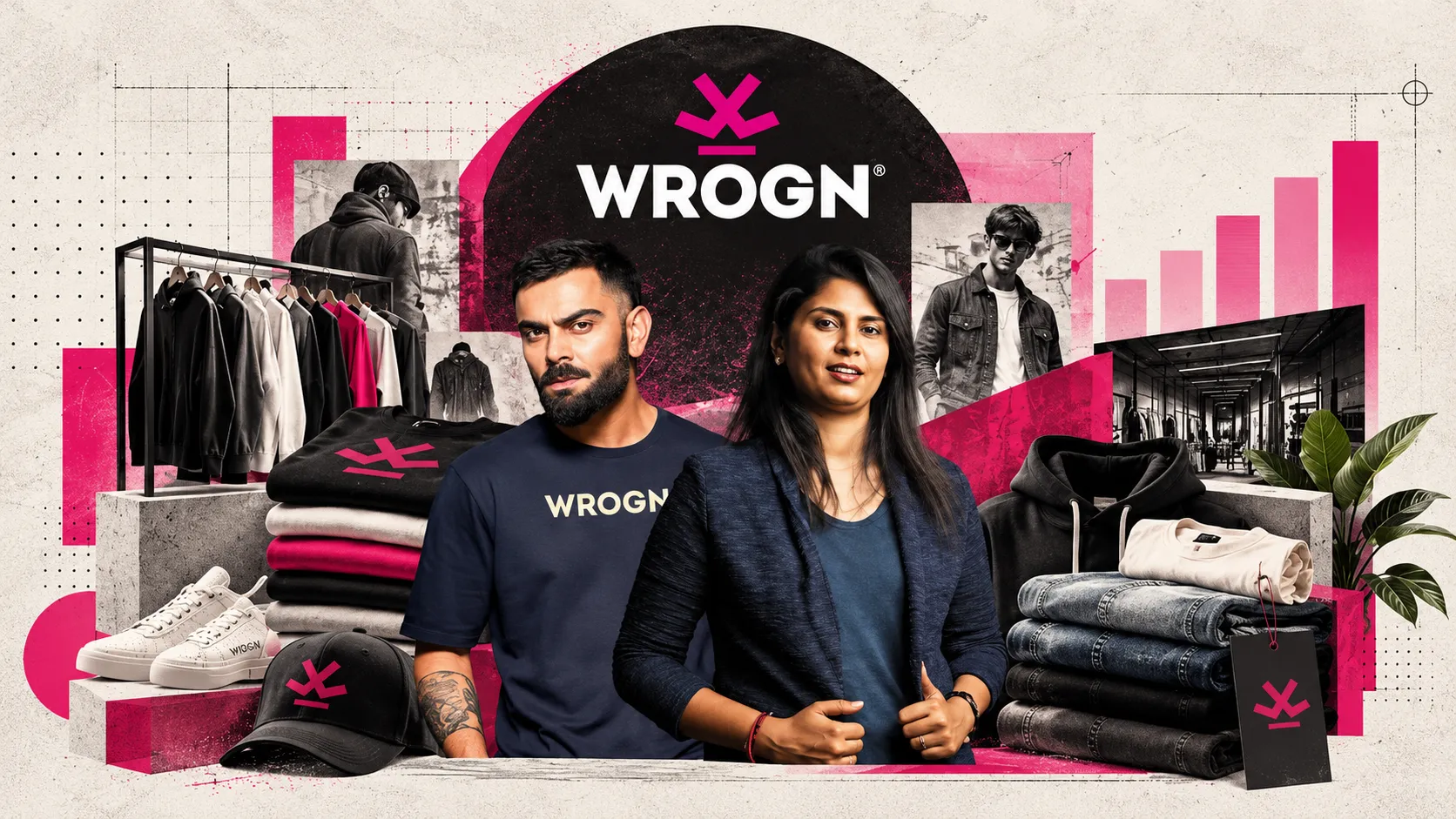
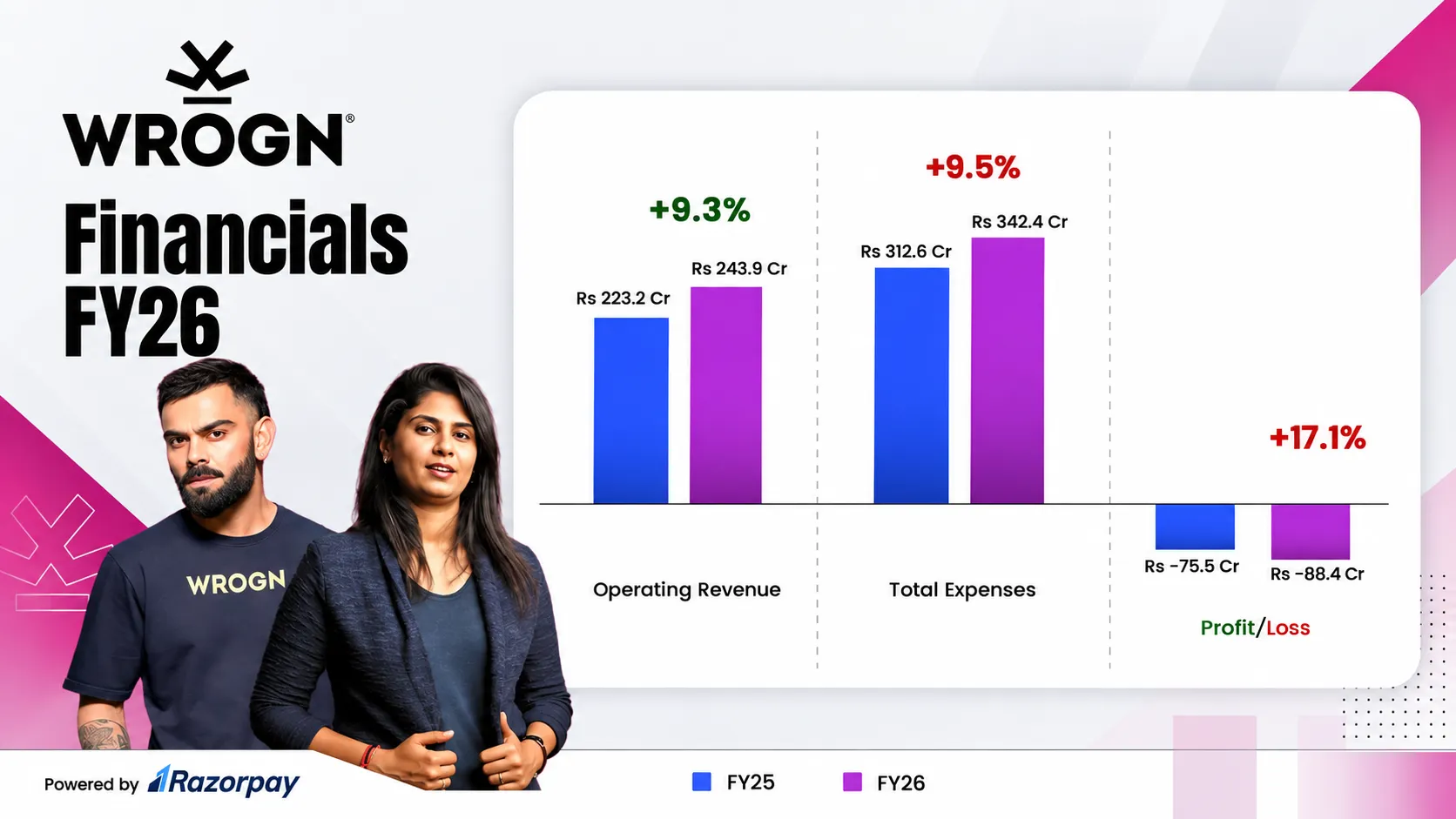
Wrogn, the celebrity-backed fashion label co-founded with cricketer Virat Kohli, reported revenue of Rs 244 crore for the financial year 2026, according to filings disclosed on September 21, 2026 — a set of results that also showed losses widening by 17% year-on-year, illustrating the persistent margin pressure facing India's direct-to-consumer fashion sector even among brands with strong celebrity backing and consumer recognition.
The results arrive against the backdrop of a significant ownership shift that has unfolded over the past couple of years: Aditya Birla Group's digital and new-commerce arm, TMRW, has steadily increased its stake in Wrogn, now holding 32.84% of the company, positioning the conglomerate as an increasingly influential stakeholder in the brand's strategic direction.
Wrogn's trajectory reflects a broader pattern playing out across India's direct-to-consumer fashion landscape through 2026, where celebrity association and strong top-line revenue growth have not automatically translated into profitability. Rising customer-acquisition costs across digital advertising platforms, intensifying competition from both established fashion retailers expanding their online presence and a wave of newer D2C entrants, and the capital-intensive nature of building offline retail alongside ecommerce operations have combined to squeeze margins across the sector.
TMRW's escalating stake in Wrogn fits within Aditya Birla Group's broader strategy of building a portfolio of digitally native fashion and lifestyle brands, acquiring meaningful ownership positions in category leaders rather than attempting to build competing brands from scratch. The conglomerate has pursued a similar playbook across several other digital-first fashion labels in recent years, betting that celebrity-anchored brand equity combined with the group's manufacturing, retail-distribution and capital resources can eventually produce sustainable profitability where standalone venture-backed operators have struggled.
Wrogn's challenges also mirror a broader reckoning playing out across India's celebrity-endorsed consumer-brand category more generally, where several prominent athlete- and film-star-backed ventures launched during the 2019-2022 funding boom have since faced similar questions about the durability of brand equity built substantially on a single individual's public profile. Analysts covering the space have increasingly distinguished between brands that have successfully built independent product and design credibility over time, versus those that remain heavily dependent on their celebrity co-founder's continued relevance and endorsement value.
For Wrogn specifically, the widening losses alongside continued revenue growth raise familiar questions that have dogged much of India's celebrity-backed D2C sector: whether the brand can transition from a growth-at-scale strategy toward genuine unit-economic discipline, and whether TMRW's increasing operational and strategic involvement will accelerate that transition or simply provide a longer runway to pursue growth before profitability becomes a hard requirement.
Industry analysts tracking India's fashion and apparel sector note that celebrity-backed brands often carry structurally higher marketing efficiency in customer acquisition — leveraging the co-founder's existing public profile rather than relying purely on paid digital advertising — but that this advantage alone has rarely proven sufficient to offset the broader cost pressures facing the category, including rising input costs, logistics expenses and the capital intensity of omnichannel expansion.
For Kohli specifically, whose commercial endorsement portfolio spans several categories beyond fashion, Wrogn's financial trajectory carries reputational as well as financial stakes. TMRW's growing operational involvement is widely read within the industry as an attempt to professionalise the brand's merchandising, supply-chain and retail operations in ways that reduce its dependence on Kohli's personal brand equity alone, even as his association remains central to the label's marketing.
As TMRW's influence over Wrogn's strategic direction continues to grow, the brand's next set of financial results will offer a clearer signal of whether Aditya Birla Group's deepening involvement can bend the company's cost structure toward profitability, or whether the widening losses reported for FY26 represent an early warning sign for one of India's more prominent celebrity-backed fashion labels.