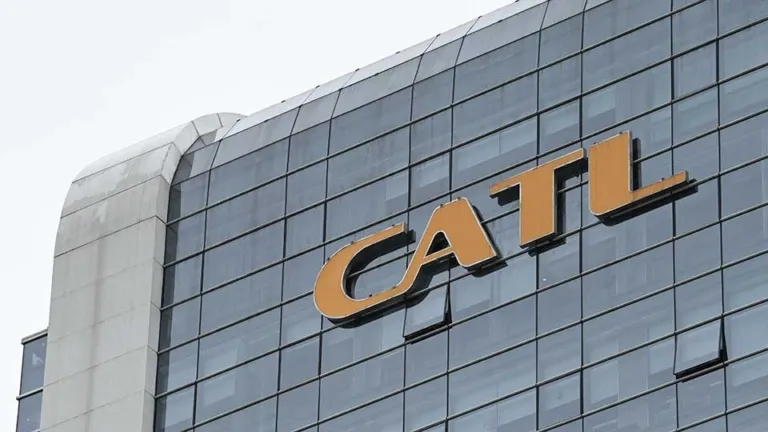
Beijing-based semiconductor company Xingyun Integrated Circuit has raised close to $110 million in a late-stage financing round, according to Dealroom's live funding tracker cited in reports on September 21, 2026, with battery giant CATL leading the round through its investment platform Puquan Capital alongside its own direct capital, and private-equity firm Primavera among the other disclosed participants.
Dealroom's headline figure rounds the transaction to nearly $120 million, while the platform's underlying transaction description places the raise closer to $110 million; industry reporting has generally cited the more conservative figure given the level of detail available in the underlying breakdown. Either way, the round ranks among the more significant semiconductor financings to emerge from China in recent weeks, reflecting continued institutional appetite for domestic chip capacity even amid ongoing global trade tensions around semiconductor supply chains.
CATL's decision to lead the round carries particular strategic significance. As the world's largest electric-vehicle battery manufacturer, CATL has increasingly extended its investment activity beyond battery cells and materials into the broader power-electronics and semiconductor ecosystem that supports EV and energy-storage applications — a vertical-integration strategy that mirrors moves by several other major battery and EV manufacturers globally seeking to secure supply chains for the increasingly sophisticated chips required in modern battery-management systems, inverters and power-conversion equipment.
Xingyun's positioning within China's semiconductor sector reflects a broader national policy priority that has intensified through 2026: reducing dependence on foreign-sourced chips for applications considered strategically important, including power electronics used in electric vehicles, renewable-energy infrastructure and industrial equipment. While China's semiconductor self-sufficiency drive has historically focused heavily on advanced logic and memory chips, power semiconductors — often less technologically advanced than cutting-edge logic chips but no less critical to the country's electrification ambitions — have increasingly attracted dedicated domestic investment.
China's broader semiconductor self-sufficiency drive has increasingly extended beyond the advanced logic and memory chips that have dominated international trade-policy attention toward a wider range of specialised semiconductor categories, including the power-management and conversion chips that Xingyun and its peers develop. Industry analysts have noted that this broader diversification of domestic semiconductor investment reflects a maturing understanding among Chinese policymakers and investors that supply-chain resilience requires depth across the full spectrum of chip categories, not just the most technologically advanced segments that have historically attracted the greatest international scrutiny.
The round arrives amid a broader wave of Chinese semiconductor financing activity through September 2026, with several other domestic chipmakers, including Shanghai-based power-electronics firm Jierendi Electronic Technology, also closing significant rounds in the same week. Industry analysts tracking China's semiconductor investment landscape have noted that this concentrated wave of activity reflects both continued state-directed capital allocation toward strategically important chip categories and growing confidence among domestic investors that China's power-semiconductor sector has reached a stage of technical maturity sufficient to compete more directly with established international suppliers.
For CATL specifically, backing Xingyun extends a pattern of strategic investment the battery maker has pursued across its supply chain over recent years, aimed at securing preferential access to critical components — in this case, power semiconductors — as global competition for EV and energy-storage supply chains continues to intensify across manufacturers in China, the United States, Europe and South Korea.
For CATL and other battery and EV manufacturers pursuing similar vertical-integration strategies, securing reliable domestic access to power semiconductors carries particular urgency given the sheer scale of China's electric-vehicle and energy-storage manufacturing base, which now represents a significant share of global EV and battery production and consequently generates substantial domestic demand for the power-electronics components these vehicles and storage systems require.
As Xingyun Integrated Circuit deploys its newly raised capital, the company's progress will offer a useful signal for how effectively China's power-semiconductor sector can translate substantial capital investment into genuine technological competitiveness — a question with implications extending well beyond Xingyun itself, given the strategic importance battery and EV manufacturers globally now place on securing reliable, cost-competitive power-electronics supply chains.


