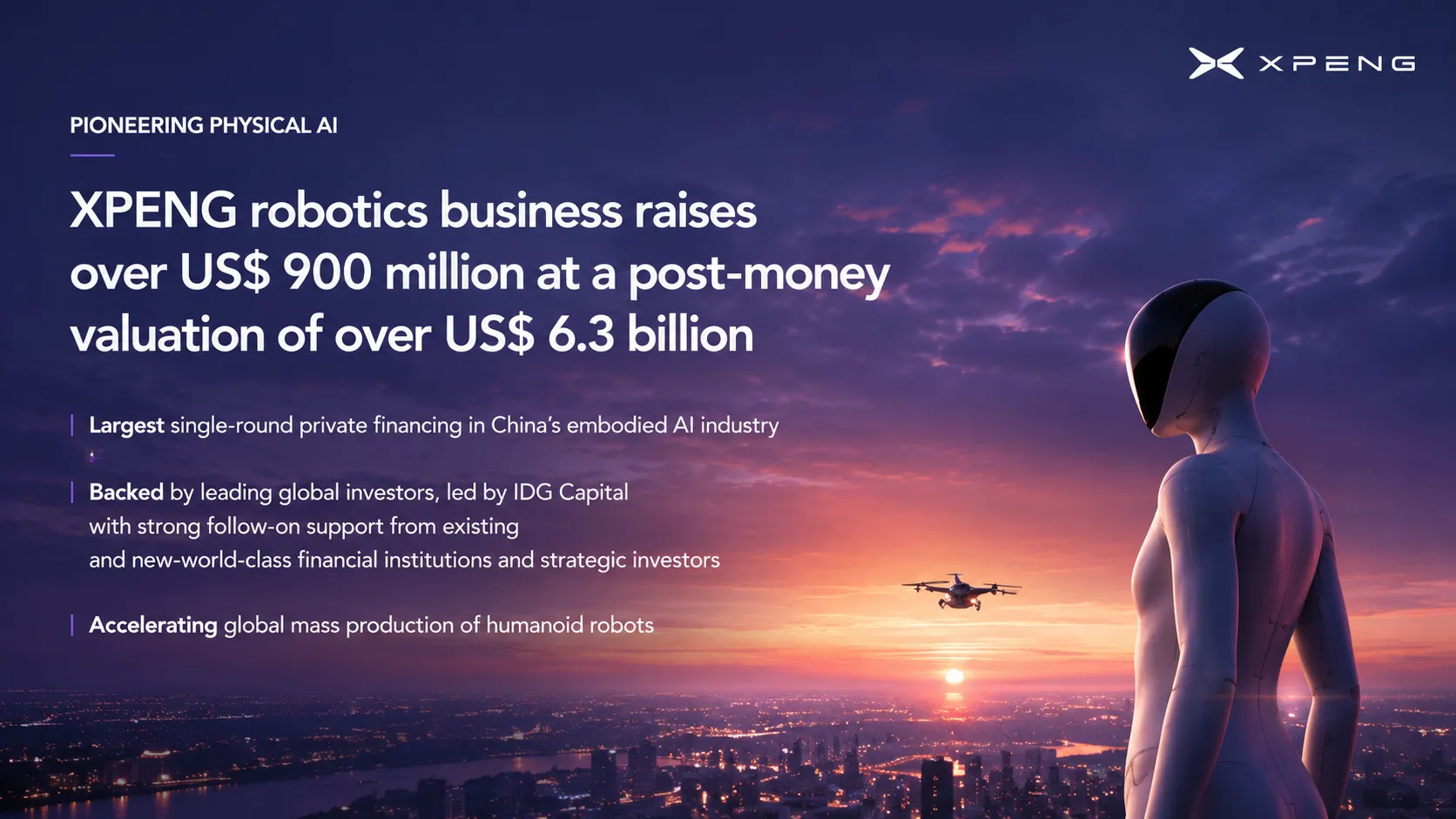
XPeng, the Chinese electric-vehicle manufacturer that has increasingly positioned itself as a broader AI and robotics company, has raised $900 million from investors including IDG Capital and Tencent, valuing the humanoid robotics business at $6.3 billion.
The round reflects the accelerating convergence between electric-vehicle manufacturing and humanoid robotics, two categories that share substantial overlapping technology — including advanced perception systems, motion control algorithms and custom silicon — even as their end markets remain distinct.
XPeng's robotics ambitions leverage capabilities the company has already developed for autonomous driving, including sensor fusion, real-time decision-making algorithms and proprietary chip design, applying that underlying technology stack to humanoid robots intended to operate in industrial, logistics and eventually consumer environments.
Tencent's participation adds a strategic dimension beyond pure financial backing, given the company's extensive AI research capabilities and its interest in embedding robotics and AI technology across its broader technology ecosystem — a pattern of strategic investment increasingly common among China's largest technology conglomerates as they position themselves across multiple layers of the AI value chain.
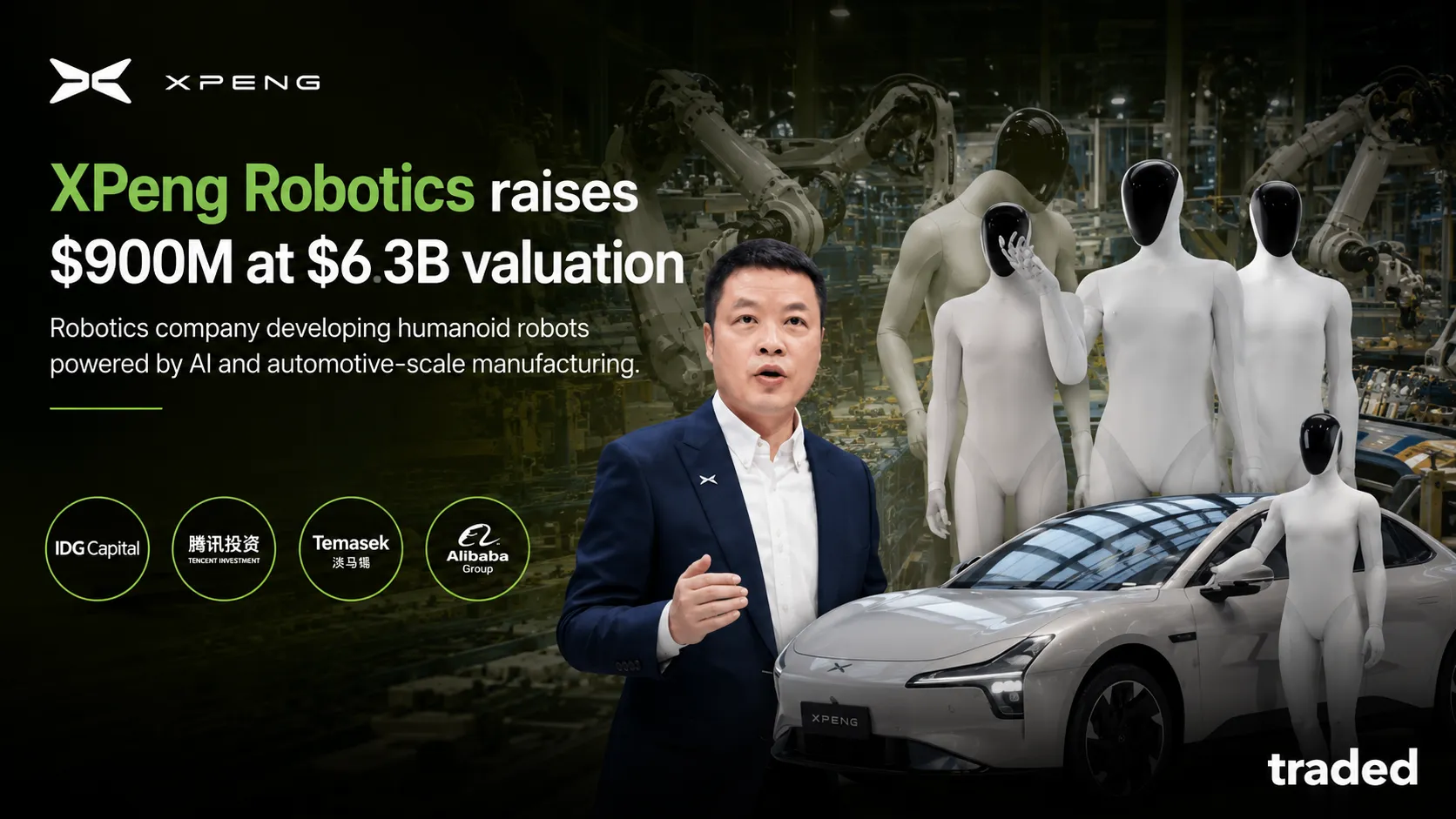
The funding places XPeng among a growing cohort of automakers and technology companies worldwide racing to establish early leadership in humanoid robotics, a category that has attracted intensifying investor interest as advances in AI models, sensors and actuators have made general-purpose humanoid robots appear commercially plausible within a shorter timeframe than many industry observers previously expected.
China's robotics sector has benefited from substantial state and private capital support in recent years, part of a broader strategic push to establish domestic leadership in advanced manufacturing and physical AI — an area where Beijing has signalled particular ambition amid intensifying technological competition with the United States.
For XPeng, successfully commercialising humanoid robotics would represent a significant diversification beyond its core automotive business, at a moment when China's electric-vehicle market has grown intensely competitive and margin-constrained. Whether the company can translate its automotive-derived technology advantages into a genuinely differentiated robotics business — rather than one of many well-funded but commercially unproven entrants — remains the central question investors are now backing at a $6.3 billion valuation.


