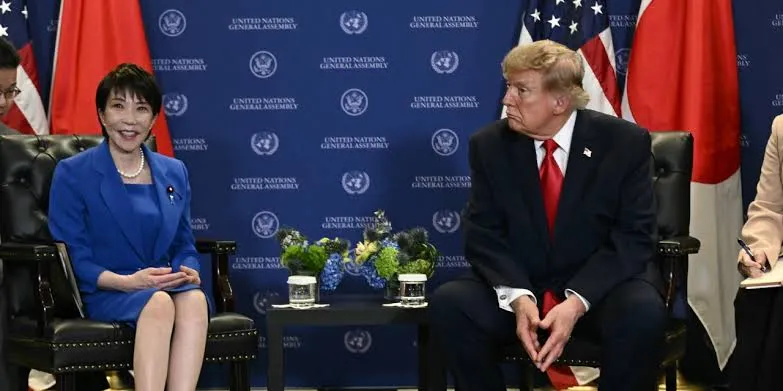
The Japanese yen strengthened on Friday, snapping a five-session losing streak, after Japan's finance minister said US President Donald Trump had expressed concern about the currency's weakness during a meeting with Prime Minister Sanae Takaichi. The comments revived expectations that Washington and Tokyo could again act together to support the yen, which had been sliding towards the closely watched level of ¥160 to the dollar.
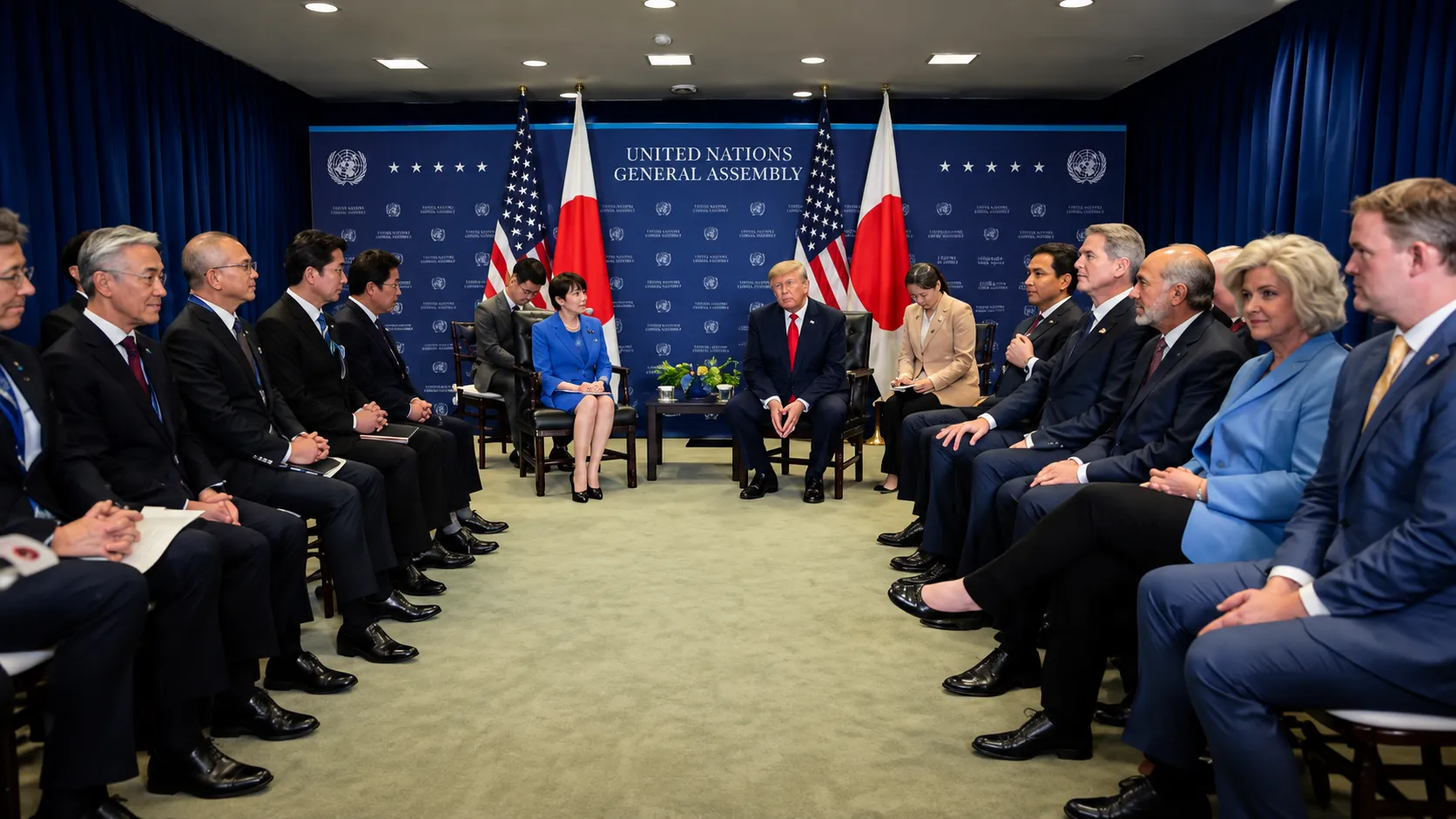
The yen recovered to around 158 per dollar from two-week lows, and was quoted at about 157.28 at one point on Friday. Finance Minister Satsuki Katayama said the issue had come up when the two leaders met on the sidelines of the United Nations General Assembly in New York earlier in the week. According to Katayama, Takaichi told Trump, "as a general principle, that an undervalued yen is problematic."
An unusually frank readout
It is unusual for Japanese officials to disclose details of leaders' private discussions on currency matters, and Katayama's account was read by markets as a deliberate signal. Katayama also said that she and US Treasury Secretary Scott Bessent had reaffirmed a shared stance on foreign exchange and would continue to communicate closely on a range of issues, including currencies.
The remarks carry weight because the two countries have acted together before. In late July, Japan and the United States carried out their first coordinated yen-buying intervention since 1998, to counter what officials described as excessive volatility and disorderly moves in the currency after it weakened beyond ¥160. Japan spent a record ¥15.4 trillion, about $97.4 billion, on intervention between July 30 and August 26, according to Finance Ministry data. The US separately confirmed its participation, though it has not disclosed the amount.
"Intervention risk should put a ceiling on further yen weakness," said Moh Siong Sim, a strategist at Oversea-Chinese Banking Corp. "More importantly, the yen may be nearing a turning point as Trump's concerns over its weakness point to deeper US–Japan coordination to support the currency."
Why the yen keeps falling
The fundamental pressure on the yen comes from the gap between interest rates in the United States and Japan. The Federal Reserve has raised its benchmark rate to a range of 3.75–4.00%, its first hike in three years, and markets are pricing in the possibility of more. Strong US economic data and US 10-year Treasury yields at their highest levels since 2007 have kept the dollar in demand.
The Bank of Japan has been tightening too, but more slowly. It raised interest rates at its meeting on September 18, with its basic loan rate now at 1.5% and its guidance for the overnight call rate at around 1.25%. But two board members dissented from the decision, and the central bank offered little guidance on the pace of further increases. The yen fell as much as 1.3% on the day of the decision and recorded its biggest weekly decline in almost a year. A report that officials had called market participants for a rate check, often a prelude to intervention, only partly reversed the losses.
The yen has been volatile for weeks. On September 3 it jumped more than 2% against the dollar, touching 155.28, as traders weighed the prospect of further intervention and bet on a Bank of Japan rate increase. US Treasury Secretary Scott Bessent told CNBC at the time that he believed Japanese authorities would take action that would lead to a stronger yen. The depth of US involvement in the summer intervention was underlined by a Reuters photograph from July 31 showing a note on Bessent's pad that read: "Buy Japanese Yen (JPY) $5-10 bil."
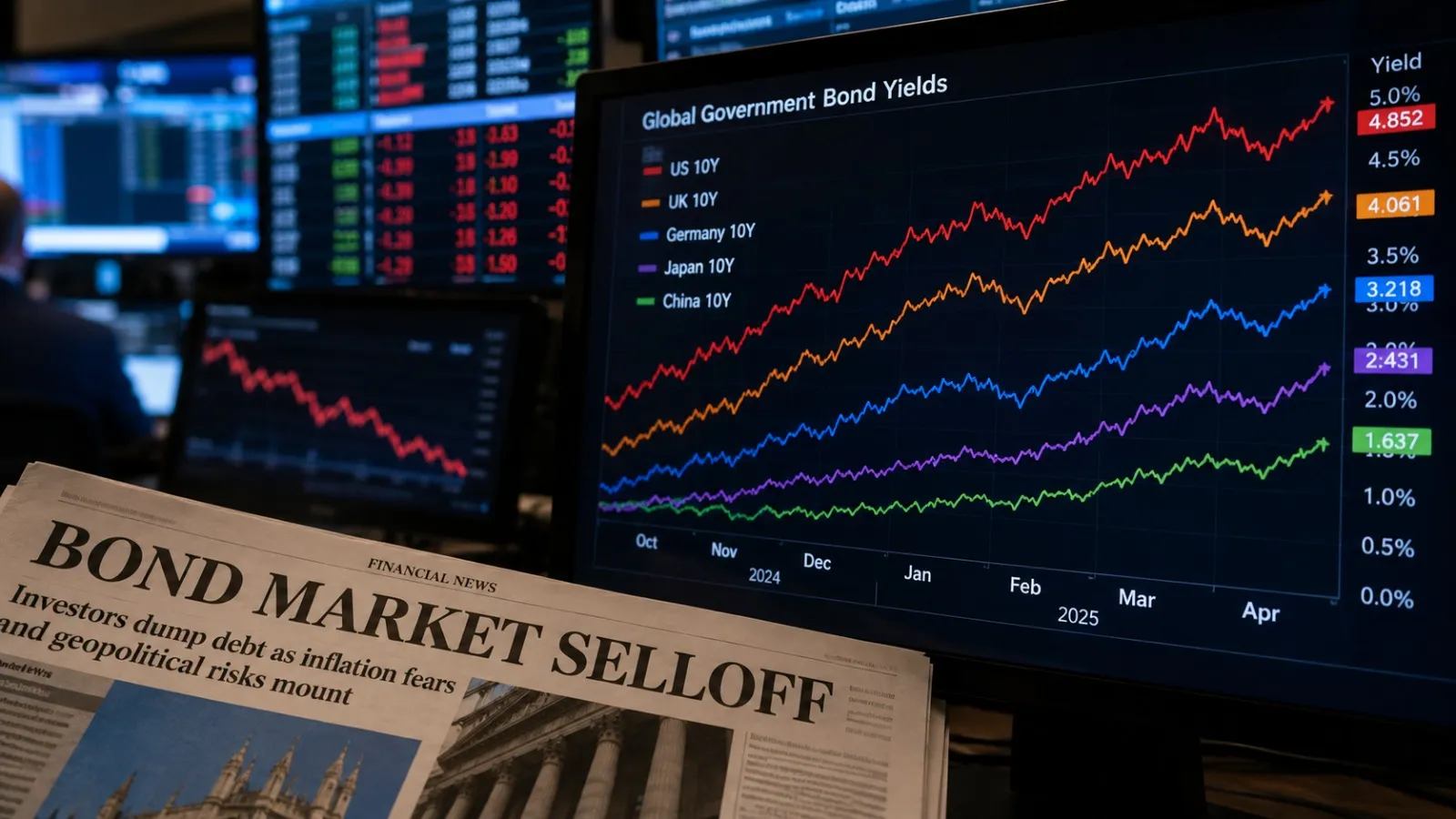
Bond yields at a 30-year high
Japan's own bond market is also moving. The yield on Japan's 10-year government bond reached a 30-year high of 3.115% this week, reflecting expectations of further tightening and concerns about government finances. Rising domestic yields would normally support the currency, but they have not kept pace with the widening gap created by higher US rates.
For the Bank of Japan, the situation presents a difficult balance. A weak yen raises the cost of imported energy and food, adding to inflation and squeezing households. But raising rates too quickly could unsettle a bond market in which the central bank still holds a large share of outstanding government debt, and could weigh on growth. The next policy meeting is scheduled for October 29 and 30.
A currency with global consequences
The yen's moves matter well beyond Japan. The currency is a key funding source for the global carry trade, in which investors borrow in low-yielding yen to invest in higher-yielding assets elsewhere. Sharp reversals in the yen have in the past triggered sudden sell-offs across global markets as those positions are unwound.
For Asian economies, including India, a weak yen affects trade competitiveness and capital flows. Japanese companies are among the largest foreign investors in India, and currency swings influence the value of their investments and the cost of Japanese capital goods. A more stable yen, supported by coordinated policy, would reduce one source of volatility for regional markets already contending with high oil prices and foreign portfolio outflows.
What to watch
The immediate question is whether Tokyo will intervene again if the yen returns towards ¥160. Katayama's comments, and the reference to shared US–Japan concerns, suggest that the authorities would be prepared to act, and that Washington might again participate. But intervention can slow a currency's decline rather than reverse its underlying trend. A durable turn in the yen is likely to require either a narrowing of the US–Japan interest rate gap or a clearer signal from the Bank of Japan about further tightening.
Markets will watch US inflation and employment data for clues about the Federal Reserve's next steps, as well as any comments from Japanese officials about currency levels. For now, Friday's rally shows how quickly sentiment can shift when policymakers signal that their tolerance for a weak yen has limits.
The Impactful Global Icon will continue to track currency and central bank developments that shape capital flows between Asia, the United States and India.