Yulu, the Bengaluru-based electric mobility startup, has raised $93 million in a Series C funding round that its chief executive says is likely to be the company's final equity raise before a public listing. The round comprised $63 million in equity led by climate-focused investor GEF Capital Partners, alongside $30 million in debt financing, and values the company at approximately $170 million post-money, according to people familiar with the matter.
Yulu rents electric two-wheelers to delivery drivers on weekly subscription plans, allowing gig workers to begin earning on quick-commerce and delivery platforms without the upfront cost of purchasing their own vehicle. The model has positioned the company at the centre of India's rapidly expanding quick-commerce economy, where platforms racing to deliver groceries, electronics and other goods within minutes have created surging demand for cheap, reliable, on-demand mobility.
With a current fleet of around 50,000 vehicles, Yulu says it logs roughly 1.6 million zero-emission miles each week and powers more than 750,000 doorstep deliveries daily, claiming to support more than 15 per cent of quick-commerce deliveries across India's four largest metropolitan markets. The company operates across 12 primary metropolitan markets — including Bengaluru, Mumbai, Delhi-NCR and Hyderabad — alongside eight franchise-operated regional markets, built on a vertically integrated model that combines proprietary vehicle hardware, technology and energy infrastructure, supported by strategic partnerships with Bajaj Auto and Magna International.
The new capital will fund an ambitious fleet expansion, targeting 200,000 electric vehicles within two years — roughly four times Yulu's current scale. Alongside that growth, the company is launching Yulu Express, a full-sized, high-payload electric scooter designed specifically for e-commerce logistics, bike taxis and express parcel deliveries, extending the company's addressable market beyond its original food and grocery delivery use case into higher-value commercial logistics applications.
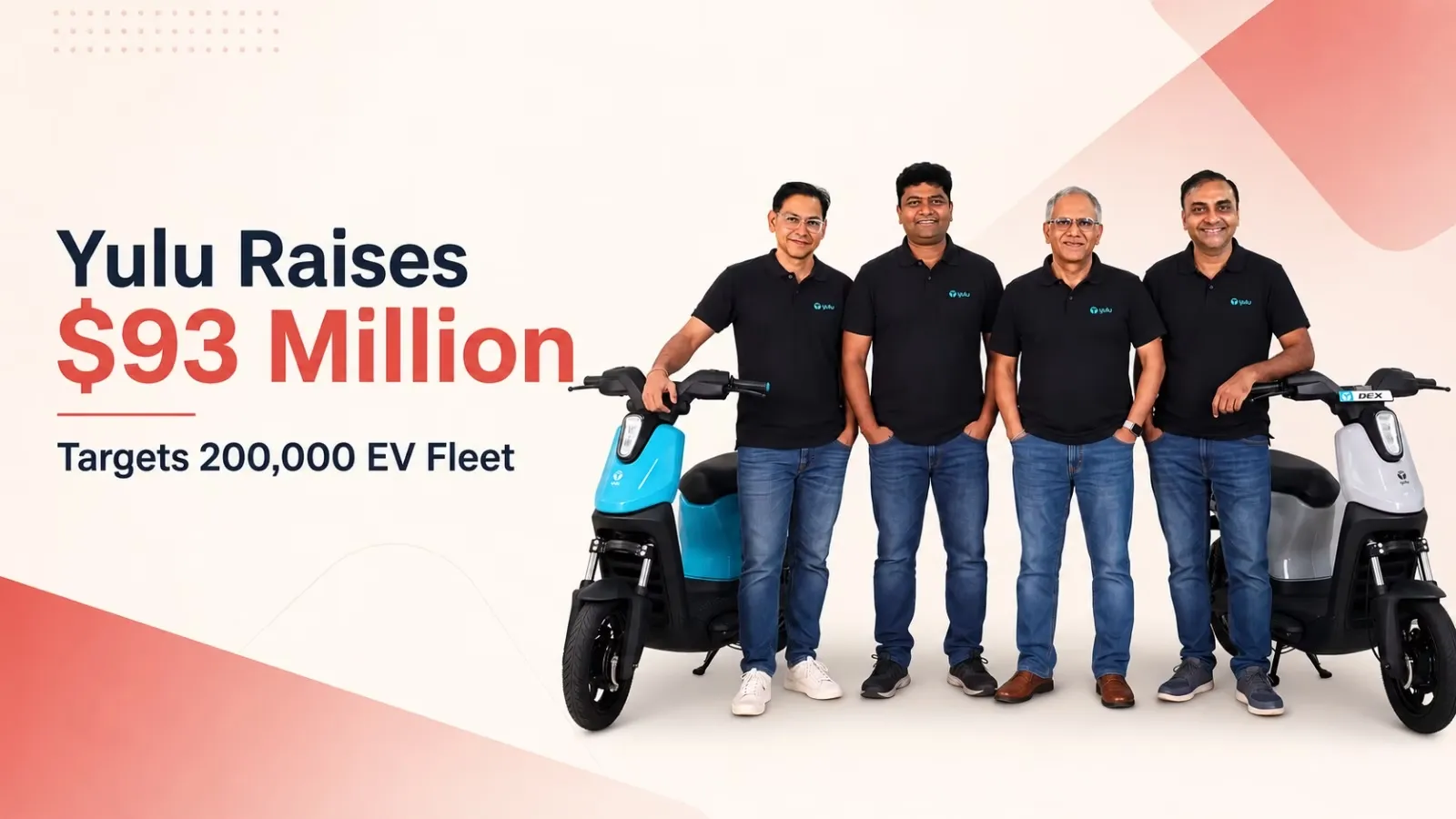
Chief executive and co-founder Amit Gupta described the Series C as likely to be Yulu's last equity raise, with future expansion expected to be financed primarily through debt and leasing arrangements rather than further dilutive fundraising. That framing reflects a company that has already crossed into positive EBITDA over its most recent financial year, with revenue growing sevenfold between fiscal 2023 and fiscal 2026, and management targeting profitability before interest and taxes in the coming year. About 95 per cent of Yulu's revenue now comes from renting bikes to gig workers, with the remainder from station-based rentals in Bengaluru.
Notably, existing backers Bajaj Auto and Magna International did not participate in the new round, having waived their pre-emptive rights to allow GEF Capital to acquire its target ownership stake — a structural choice that gave the new climate-focused lead investor a cleaner path into the cap table. About $5.5 million of the equity raised was also used to buy out seed investors whose funds were approaching the end of their investment life, a routine but telling detail suggesting Yulu's capitalisation table is being actively tidied ahead of any future public-market process.
GEF Capital Partners, an investment firm focused on climate change mitigation, pollution reduction and environmental outcomes, framed its investment as a bet on shared electric mobility becoming an integral part of India's urban transportation infrastructure as cities continue to evolve. That framing sits at the intersection of two of the more durable themes in Indian venture investing over the past two years: the explosive growth of quick-commerce as a delivery model, and the steady maturation of electric two-wheeler infrastructure as India works to decarbonise its urban transport sector.
With profitability metrics improving, a large existing fleet already generating revenue, and a clearly stated path toward public markets, Yulu's Series C represents one of the more mature-stage bets in India's electric mobility sector this year — a sector that has, until recently, been dominated by capital-intensive vehicle manufacturers rather than asset-light mobility-as-a-service platforms serving the delivery economy specifically. How the company executes its fourfold fleet expansion over the next two years, and whether it can maintain profitability while scaling into new vehicle categories through Yulu Express, will likely determine how public markets ultimately receive the company when it does eventually list.