NEW DELHI, Oct 8 — Zelio E-Mobility, the Indian electric two-wheeler manufacturer, plans to add more than 150 dealers across South India by the end of the 2027 financial year, as it bets that the region's fast-growing appetite for electric scooters can power its next phase of expansion.
The company currently operates through more than 400 dealers in over 25 states. The southern push would take its network past 550 outlets, giving it one of the broader retail footprints among the newer generation of Indian EV makers.
The expansion plan is weighted towards states where electric two-wheeler adoption has been strongest and where consumers are increasingly treating battery-powered scooters as a mainstream choice rather than an experiment.
Key facts at a glance
• Current network: more than 400 dealers in over 25 states
• Target: more than 550 dealers, with 150-plus additions in South India by FY27
• Tamil Nadu: about 40 new dealers
• Kerala, Karnataka, Andhra Pradesh: about 30 new dealers each
• Telangana: from about 15 to about 30 dealers over the longer term
• Same-day rival move: River Mobility's Indie scooter listed on Flipkart (4 kWh battery, 163 km IDC range, 90 km/h top speed, 55 litres of storage)
The southern blueprint
Zelio's plan breaks down state by state. Tamil Nadu, home to some of India's largest two-wheeler manufacturing clusters, is expected to account for about 40 new dealers. Kerala, Karnataka and Andhra Pradesh are each slated for around 30. In Telangana, the company aims to roughly double its presence over the longer term, from about 15 dealers to about 30.
The targeting is deliberate. South Indian states have consistently been among the leaders in electric two-wheeler adoption, helped by state-level EV policies, strong urban demand, an established culture of two-wheeler commuting and, in cities such as Bengaluru and Chennai, a dense ecosystem of EV manufacturers, suppliers and charging providers.
Many of the region's tier-two and tier-three towns are also growing quickly, with rising incomes and long commutes that make the low running costs of electric scooters especially attractive. A wider dealer network allows Zelio to reach those buyers directly rather than relying on metros alone.
Why dealers still matter
The electric two-wheeler industry has learned a hard lesson over the past few years: online sales can build buzz, but sustained growth depends on physical presence. Buyers want to test ride vehicles, compare models and, above all, know that they can get their scooter serviced quickly if something goes wrong.
Service quality has become a decisive factor in the market. Companies that expanded sales faster than their after-sales capacity have faced customer complaints and reputational damage. By expanding through dealers who handle both sales and service, Zelio is trying to grow its footprint and its support capacity at the same time.
For dealers, electric two-wheelers offer a growth opportunity at a time when fuel prices and urban congestion are pushing commuters to consider alternatives. Many dealers are local entrepreneurs, and the expansion of EV networks into smaller towns is creating new small-business opportunities across the country.
A crowded and fast-changing market
Zelio is expanding into one of the most competitive consumer markets in India. Electric two-wheeler registrations rose about 12% month on month to roughly 2.07 lakh units in September as festive demand picked up, and the competitive order has been shifting rapidly. Legacy manufacturers such as TVS Motor, Bajaj Auto and Hero MotoCorp have scaled their electric portfolios, Ather Energy has extended its reach well beyond its home base, and a host of smaller manufacturers are targeting price-sensitive buyers.
Fresh competition is also arriving from other directions. On the same day, Bengaluru-based River Mobility made its Indie scooter available on Flipkart. The Indie, which carries a 4 kWh battery, a certified IDC range of 163 km, a top speed of 90 km/h and 55 litres of storage, is pitched as a practical, utility-focused everyday scooter. Its arrival on a major e-commerce platform underlines how manufacturers are combining online and offline channels to reach customers.
Vietnam's VinFast, meanwhile, announced letters of intent with more than 50 dealers across 34 Indian cities for its electric motorcycles and scooters, adding another well-funded rival to the field.
The economics of expansion
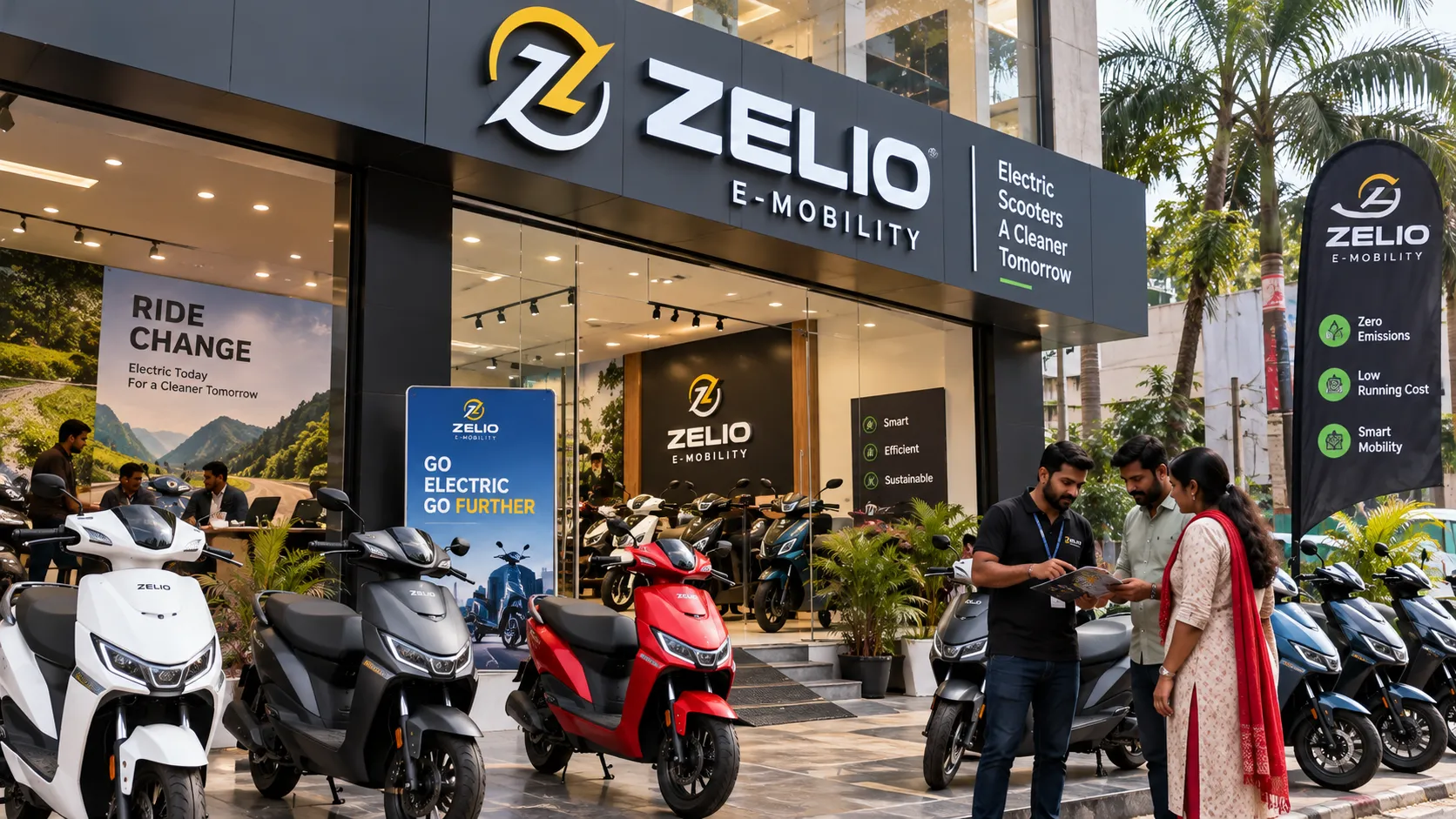
Dealer-led growth is relatively capital-light for manufacturers, since dealers invest in showrooms and working capital. But it requires strong support from the brand: reliable vehicle supply, spare parts, training, marketing and financing options for buyers. Manufacturers that fail to deliver on those fronts risk dealer attrition, which can quickly undermine a network.
Battery costs, supply-chain stability and government incentives will also shape Zelio's prospects. Lower battery prices have helped narrow the price gap between electric and petrol scooters, but manufacturers remain sensitive to policy changes and to competition on price.
Financing the buyer
One factor that will shape Zelio's southern push is consumer financing. Many two-wheeler buyers in smaller towns rely on loans, and lenders have historically been more cautious about electric vehicles because of uncertainty over battery life and resale values. As more data on EV performance becomes available, banks and non-bank lenders have grown more comfortable, and several have launched dedicated electric two-wheeler loan products. Dealers that can offer quick, affordable financing at the point of sale have a clear advantage. For a brand expanding into new regions, partnerships with local lenders and cooperative banks can be as important as the showroom itself, particularly in states where small-ticket rural credit networks are strong.
What it means
Zelio's southern expansion is a sign of how India's electric two-wheeler market is maturing. The early phase was defined by bold launches and aggressive online marketing; the current phase is about distribution, service and steady execution in specific regions.
For consumers in South India, more brands and more dealers mean more choice and better access to service. For local entrepreneurs, the growth of EV networks is creating new business opportunities. And for India's clean mobility ambitions, every additional dealer in a smaller town brings electric transport a step closer to the mass market.
The company's ability to hit its FY27 target — and to keep dealers profitable along the way — will be an important indicator of whether India's second wave of EV makers can build durable businesses alongside the industry's giants.