
FundingLatest Deals5 MIN READ

Zenergize Technologies Raises $4 Million to Scale Indian Power-Electronics Manufacturing

Power-electronics manufacturer Zenergize Technologies has raised $4 million in a pre-Series A round led by Giraffe Studios, combining equity and venture debt to scale production capacity amid surging order demand.

By Shaym Kumar · Author2 September 2026New
Zenergize Technologies Raises $4 Million to Scale Indian Power-Electronics Manufacturing

India-based Zenergize Technologies has raised $4 million in pre-Series A financing led by Giraffe Studios, with participation from industrial entrepreneurs and angel investors, the company announced on September 1. The round, structured as a combination of equity and venture debt, comes at a pivotal moment for the power-electronics manufacturer, which says demand for its products is already outpacing its current manufacturing capacity.

Zenergize develops power-electronics products used across industrial and energy applications, and the company reports it has reached an annual revenue run rate exceeding ₹30 crore within just one year of commercialisation. Perhaps more striking is its order book, which the company says now exceeds ₹150 crore — a figure that underscores the scale of unmet demand the startup is attempting to address as it scales production.

The financing will be directed toward expanding manufacturing capacity, engineering resources, research and development, and sales and servicing infrastructure. Unlike many early-stage hardware startups that raise capital primarily to prove market demand, Zenergize's fundraising rationale centres on converting already-demonstrated demand into deliverable revenue — a distinction that founders in the hardware manufacturing space frequently describe as one of the most difficult transitions in scaling a physical-products business.

India's power-electronics sector sits at the intersection of several converging national priorities: the government's push toward domestic manufacturing self-sufficiency, the rapid buildout of renewable-energy infrastructure, and rising demand for grid-modernisation technology as electricity consumption patterns shift with growing electrification of transport and industry. Companies capable of manufacturing reliable power-electronics components domestically are increasingly viewed as strategically significant within this broader industrial policy context.

The venture-debt component of the round is notable in itself, reflecting a growing willingness among Indian lenders and specialty finance providers to extend debt capital to hardware manufacturers with proven revenue traction — a financing structure that allows founders to scale production without diluting equity as aggressively as a pure venture-capital raise would require. This blended approach has become increasingly common among Indian deep-tech and manufacturing startups seeking to balance growth capital needs with founder ownership preservation.

Giraffe Studios' backing of Zenergize adds to a broader pattern of specialised investors targeting India's industrial technology and manufacturing sector, an area that has historically received less venture attention than software and consumer internet businesses but has seen accelerating interest as investors seek exposure to India's physical infrastructure buildout.

With fresh capital in hand, Zenergize is expected to move quickly to expand production capacity in order to work through its substantial order backlog, positioning the company as one to watch within India's growing cohort of deep-tech manufacturing startups translating engineering capability into commercially scaled, revenue-generating businesses.

The company's order-to-capacity mismatch also illustrates a structural challenge increasingly common across India's electronics-manufacturing startups: domestic supply chains for critical components, testing equipment and skilled technical labour have not always scaled at the same pace as end-market demand, creating bottlenecks that pure capital injection alone cannot immediately resolve. Zenergize's ability to translate this funding into actual shipped product within a reasonable timeframe will be an important signal for how efficiently India's broader power-electronics manufacturing base can absorb rising capital investment.
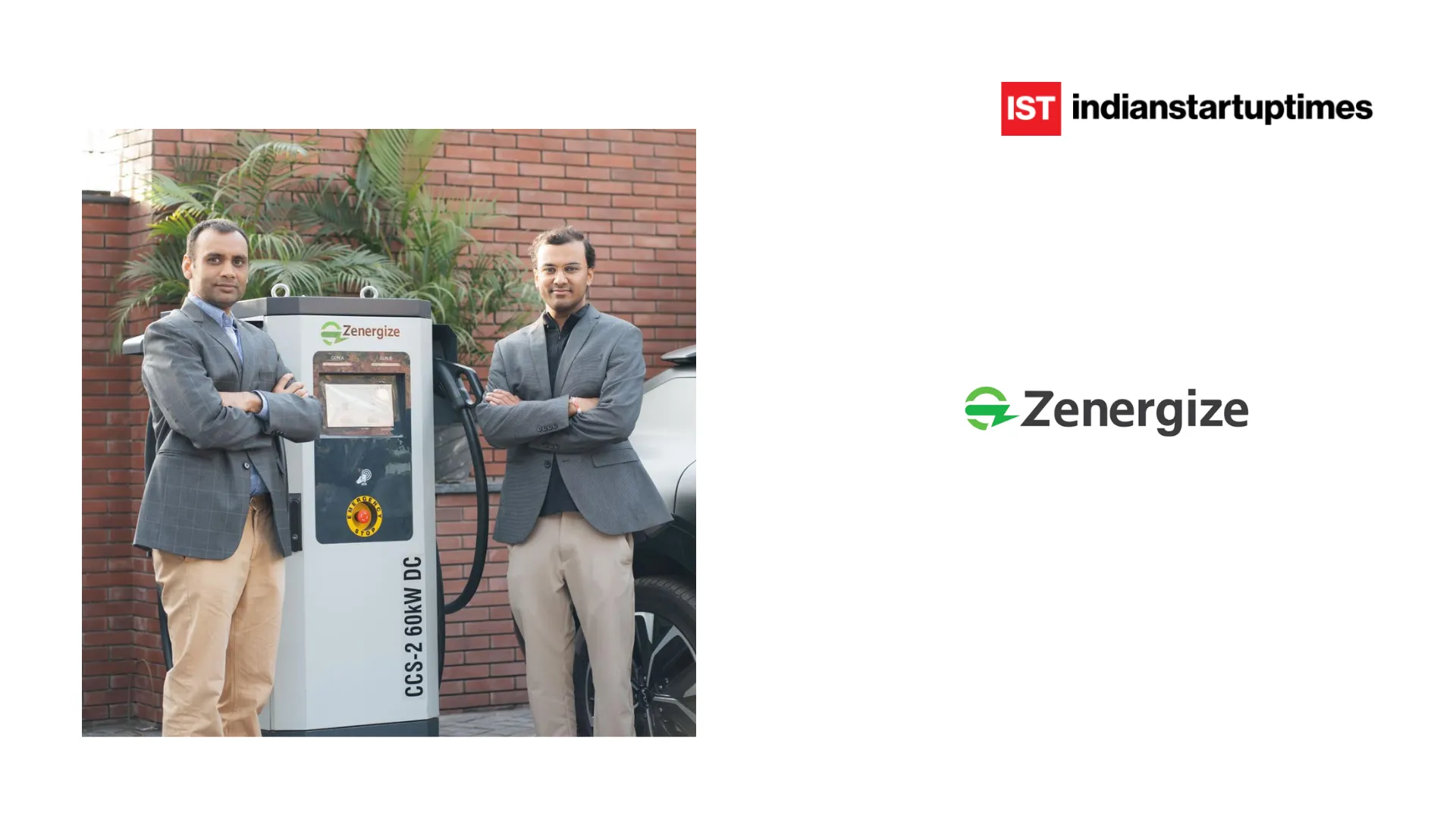

For India's hardware manufacturers, the hardest problem is no longer proving demand — it's building capacity fast enough to capture it.
TIGI Markets Desk

image.png

Government policy has increasingly favoured domestic power-electronics manufacturing through production-linked incentive schemes aimed at reducing India's historical reliance on imported components for renewable-energy and electric-mobility applications. Startups positioned to benefit from this policy tailwind, while simultaneously proving out commercial demand independent of subsidy dependence, are increasingly viewed by investors as carrying a more durable long-term thesis than companies reliant primarily on government incentive structures that could shift with future policy cycles.

Founders in India's deep-tech manufacturing space frequently describe talent acquisition as an equally pressing constraint alongside capital and physical infrastructure, given the relatively limited domestic pool of engineers with direct experience in power-electronics design and industrial-scale production processes compared with software engineering talent. Zenergize's expansion plans are therefore likely to include significant investment in specialised hiring and internal training programmes, not merely factory floor space and equipment procurement, if the company is to convert its order backlog into delivered product on the timeline its customers expect.

The venture-debt component of Zenergize's round also reflects a maturing Indian lending market increasingly willing to underwrite hardware manufacturers against demonstrated order books rather than requiring the extended profitability track record that traditional bank lending typically demands. This financing innovation has meaningfully expanded the capital options available to Indian deep-tech founders who might otherwise face a stark choice between dilutive equity rounds and inaccessible conventional debt, giving companies like Zenergize a more capital-efficient path to scaling production without ceding disproportionate ownership at a relatively early stage of commercial maturity.

As India's broader manufacturing sector continues to attract policy attention and investment under the government's production-linked incentive framework, Zenergize's trajectory offers a useful case study in how narrowly focused, technically differentiated component manufacturers can build defensible businesses even within a power-electronics category that includes far larger, more established domestic and international competitors, provided they can demonstrate the kind of concentrated demand and order-book strength that has characterised the company's first year of commercial operation.

Should Zenergize successfully execute on its expansion plans, the company would offer a compelling template for other Indian deep-tech manufacturers navigating the difficult transition from early commercial traction to sustainable, capacity-matched scale — a transition that many hardware-focused Indian startups have historically found more challenging to manage than the initial product-development phase itself.

The round is likely to be studied by other Indian power-electronics manufacturers navigating similar demand-versus-capacity imbalances, offering a real-world example of how blended equity and venture-debt structures can accelerate the transition from proven product-market fit to sustainable, revenue-matched production scale.

TagsZenergize TechnologiesPower ElectronicsManufacturingDeep TechIndiaFunding

Reader reviews

Sign in to rate and review this article.
Loading reviews…