Results (439 found)

The ₹5 Sachet That's Quietly Building India's Next FMCG Giant—One Village at a Time
StartupsMay 22, 2026

The ₹5 Sachet That's Quietly Building India's Next FMCG Giant—One Village at a Time

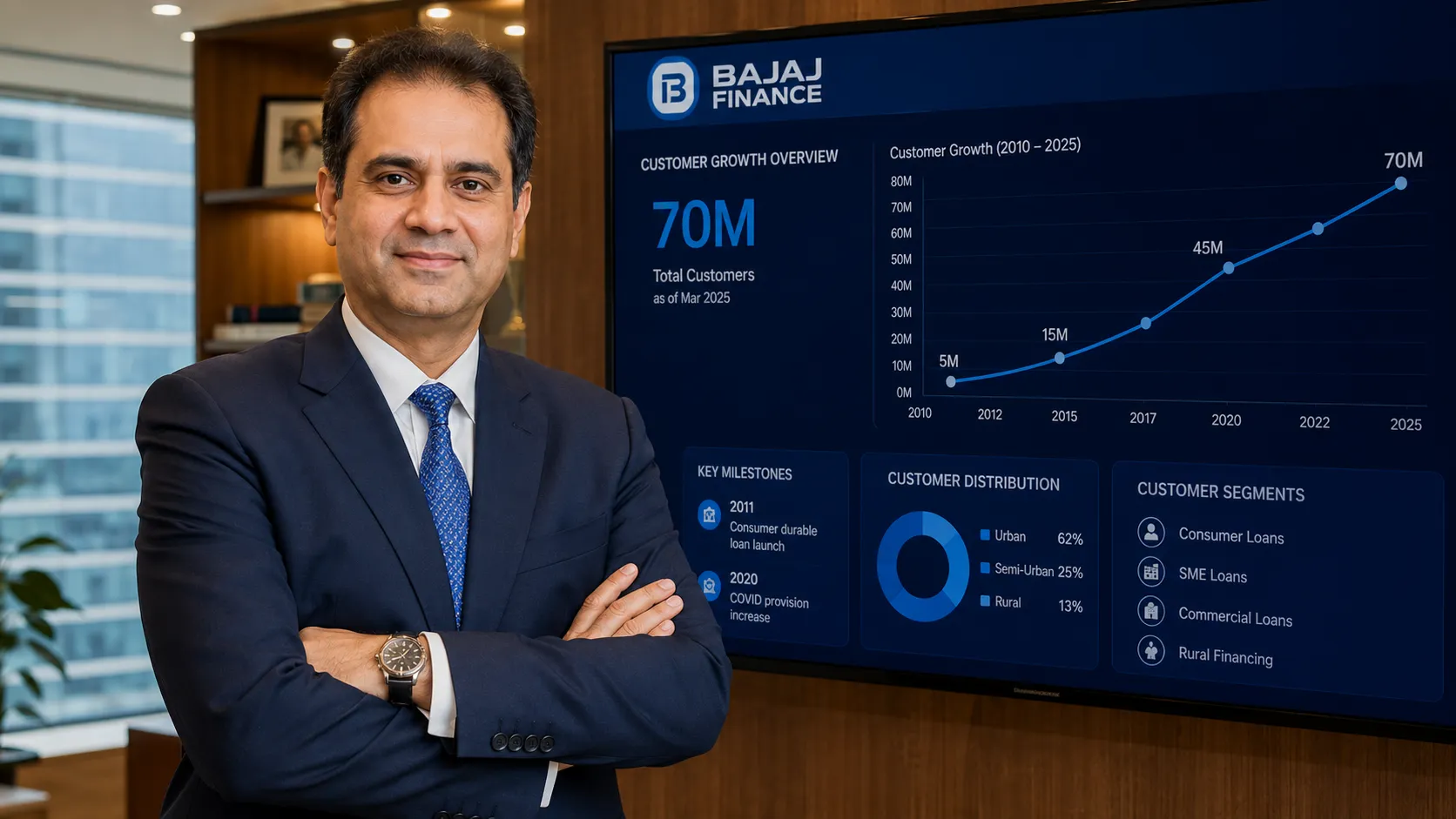
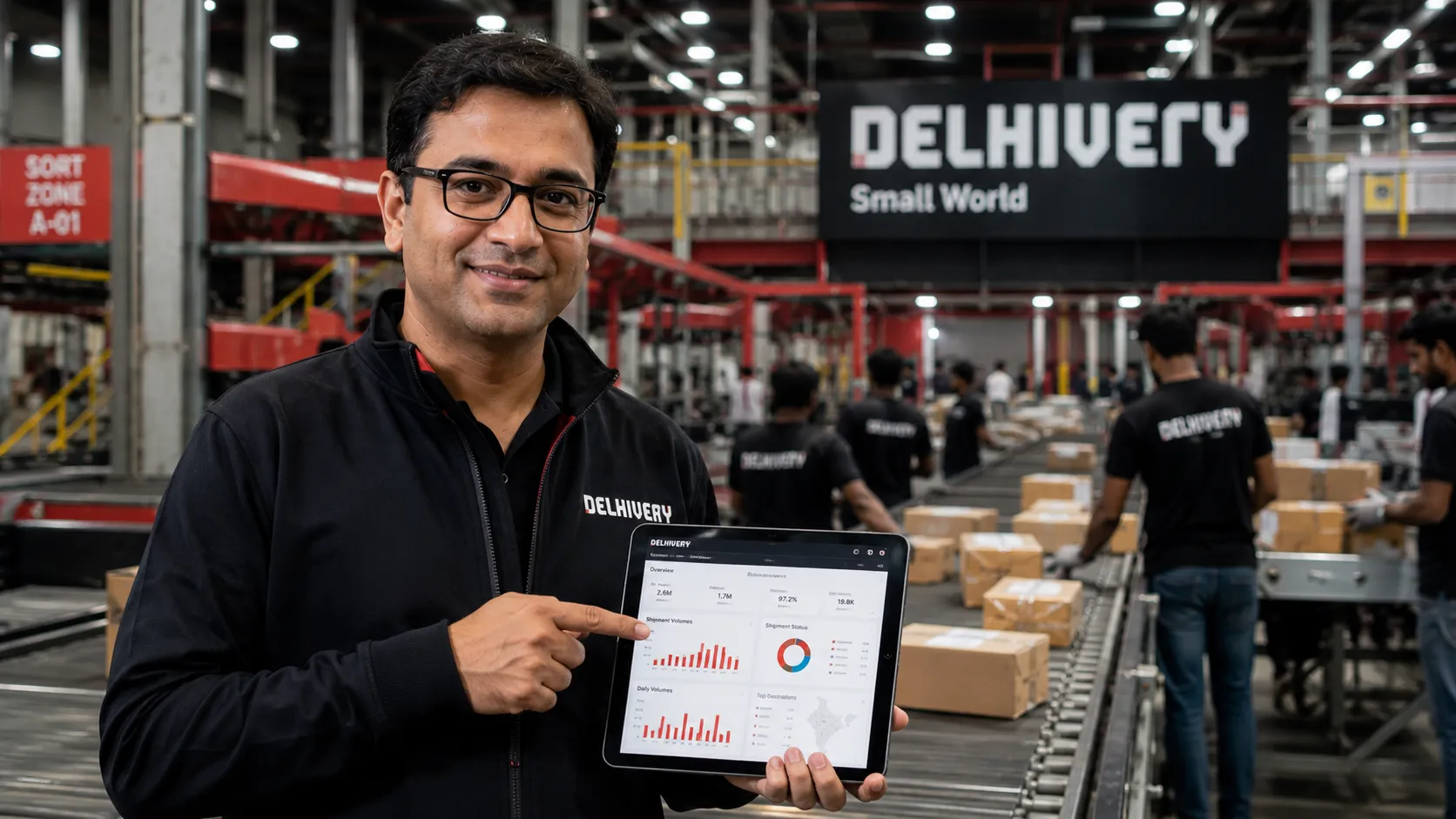
Ankur Dahiya has spent the past twelve months doing something that most FMCG executives would describe as commercially irrational. He has been selling shampoo, detergent, and cooking oil in single-use sachets priced at ₹5—roughly six cents—to customers in villages that are not connected by paved roads, in districts that do not appear on any consumer brand's growth map, through a network of women micro-entrepreneurs who had never sold anything before his company trained them.

The Tea Brand That Conquered 180 Countries Before Selling a Single Bag in India—And the $65 Crore Bet That Comes Next
StartupsMay 22, 2026

The Tea Brand That Conquered 180 Countries Before Selling a Single Bag in India—And the $65 Crore Bet That Comes Next

Bala Sarda was 23 years old when he made a decision that defied every convention of Indian entrepreneurship. He was the scion of a 90-year-old tea dynasty—the Sardas of Darjeeling, whose plantations had produced some of the finest loose-leaf tea in the world for four generations. He could have spent his twenties learning the family business from a corner office, taking over the export operation, and settling into the comfortable trajectory of a legacy industry. Instead, he looked at the tea industry and saw that it was broken. Not the tea. The business model.

The Australian Startup That Just Got a $38 Million CHIPS Act Nod to Build Silicon Qubits—and Could Slash the Cost of Quantum Computing by 99%
StartupsMay 22, 2026

The Australian Startup That Just Got a $38 Million CHIPS Act Nod to Build Silicon Qubits—and Could Slash the Cost of Quantum Computing by 99%

In the global race to build a fault-tolerant quantum computer, most of the attention has been focused on exotic hardware: superconducting circuits cooled to near absolute zero, trapped ions levitating in vacuum chambers, neutral atoms suspended in lattices of laser light. Andrew Dzurak has spent his career working on something that sounds, by comparison, almost mundane. He wants to build quantum computers out of the same material that powers every smartphone on Earth: silicon.

The Company That Powers Every AI App You Use—And the 13 Cloud Providers It Had to Scramble to Find Just to Keep the Lights On
StartupsMay 22, 2026

The Company That Powers Every AI App You Use—And the 13 Cloud Providers It Had to Scramble to Find Just to Keep the Lights On

Erik Bernhardsson has spent the past six months doing something no CEO of a serious infrastructure company ever wants to do: calling up cloud providers he has never heard of and begging them for spare GPU capacity. His company, Modal Labs, is not a small startup struggling to find compute. It is a $4.65 billion business that just raised $355 million in Series C funding, quintupled its annualized revenue from $60 million to $300 million since September, and counts biotech companies, hedge funds, and weather-forecasting firms among its customers. And yet, Bernhardsson has been forced to cast an ever-wider net for the chips his customers need, expanding Modal's roster of cloud suppliers from five to thirteen in a matter of months, including names he admits he had never encountered before the great GPU famine of 2026 forced him to go looking.

From Smokestack to Supper: The Deep-Tech Startups Turning Industrial Emissions Into Capitalist Gold
ImpactMay 22, 2026

From Smokestack to Supper: The Deep-Tech Startups Turning Industrial Emissions Into Capitalist Gold

Forget plant-based burgers and laboratory-grown steak. A fiercely competitive cohort of deep-tech biotech startups is shaking up the venture capital world by commercializing an entirely new category of nutrition: protein brewed directly from industrial carbon dioxide emissions. By leveraging ancient, gas-fermenting microbes originally studied by NASA, these companies are transforming factory pollution into high-purity protein effectively decoupling the future of global food security from the limitations of land, water, and shifting climate patterns.

The $2 Billion Deal That Beijing Killed: Inside the Unprecedented Unwinding of Meta's Manus Acquisition—and the $1 Billion Buyback That Comes Next
StartupsMay 22, 2026

The $2 Billion Deal That Beijing Killed: Inside the Unprecedented Unwinding of Meta's Manus Acquisition—and the $1 Billion Buyback That Comes Next

In December 2025, Meta Platforms announced the acquisition of Manus, a Singapore-based AI startup whose general-purpose AI agents could function as digital employees, independently carrying out tasks such as research and automation with minimal human input. The price was approximately $2 billion. The deal closed. Manus employees moved into Meta offices in Singapore. Capital was transferred. The startup's executives joined the American firm's rapidly expanding AI team. Investors including Tencent Holdings, ZhenFund, and HSG received their proceeds. The acquisition was, by all appearances, complete.

The Search Engine That Thinks the Internet Should Be Built for Machines, Not Humans
StartupsMay 22, 2026

The Search Engine That Thinks the Internet Should Be Built for Machines, Not Humans

William Bryk has a prediction that sounds absurd until you realize the data already backs it up. Sometime this year, he says, AI agents will conduct more searches on the internet than humans. Not someday. Not in a decade. This year. “There are billions of humans doing searches,” he told Bloomberg this week. “There are going to be trillions of agents, like, very soon.”

The €5 Billion Ultimatum: Europe Just Hired a Swedish Giant to Stop Its Best Ideas From Fleeing to America
StartupsMay 22, 2026

The €5 Billion Ultimatum: Europe Just Hired a Swedish Giant to Stop Its Best Ideas From Fleeing to America

Sometime in the next several weeks, a Swedish private equity firm with €269 billion in assets will begin raising a fund that represents something Europe has never attempted before: a concerted, state-backed effort to stop the continent's most valuable technology companies from being systematically acquired by American and Chinese buyers before they reach scale. The Scaleup Europe Fund, a €5 billion vehicle that will target late-stage companies in artificial intelligence, quantum computing, space technology, clean energy, and biotechnology, is the most ambitious government intervention in European venture capital since the creation of the European Investment Fund in 1994. It is also an admission of failure.

The French Quantum Startup That Just Proved Error Correction Works — And Is About to Drop a $2 Billion IPO on Wall Street
StartupsMay 22, 2026

The French Quantum Startup That Just Proved Error Correction Works — And Is About to Drop a $2 Billion IPO on Wall Street

For as long as quantum computers have existed, they have been haunted by a single, unforgiving problem: noise. The same quantum properties that make qubits so powerful—their ability to exist in multiple states simultaneously, to entangle with one another across distances, to perform calculations that would take classical computers longer than the age of the universe—also make them exquisitely fragile. A stray photon. A fluctuation in temperature. A whisper of electromagnetic interference from a nearby power line. Any of these can cause a qubit to lose its quantum coherence, introducing errors that cascade through a calculation and render the output meaningless.

Load More Results