Results (439 found)

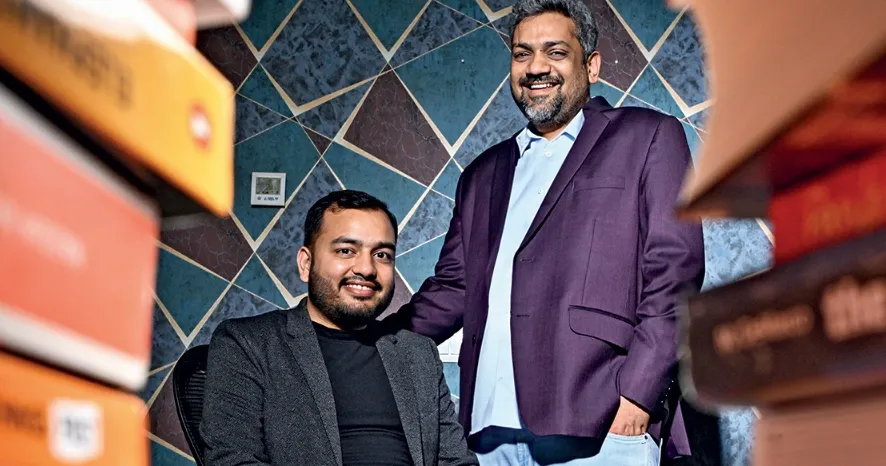
The Chicken, the Egg, and the $11M Bet to End $1,000-a-Gram Medicine: How Two Outsiders Are Rewiring Biomanufacturing from a Davis Farm
StartupsMay 20, 2026

The Chicken, the Egg, and the $11M Bet to End $1,000-a-Gram Medicine: How Two Outsiders Are Rewiring Biomanufacturing from a Davis Farm

Sam Levin is an evolutionary biologist. He thinks in geological time. He has spent his career studying how nature solves problems — how a bird's immune system packages antibodies into the sterile, self-contained universe of an egg; how natural selection, over hundreds of millions of years, has built protein factories that make the stainless-steel tanks of modern pharmaceutical plants look like crude stone tools by comparison. His co-founder, Dimi Kellari, is an aerospace engineer who spent four years building autonomous vehicle technology before concluding, with the clarity of a systems thinker, that the most consequential frontier was not in space or on the road, but inside a hen.

The Boy from the Coffee Hills Who Is Building India's Eye in the Sky — and Its First AI Data Center in Orbit
StartupsMay 20, 2026

The Boy from the Coffee Hills Who Is Building India's Eye in the Sky — and Its First AI Data Center in Orbit

Justin Cyrus had exactly 25 minutes to decide. It was a Friday morning in late March, and Cyrus, the 32-year-old founder and CEO of Lunar Outpost, had just watched NASA Administrator Jared Isaacman appear on a livestream from the agency's Ignition event at Kennedy Space Center and announce, with no advance warning to the commercial contractors whose fortunes depend on the Artemis program, that NASA was abandoning its Lunar Terrain Vehicle acquisition strategy. The three companies competing to build the moon's first crewed rover — Lunar Outpost, Astrolab, and Intuitive Machines — would not, as they had expected, be awarded a contract that day. Instead, Isaacman told them to go back to their factories and design something simpler, faster, and cheaper. The new deadline for a flight-ready rover: the end of 2027. The new mandate: get it done now.

The Lunar Land Grab: How a Colorado Startup Is Racing to Build the First Industrial Park on the Moon
StartupsMay 20, 2026

The Lunar Land Grab: How a Colorado Startup Is Racing to Build the First Industrial Park on the Moon

Justin Cyrus had exactly 25 minutes to decide. It was a Friday morning in late March, and Cyrus, the 32-year-old founder and CEO of Lunar Outpost, had just watched NASA Administrator Jared Isaacman appear on a livestream from the agency's Ignition event at Kennedy Space Center and announce, with no advance warning to the commercial contractors whose fortunes depend on the Artemis program, that NASA was abandoning its Lunar Terrain Vehicle acquisition strategy. The three companies competing to build the moon's first crewed rover — Lunar Outpost, Astrolab, and Intuitive Machines — would not, as they had expected, be awarded a contract that day. Instead, Isaacman told them to go back to their factories and design something simpler, faster, and cheaper. The new deadline for a flight-ready rover: the end of 2027. The new mandate: get it done now.

The Robot Babysitter and the 10,000-Machine Future: Inside the Factory Where Humans Are Already Working for Robots
StartupsMay 20, 2026

The Robot Babysitter and the 10,000-Machine Future: Inside the Factory Where Humans Are Already Working for Robots

Doug Thompson has worked at the Schaeffler auto-parts plant in Cheraw, South Carolina, for fourteen years. He has operated stamping presses, run assembly lines, and trained the new hires who cycle through the factory floor every few months, driven away by the repetition and the heat and the toll that three decades of industrial labor exacts on a body. He has seen automation arrive in waves — robotic welders, automated guided vehicles, computer-controlled machining — and he has watched each wave change the nature of his work without ever fully replacing it. Something, always, needed a human hand.

The Intern That Never Sleeps: Inside the AI Agent That Just Ate Wall Street's Junior Banking Ranks — and What JPMorgan Is Doing About It
StartupsMay 20, 2026

The Intern That Never Sleeps: Inside the AI Agent That Just Ate Wall Street's Junior Banking Ranks — and What JPMorgan Is Doing About It

The class of 2025 was supposed to be different. They had survived the most competitive recruiting cycle in the history of Wall Street, a gauntlet of networking calls, technical interviews, and super‑days that winnowed thousands of Ivy League resumes down to a few hundred coveted seats. They arrived at 383 Madison Avenue in July, crisp in their new suits, ready for the hundred‑hour weeks, the pitchbook revisions, the coffee runs, the slow, humiliating climb from analyst to associate that had defined investment banking for a century.

The $220M British Invasion: How an Oxford PhD Is Building the Chip That Could Break Nvidia's Stranglehold on AI
StartupsMay 20, 2026

The $220M British Invasion: How an Oxford PhD Is Building the Chip That Could Break Nvidia's Stranglehold on AI

Sometime in 2022, a robotics PhD student at Oxford University made a bet so contrarian it bordered on absurd. The world's most valuable technology company, Nvidia, had just crossed a trillion-dollar valuation on the back of its dominance in AI hardware. Its GPUs were the undisputed standard for both training and running artificial intelligence models. The idea that a graduate student — working out of Oxford, not Silicon Valley, with no track record, no prototype, and no venture backing — could challenge that dominance was, by any rational assessment, not a business plan. It was a daydream.

The $725 Billion Fever: Inside the Greatest Infrastructure Bet in History — and the Quiet Evidence It May Already Be Overheating
StartupsMay 18, 2026

The $725 Billion Fever: Inside the Greatest Infrastructure Bet in History — and the Quiet Evidence It May Already Be Overheating

Some numbers are too large to feel. The human mind can grasp a hundred, a thousand, perhaps a million with effort. Beyond that, figures blur into abstraction. So when the four largest technology companies on Earth — Microsoft, Alphabet, Amazon, and Meta — disclose, in a single earnings week in late April, that their combined capital expenditures will reach approximately $725 billion in 2026, the number floats past comprehension. It is roughly the GDP of Switzerland and Sweden combined. It represents a 77 percent increase over last year's record $410 billion. It is, by any historical measure, the largest concentrated infrastructure buildout in the history of private industry — larger than the railroad boom, larger than the interstate highway system, larger than the original buildout of the internet itself in real terms.

The ₹100 Revolution: How a Former BCG Partner Is Building India's First Financial OS for 300 Million Shopkeepers — One Day at a Time
StartupsMay 18, 2026

The ₹100 Revolution: How a Former BCG Partner Is Building India's First Financial OS for 300 Million Shopkeepers — One Day at a Time

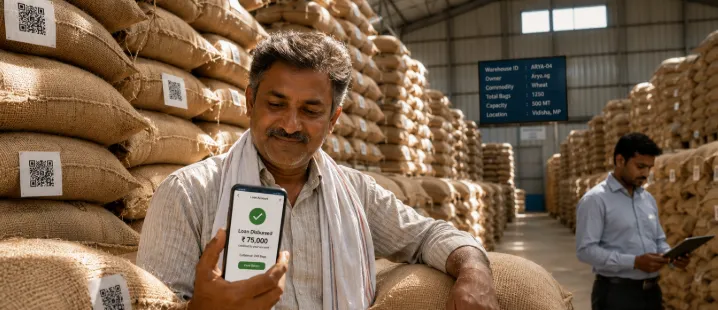
Anugrah Jain spent a decade inside the machinery of Indian finance before he understood what was broken. As a partner at Boston Consulting Group, he advised two of India's largest non-banking financial companies as they scaled their combined loan books past ₹14,000 crore. He sat in boardrooms. He built models. He became, by any standard, an expert in how money moves through the Indian economy. And somewhere in that decade, he came to a conclusion that has since become the founding thesis of one of India's most closely watched fintech startups: the modern financial system was not built for the people who actually run India.

The Spotify of Home Energy: How a Swedish Startup Is Making Solar as Simple as a Netflix Subscription — and Just Landed €480 Million to Prove It
StartupsMay 18, 2026

The Spotify of Home Energy: How a Swedish Startup Is Making Solar as Simple as a Netflix Subscription — and Just Landed €480 Million to Prove It

Johan Outinen wants to be very clear about what his company is not selling. "The customer doesn't know the energy market," he says. "We tell them: this isn't sexy, but it's a long-term cost-saving measure. We're not going to promise you'll get rich from it." The line is quintessentially Swedish — understated, honest to the point of bluntness, almost suspicious of its own ambition. It is also the core of a business model that has, in under three years, attracted €480 million in credit financing, €5.9 million in fresh equity, a tenfold growth in subscribers in 2025 alone, and the quiet conviction from some of Europe's most discerning investors that the future of home energy looks less like a hardware purchase and more like a Spotify subscription.

Load More Results