Physical Infrastructure Startups Are Raising Capital Again
Aurm’s funding round highlights a growing investor shift toward startups combining technology with physical infrastructure, reflecting renewed interest in hard-asset business models.


Aurm’s funding round highlights a growing investor shift toward startups combining technology with physical infrastructure, reflecting renewed interest in hard-asset business models.

HealthFab’s appearance in seed-stage funding trackers reflects growing investor interest in women-focused healthcare, menstrual wellness and preventive health infrastructure across India.

As AI startups multiply across industries, investors and enterprise customers are increasingly prioritizing validation, recognition and measurable outcomes over AI branding alone.

India’s student founder movement is expanding beyond traditional IIT-centered narratives as young entrepreneurs increasingly launch startups directly from campuses across the country.

Pronto’s funding momentum is highlighting the rapid rise of India’s “15-minute home services” economy, where startups are bringing quick-commerce style speed and convenience to household repairs and maintenance.

Ashish Kumar, the co-founder of Fundamentum Partnership, has just unveiled F2A (Fundamentum Frontier Advisors) — a massive ₹2,000 crore fund dedicated entirely to AI and deeptech startups. And as an anchor investor, he's brought in none other than Nandan Nilekani, the Infosys co-founder and one of India's most respected tech minds.

India has 13 million kirana stores — the small, family-run shops that are the backbone of the country's retail economy, selling everything from rice and dal to shampoo and detergent. They account for more than 80 percent of India's grocery sales. They survived the arrival of supermarkets, the rise of e‑commerce, and the entry of the world's largest retailers into the Indian market. They are, by any measure, among the most resilient institutions in the Indian economy. And yet, for most of their history, they have been served by a supply chain that has barely evolved in decades.

The memory arrives without warning. For a combat veteran, it might be the sound of a helicopter's rotor, the smell of diesel, the particular quality of desert heat. For a survivor of assault, it could be a stranger's hand on a shoulder in a crowded bar. For someone who lived through a car accident, the screech of tires at an intersection can trigger a cascade of physiological terror—racing heart, shallow breath, the cold certainty that death is near. These are not ordinary recollections. They are trauma memories, and for tens of millions of Americans, they function less like memories and more like possessions: involuntary, intrusive, and seemingly indestructible.

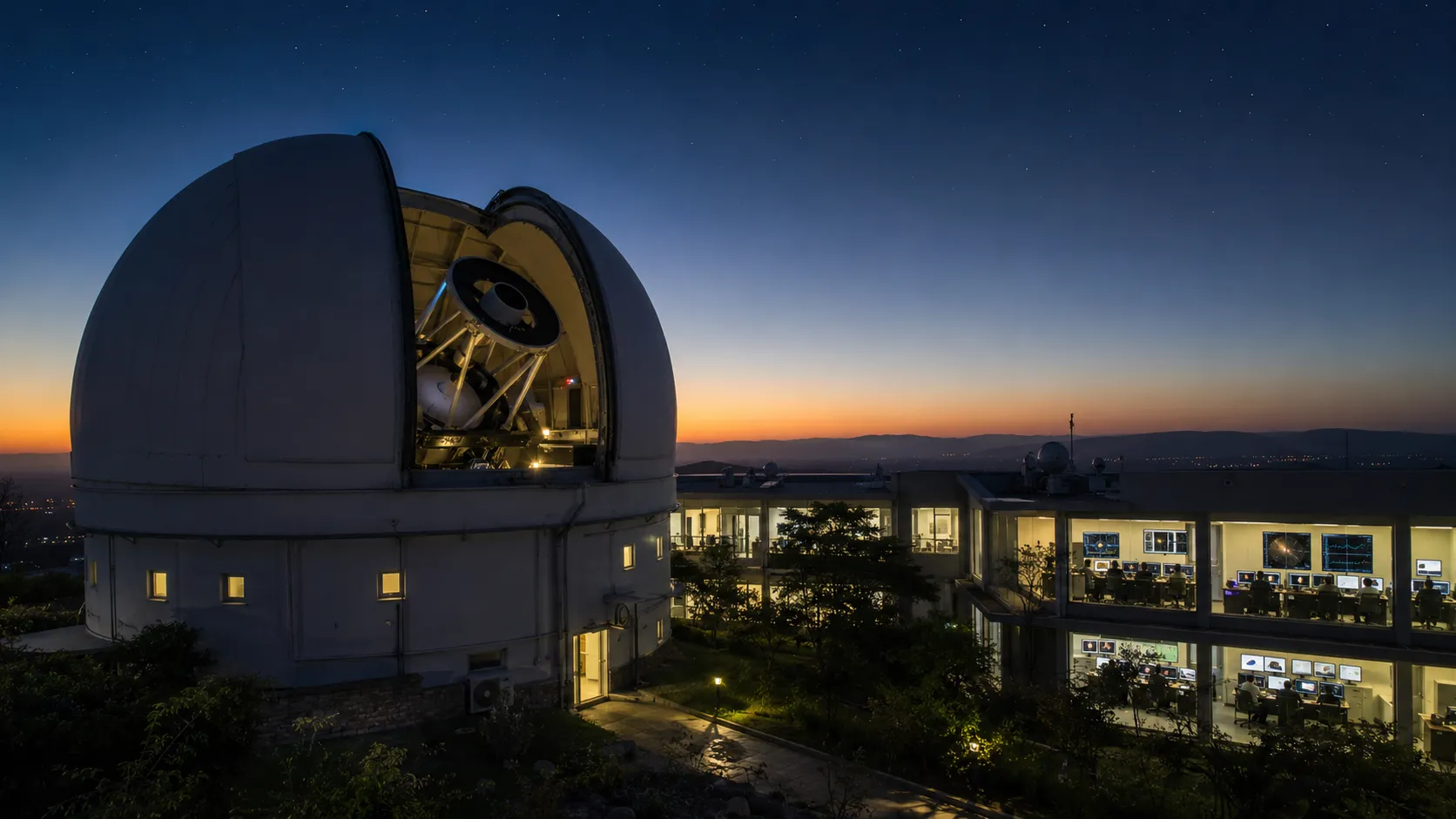
For more than two decades, the dominant theory of how galaxies form has been built on a simple, elegant premise: in the early universe, galaxies were chaotic. They were small, irregular, clumpy agglomerations of gas and stars, colliding and merging in a violent cosmic dance that took billions of years to settle into the graceful spiral structures we see today. The Milky Way—our own galaxy, with its sweeping arms and its calm, orderly rotation—was supposed to be a product of middle age, a structure that could only emerge after eons of cosmic evolution had smoothed out the turbulence of youth. The early universe, the theory held, was too hot, too dense, and too violent to produce anything so refined. The James Webb Space Telescope, the most powerful astronomical observatory ever built, has just proven that theory wrong—and the team that made the discovery was led by Indian astronomers.

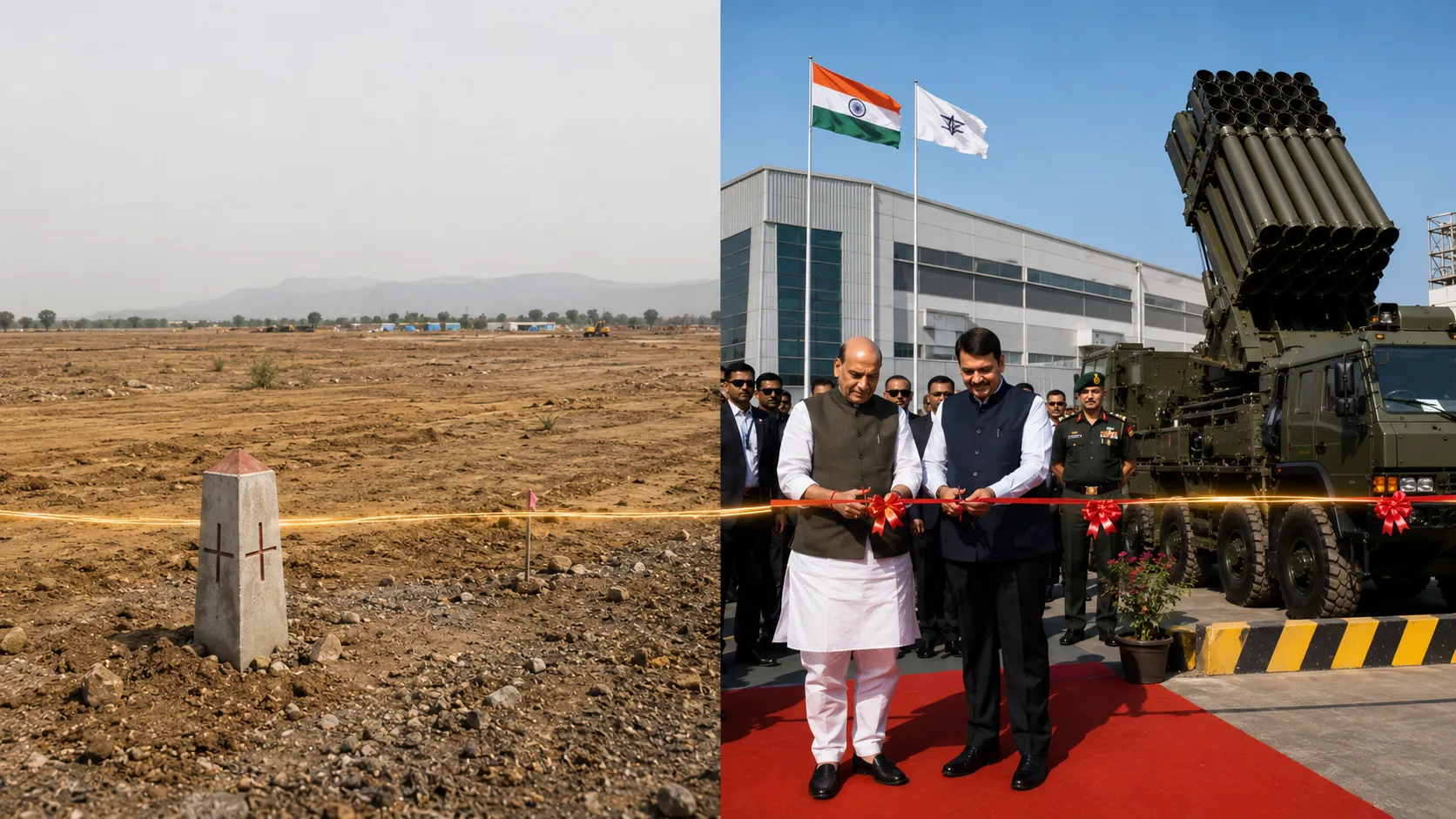
On a Saturday morning three days ago, Defence Minister Rajnath Singh stood on a dusty construction site in the shadow of the world's most famous pilgrimage town and declared that India was building a "fortress of self-reliance" in the land of Chhatrapati Shivaji. The fortress in question was not a medieval stone structure. It was a 200-acre defence manufacturing complex—the largest private weapons factory ever built in India—that will produce half a million artillery shells a year, manufacture advanced missile and space technologies, build autonomous defence platforms, and house the country's first indigenous 300-kilometre Universal Rocket Launching System. Its name is Suryastra. Its range is the distance from Delhi to Jaipur. And its first units were flagged off to the Indian Army at the inauguration ceremony itself.