Results (702 found)

The Flower That Glows in the Dark: How a $29.99 Petunia Is Rewriting the Future of Light—and the Rules of Genetic Engineering
TechMay 21, 2026

The Flower That Glows in the Dark: How a $29.99 Petunia Is Rewriting the Future of Light—and the Rules of Genetic Engineering

On a quiet suburban street in central Nebraska, Sarah Kleiner walks out of her front door at 10 p.m. and looks at her garden. There, among the petunias, something impossible is happening. The flowers are glowing. Not metaphorically, not in the way that poets describe flowers under moonlight, but literally, physically, emitting a soft green-white light from their petals and stems, visible to the naked eye, requiring no electricity, no UV lamp, no special conditions. Just a plant, doing what no plant on Earth has ever done in four billion years of evolution.

The Invisible Giant: How a PhD Dropout from IIT Kanpur Shaped Google, Facebook, Square, DoorDash, and Coinbase—Without Anyone Knowing His Name
StartupsMay 21, 2026

The Invisible Giant: How a PhD Dropout from IIT Kanpur Shaped Google, Facebook, Square, DoorDash, and Coinbase—Without Anyone Knowing His Name

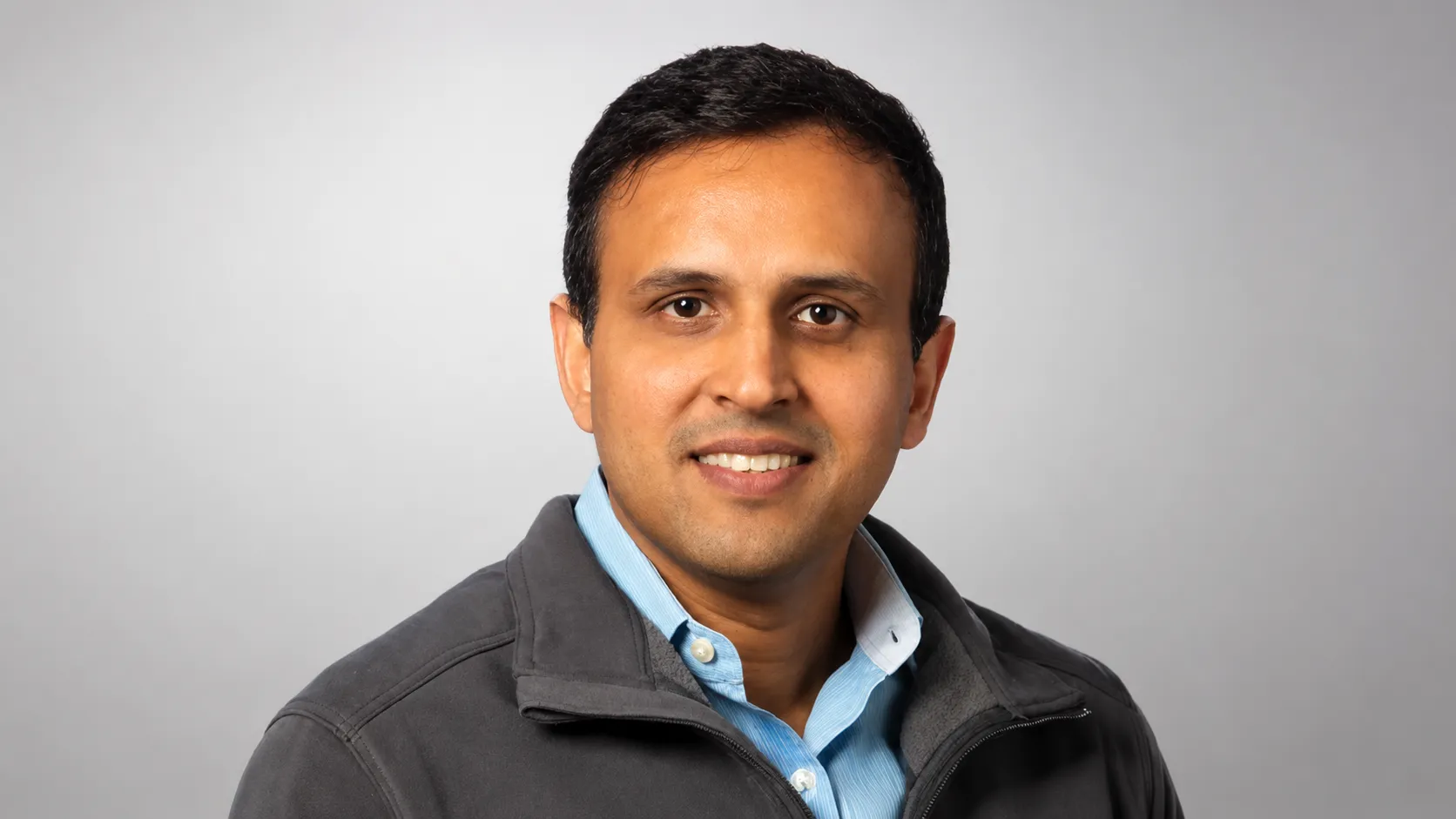
Gokul Rajaram does not have a Wikipedia page. He has never been on the cover of Fortune or Forbes. He does not keynote major technology conferences, does not maintain a public relations presence, and does not, by all available evidence, seek the kind of recognition that usually attaches to someone who has helped build seven billion‑dollar companies and invested in more than 300 startups. He is, by the standards of the technology industry, almost invisible—a ghost in the machine whose fingerprints are everywhere but whose face is known only to the insiders who have worked alongside him.

The $1 Billion Sovereignty Play: How Tata and JSW Are Trying to Break India's Dependence on Chinese EV Batteries
StartupsMay 20, 2026

The $1 Billion Sovereignty Play: How Tata and JSW Are Trying to Break India's Dependence on Chinese EV Batteries

The most expensive, most technically demanding component of an electric vehicle is not the motor, the software, or the chassis. It is the battery—and for nearly every electric vehicle sold in India today, the cells inside that battery were designed and manufactured in China. India's EV penetration has surged past 8.5 percent, driven by electric two- and three-wheelers that have become a common sight on city streets. But the lithium-ion cells that power those vehicles, and the lithium-iron-phosphate chemistry that is increasingly used in stationary energy storage, remain almost entirely imported from a single country.

The ₹67 Crore Bet That India Can Design Its Own Appliances—Not Just Assemble Them
TechMay 20, 2026

The ₹67 Crore Bet That India Can Design Its Own Appliances—Not Just Assemble Them

For decades, the Indian consumer electronics industry has operated on a simple, humbling premise: design overseas, assemble in India. The air fryer in your kitchen, the juicer on your counter, the car vacuum in your trunk—the outer shell may carry an Indian brand, but the motors, the precision gears, the heating elements, and the load cells that make it work were almost certainly designed and manufactured somewhere else. India's ₹40,000-crore small-appliance market runs largely on imported components, and the companies that sell to Indian consumers have accepted this as the cost of doing business.

The Microwave Plasma Maverick: How a Belagavi Martial Artist Is Turning Natural Gas Into Clean Hydrogen and Nanocarbon—at the Same Time
TechMay 20, 2026

The Microwave Plasma Maverick: How a Belagavi Martial Artist Is Turning Natural Gas Into Clean Hydrogen and Nanocarbon—at the Same Time

Prakash Mugali did not build his first microwave plasma reactor in a pristine cleanroom or a university laboratory. He built it on the outskirts of Belagavi, a tier-2 city in northern Karnataka, surrounded by foundries, hydraulic shops, and the quiet hum of small-scale manufacturing that most venture capitalists never see. He is a scientist, an engineer, a third-degree black belt in Bruce Lee's martial arts discipline, and—as of this summer—the founder of a company that may have solved one of the hardest dual-output problems in clean energy.

The $65,000 Cancer Cure: Inside the Indian Lab That Is Taking on a Half‑Million‑Dollar Industry — and Winning
TechMay 20, 2026

The $65,000 Cancer Cure: Inside the Indian Lab That Is Taking on a Half‑Million‑Dollar Industry — and Winning

On a Tuesday morning in March, a child in Vellore who had exhausted every option became the first patient in India to receive a CAR‑T therapy designed in a Delhi laboratory. The treatment took less than an hour. The child went home. The cost of the infusion — the cells, the engineering, the quality control, the cold‑chain logistics — was roughly one‑eighth of what the same therapy would have cost at a major American cancer center.

The AI Scientists Are Here: Inside the Lab Where Machines Debate, Argue, and Design Life‑Saving Drugs in Days
TechMay 20, 2026

The AI Scientists Are Here: Inside the Lab Where Machines Debate, Argue, and Design Life‑Saving Drugs in Days

James Zou had run out of time. The Stanford professor of biomedical data science runs a physical lab filled with brilliant graduate students and postdoctoral researchers, and yet, like every academic scientist, he was haunted by the gap between what his team could theoretically accomplish and what they could actually do in the finite hours of a working day. The problem was not intelligence. It was bandwidth. There were always more promising targets than there were people to investigate them, always more experiments worth running than hours in which to run them.

The Photon Breakthrough: How Caltech Taught Silicon to Behave Like Fiber Optic Cable — and What It Means for Everything from AI to Quantum Computing
TechMay 20, 2026

The Photon Breakthrough: How Caltech Taught Silicon to Behave Like Fiber Optic Cable — and What It Means for Everything from AI to Quantum Computing

In a cramped basement laboratory at the California Institute of Technology, a slab of silicon sits on an optical table, no larger than a fingernail. A beam of red light, no thicker than a human hair, enters one end of a microscopic channel carved onto its surface. It snakes through a maze of bends and splitters, bounces off a series of precisely angled mirrors, and exits the other side — not as a dimmed, scattered whisper of its former self, but nearly as bright and coherent as when it began. The loss, measured in decibels per meter, is so low that it flirts with the physical limits set by the material itself.

The $3.44 Billion Wake-Up Call: How Ronnie Screwvala Is Consolidating the Rubble of India's Edtech Crash — and Building Something That Might Actually Last
StartupsMay 20, 2026

The $3.44 Billion Wake-Up Call: How Ronnie Screwvala Is Consolidating the Rubble of India's Edtech Crash — and Building Something That Might Actually Last

In the autumn of 2021, Unacademy was worth $3.44 billion. Its founder, Gaurav Munjal, was 27 years old. The company had raised nearly $900 million from SoftBank, Tiger Global, and Sequoia Capital. It had acquired a dozen startups, launched a graph-novel platform, opened a chain of physical coaching centers, and sponsored every major cricket tournament in India. The narrative was intoxicating: a young, aggressive founder building the Amazon of education, a generational company that would teach India everything it needed to know, from cracking the civil service exam to mastering code. The pandemic had accelerated online learning, and Unacademy was surfing the wave with the bravado of a company that believed the wave would never break.

The Chicken, the Egg, and the $11M Bet to End $1,000-a-Gram Medicine: How Two Outsiders Are Rewiring Biomanufacturing from a Davis Farm
StartupsMay 20, 2026

The Chicken, the Egg, and the $11M Bet to End $1,000-a-Gram Medicine: How Two Outsiders Are Rewiring Biomanufacturing from a Davis Farm

Sam Levin is an evolutionary biologist. He thinks in geological time. He has spent his career studying how nature solves problems — how a bird's immune system packages antibodies into the sterile, self-contained universe of an egg; how natural selection, over hundreds of millions of years, has built protein factories that make the stainless-steel tanks of modern pharmaceutical plants look like crude stone tools by comparison. His co-founder, Dimi Kellari, is an aerospace engineer who spent four years building autonomous vehicle technology before concluding, with the clarity of a systems thinker, that the most consequential frontier was not in space or on the road, but inside a hen.

Load More Results