Results (2453 found)

The ₹67 Crore Bet That India Can Design Its Own Appliances—Not Just Assemble Them
TechMay 20, 2026

The ₹67 Crore Bet That India Can Design Its Own Appliances—Not Just Assemble Them

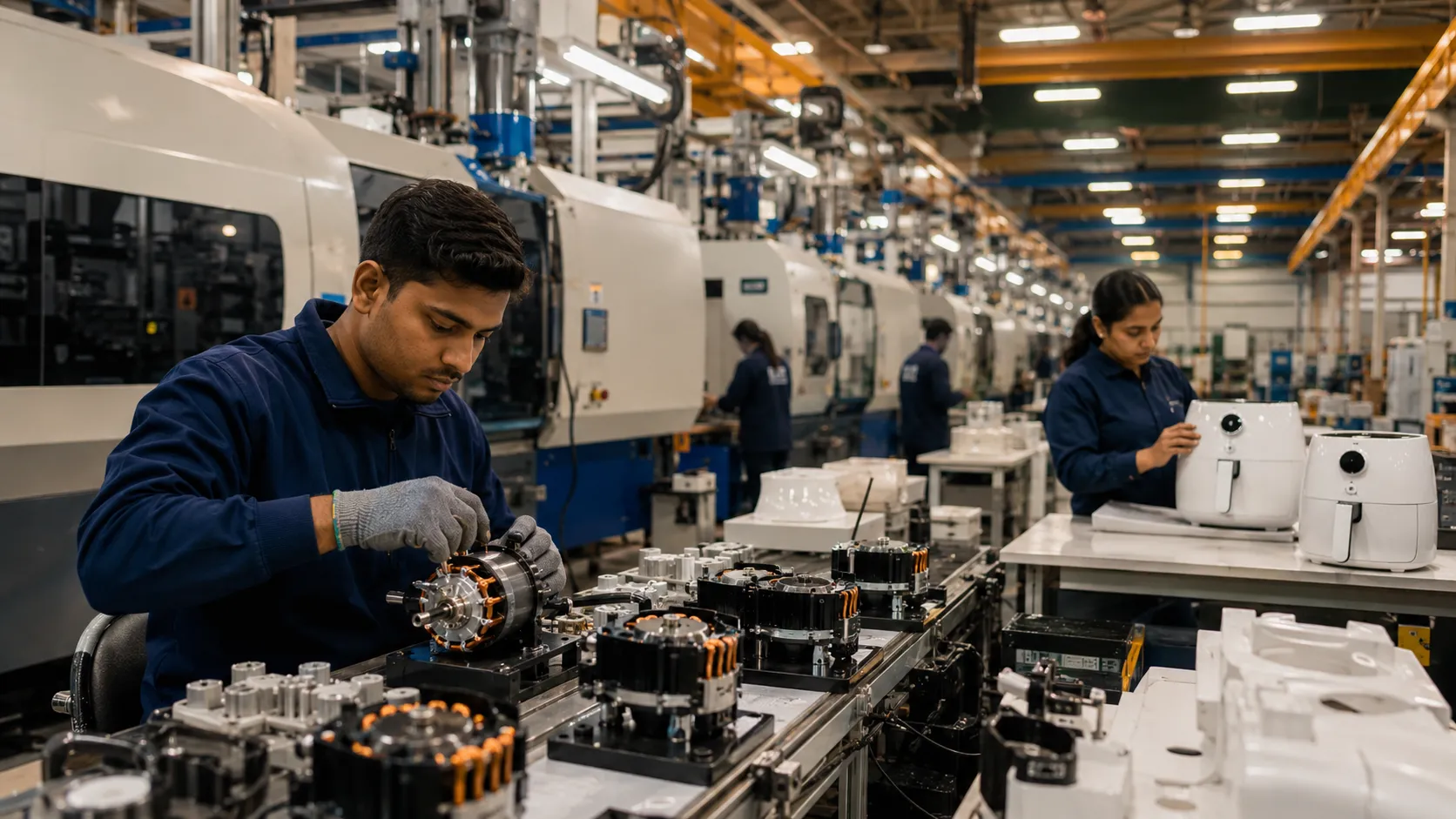
For decades, the Indian consumer electronics industry has operated on a simple, humbling premise: design overseas, assemble in India. The air fryer in your kitchen, the juicer on your counter, the car vacuum in your trunk—the outer shell may carry an Indian brand, but the motors, the precision gears, the heating elements, and the load cells that make it work were almost certainly designed and manufactured somewhere else. India's ₹40,000-crore small-appliance market runs largely on imported components, and the companies that sell to Indian consumers have accepted this as the cost of doing business.


The Microwave Plasma Maverick: How a Belagavi Martial Artist Is Turning Natural Gas Into Clean Hydrogen and Nanocarbon—at the Same Time
TechMay 20, 2026

The Microwave Plasma Maverick: How a Belagavi Martial Artist Is Turning Natural Gas Into Clean Hydrogen and Nanocarbon—at the Same Time

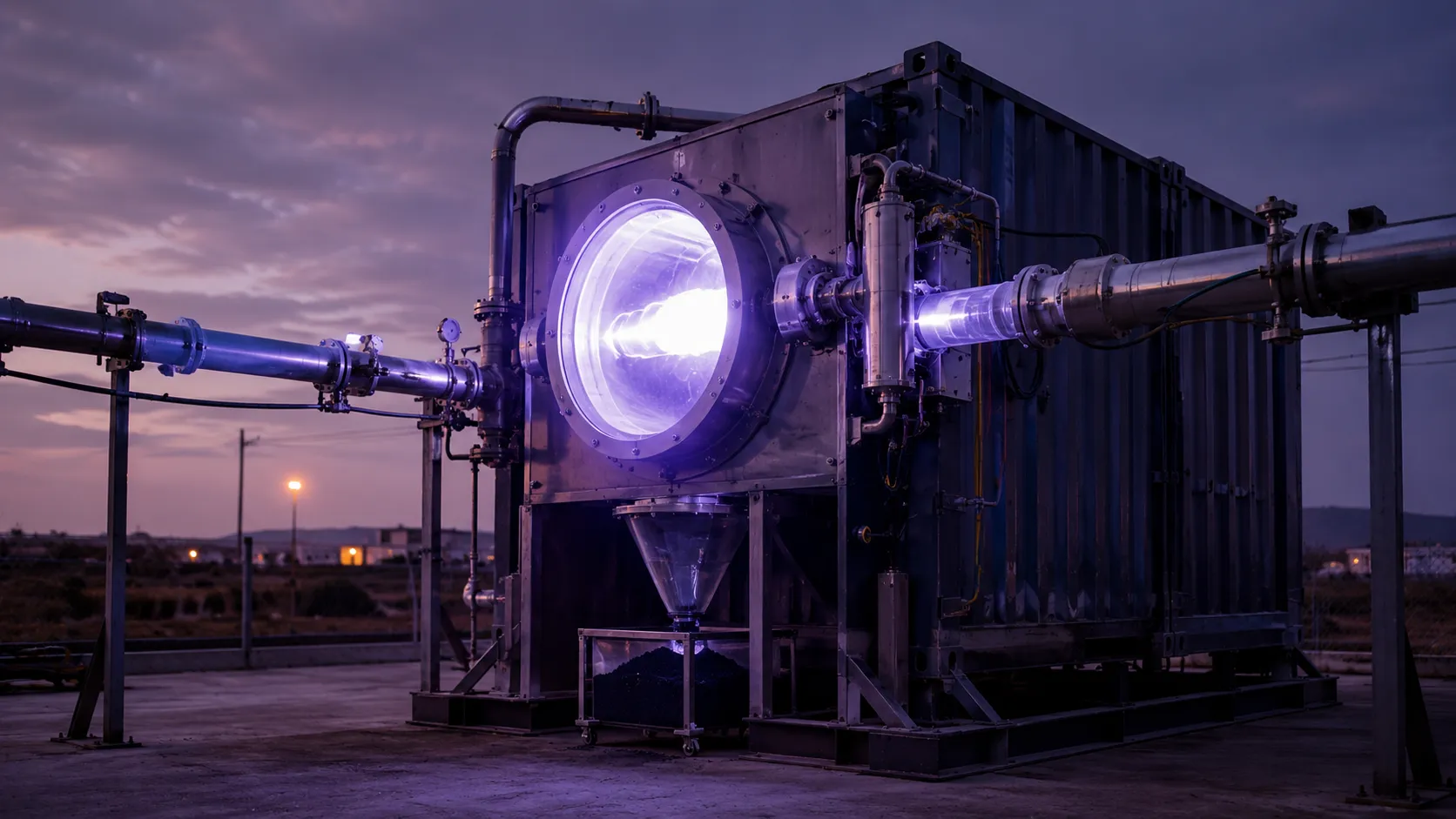
Prakash Mugali did not build his first microwave plasma reactor in a pristine cleanroom or a university laboratory. He built it on the outskirts of Belagavi, a tier-2 city in northern Karnataka, surrounded by foundries, hydraulic shops, and the quiet hum of small-scale manufacturing that most venture capitalists never see. He is a scientist, an engineer, a third-degree black belt in Bruce Lee's martial arts discipline, and—as of this summer—the founder of a company that may have solved one of the hardest dual-output problems in clean energy.

The $65,000 Cancer Cure: Inside the Indian Lab That Is Taking on a Half‑Million‑Dollar Industry — and Winning
TechMay 20, 2026

The $65,000 Cancer Cure: Inside the Indian Lab That Is Taking on a Half‑Million‑Dollar Industry — and Winning

On a Tuesday morning in March, a child in Vellore who had exhausted every option became the first patient in India to receive a CAR‑T therapy designed in a Delhi laboratory. The treatment took less than an hour. The child went home. The cost of the infusion — the cells, the engineering, the quality control, the cold‑chain logistics — was roughly one‑eighth of what the same therapy would have cost at a major American cancer center.

The AI Scientists Are Here: Inside the Lab Where Machines Debate, Argue, and Design Life‑Saving Drugs in Days
TechMay 20, 2026

The AI Scientists Are Here: Inside the Lab Where Machines Debate, Argue, and Design Life‑Saving Drugs in Days

James Zou had run out of time. The Stanford professor of biomedical data science runs a physical lab filled with brilliant graduate students and postdoctoral researchers, and yet, like every academic scientist, he was haunted by the gap between what his team could theoretically accomplish and what they could actually do in the finite hours of a working day. The problem was not intelligence. It was bandwidth. There were always more promising targets than there were people to investigate them, always more experiments worth running than hours in which to run them.

The Photon Breakthrough: How Caltech Taught Silicon to Behave Like Fiber Optic Cable — and What It Means for Everything from AI to Quantum Computing
TechMay 20, 2026

The Photon Breakthrough: How Caltech Taught Silicon to Behave Like Fiber Optic Cable — and What It Means for Everything from AI to Quantum Computing

In a cramped basement laboratory at the California Institute of Technology, a slab of silicon sits on an optical table, no larger than a fingernail. A beam of red light, no thicker than a human hair, enters one end of a microscopic channel carved onto its surface. It snakes through a maze of bends and splitters, bounces off a series of precisely angled mirrors, and exits the other side — not as a dimmed, scattered whisper of its former self, but nearly as bright and coherent as when it began. The loss, measured in decibels per meter, is so low that it flirts with the physical limits set by the material itself.

The AI Coworker Arrives: How Two Former Meta Engineers Built a $15 Million Business in 10 Weeks by Putting an Assistant Inside Slack
StartupsMay 20, 2026

The AI Coworker Arrives: How Two Former Meta Engineers Built a $15 Million Business in 10 Weeks by Putting an Assistant Inside Slack

When Fryderyk Wiatrowski and Peter Albert met inside Meta's AI division, they had no intention of starting a company. They were engineers, not entrepreneurs. Their evenings were spent tinkering — building small AI agents that could handle the repetitive parts of knowledge work that nobody enjoys. Writing reports. Pulling data from scattered systems. Setting up dashboards. The kind of tasks that fill calendars and drain energy without producing anything anyone would call meaningful.

The 21-Year-Old, the $3,367 Crore Loss, and the IPO That Could Rewire How India Shops: Inside Zepto's Make-or-Break Summer
StartupsMay 20, 2026

The 21-Year-Old, the $3,367 Crore Loss, and the IPO That Could Rewire How India Shops: Inside Zepto's Make-or-Break Summer

On May 8, 2026, the Securities and Exchange Board of India issued a single-page observation letter that changed the trajectory of one of the most aggressive startups in the country's history. The recipient was Zepto, the quick-commerce company founded in 2021 by two Stanford dropouts who were nineteen years old at the time. The letter meant that Zepto's initial public offering — a monster raise of approximately Rs 8,000 to Rs 9,000 crore, or roughly $1 billion — had cleared its largest regulatory hurdle. The company was now on a countdown: file the updated prospectus, test the waters with institutional investors, and hit the public markets in the July-September quarter of 2026.

Load More Results